LACMA

ShopMembershipMyLACMATickets
LACMA
Los Angeles County Museum of Art
5905 Wilshire Blvd.
Los Angeles, CA 90036
info@lacma.org
(323) 857-6000
Sign up to receive emails
Subscribe
© Museum Associates 2026
  • About LACMA
  • Jobs
  • Building LACMA
  • Host An Event
  • Unframed
  • Press
  • FAQs
  • Log in to MyLACMA
  • Privacy Policy
© Museum Associates 2026
Collections

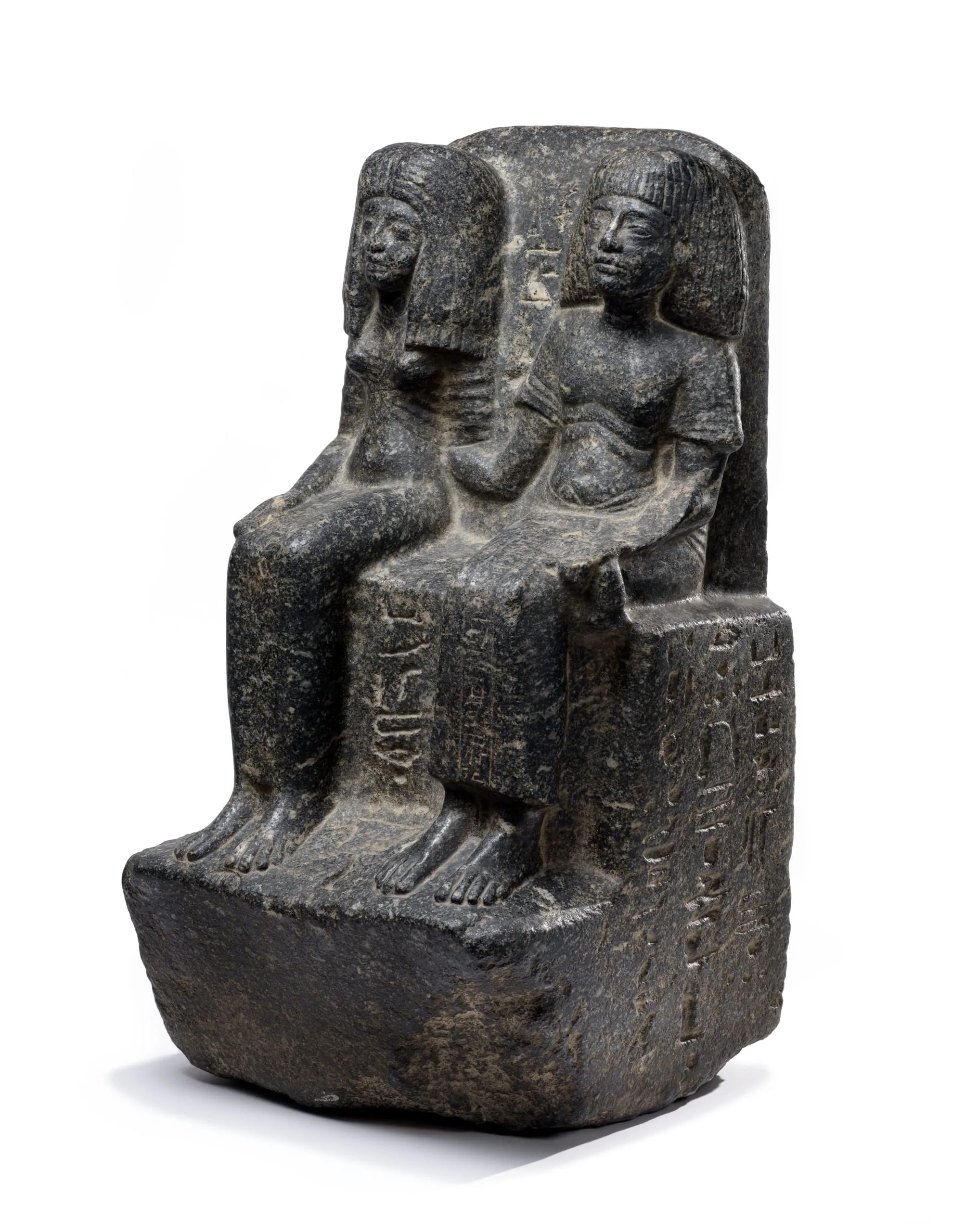
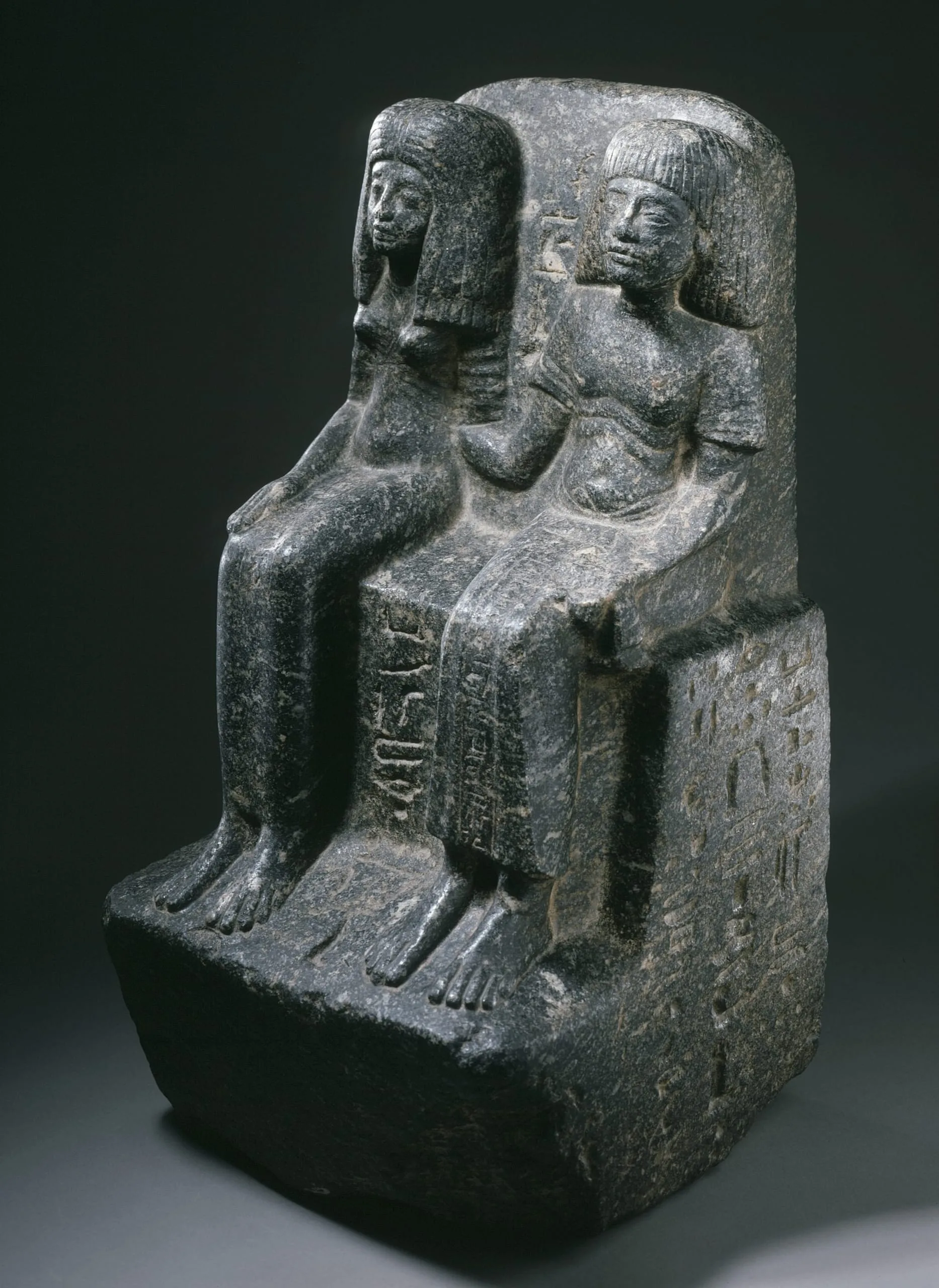
Pair Statue of Userhat and KhaNew Kingdom, late 18th–early 19th Dynasty (c. 1330–1280 BCE), reused by Pawenhetusiri, 30th dynasty (380–343 BCE)

On view:
Geffen Galleries, floor 1
Dark gray-green granite sculpture of two seated figures side by side on a shared throne, with hieroglyphic inscriptions carved on the throne face and back slab
Dark granite dyad sculpture of two seated figures with Egyptian-style striped wigs, hands resting on laps, on a shared rectangular throne with incised hieroglyphic inscriptions on the front and side.

Unknown, Pair Statue of Userhat and Kha, New Kingdom, late 18th-early 19th Dynasty (1319 - 1306 BCE), Los Angeles County Museum of Art, William Randolph Hearst Collection, photo © Museum Associates/LACMA

Title
Pair Statue of Userhat and Kha
Place Made
Egypt, Temple of Amun, Karnak, Karnak Cachette CK 1203
Date Made
New Kingdom, late 18th–early 19th Dynasty (c. 1330–1280 BCE), reused by Pawenhetusiri, 30th dynasty (380–343 BCE)
Medium
Granite
Dimensions
21 × 13 × 13 in. (53.34 × 33.02 × 33.02 cm)
Credit Line
William Randolph Hearst Collection
Accession Number
47.8.34
Classification
Sculpture
Collecting Area
Egyptian Art
Curatorial Notes

Userhat and his wife Kha may be identified by the hieroglyphic text inscribed on their clothing. Userhat is designated as “Royal Scribe and Overseer of the Granary.” An additional inscription added to the throne’s front section tells us that the pair statue was usurped and reused by another individual in the 30th Dynasty. The elegant garments and the naturalistic rendering of Userhat’s torso indicate a dating from the late 18th or early 19th Dynasty. The outline of Kha’s hand appears wrapped around Userhat’s left arm in a gesture of affection. The statue was excavated from the forecourt of the seventh pylon of the Temple of Amun at Karnak during the restoration work led by French archaeologist Georges Legrain between 1903 and 1907. While the majority of the 800-plus stone statues and 17,000 bronze objects recovered from the cachette are now housed in the Egyptian Museum in Cairo or at Egyptian provincial museums, hundreds of pieces were distributed to other locations, especially museums in New York, Brooklyn, Baltimore, Berlin, and London.

Provenance: Karnak cachette, no. 1203. William Randolph Hearst; Sold [Sotheby & Co. London, sale; The Important Collection of The Property of William Randolph Bearst, Esq., The First Day’s Sale: Prehistoric, Babylonian and Egyptian Antiquities, July 11, 1939, Sale code: NARBO, Lot 51]; Purvis (no information). Purchased [French & Company, NY], 1947 by; LACMA.
Selected Bibliography
  • Hopkins, Henry T., ed. Illustrated Handbook of the Los Angeles County Museum of Art. West Germany: Bruder Hartmann, 1965.