LACMA

ShopMembershipMyLACMATickets
LACMA
Los Angeles County Museum of Art
5905 Wilshire Blvd.
Los Angeles, CA 90036
info@lacma.org
(323) 857-6000
Sign up to receive emails
Subscribe
© Museum Associates 2025

Museum Hours

Monday

11 am–6 pm

Tuesday

11 am–6 pm

Wednesday

Closed

Thursday

11 am–6 pm

Friday

11 am–8 pm

Saturday

10 am–7 pm

Sunday

10 am–7 pm


  • About LACMA
  • Jobs
  • Building LACMA
  • Host An Event
  • Unframed
  • Press
  • FAQs
  • Log in to MyLACMA
  • Privacy Policy
© Museum Associates 2025
Collections

Andrea della Robbia
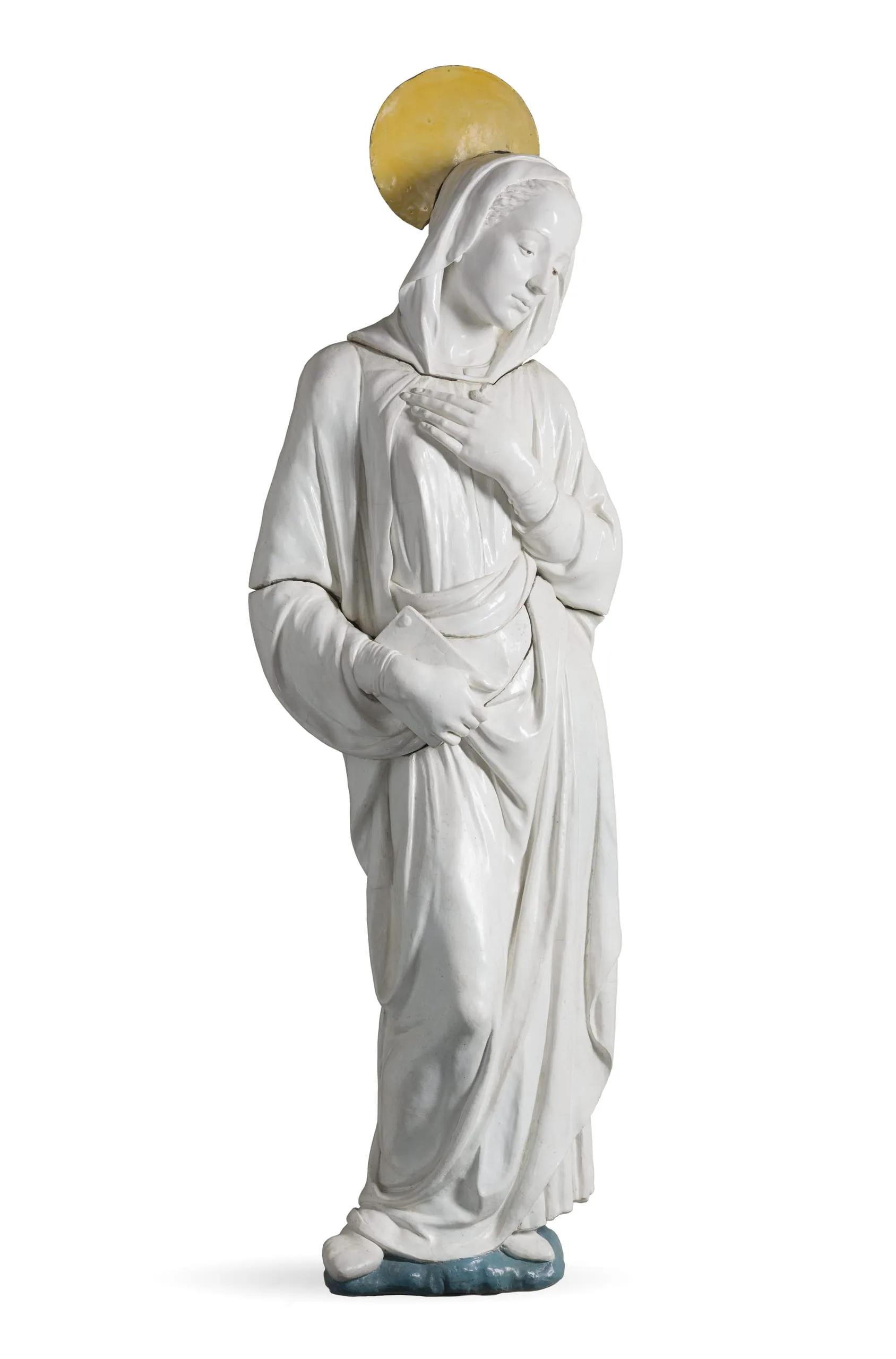
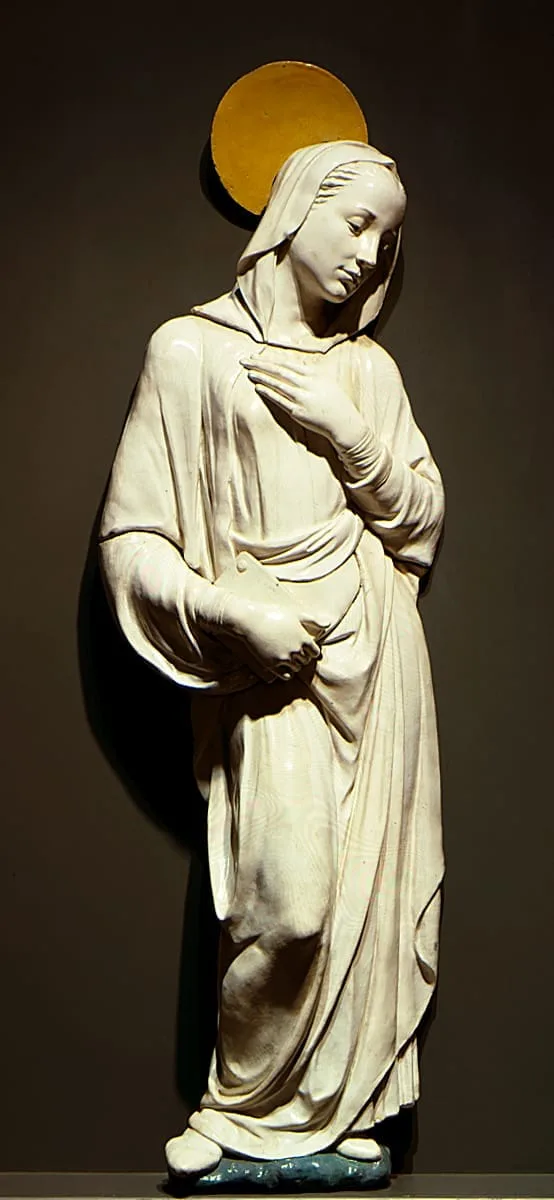
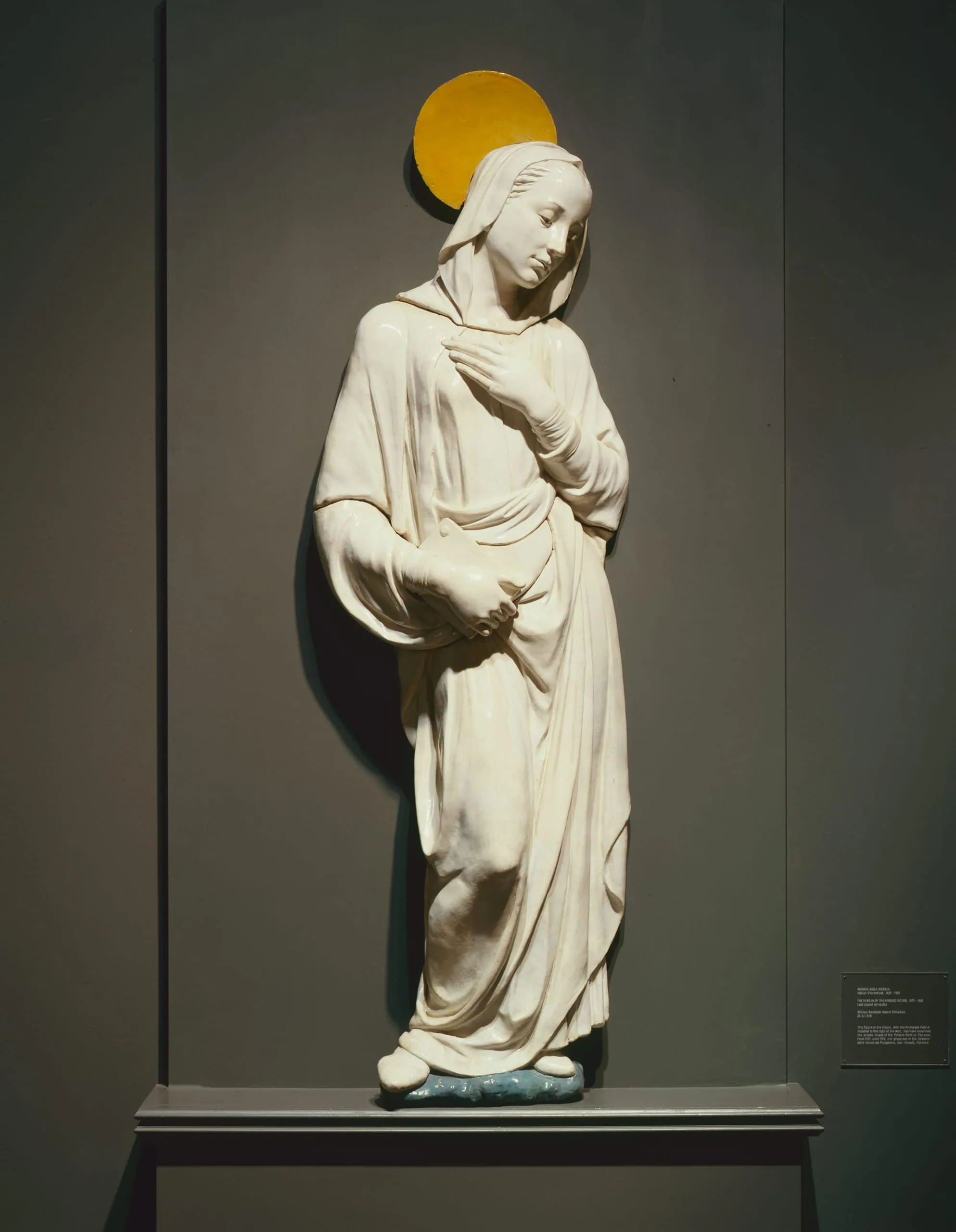
The Virgin of the Annunciationcirca 1465

On view:
Geffen Galleries, Grandeur in Sacred Spaces
Tin-glazed ceramic sculpture of a standing draped female figure with a mustard yellow halo, head bowed, one hand raised to her chest, on a slate blue base
Glazed terracotta standing figure of a draped woman in flowing robes, head bowed and eyes downcast, one hand raised to the chest, with a flat gilt halo and pale blue base.
White marble sculpture of a standing draped female figure, head bowed and slightly inclined, one hand raised to the chest, with a separate gilt circular halo mounted on the wall behind; blue-painted base visible at feet.
Artist or Maker
Andrea della Robbia
Italy, Florence, 1435-1525
Title
The Virgin of the Annunciation
Date Made
circa 1465
Medium
Lead-glazed earthenware
Dimensions
66 × 22 × 9 in. (167.64 × 55.88 × 22.86 cm)
Credit Line
Purchased with funds provided by the William Randolph Hearst Foundation
Accession Number
47.8.1a
Classification
Sculpture
Collecting Area
European Painting and Sculpture
Curatorial Notes
Although glazed terra-cotta had long been used as earthenware, Luca della Robbia popularized its use for sculpture. The medium gained great popularity in fifteenth-century Florence and became a specialty of the della Robbia family studio, which was directed by Andrea after Luca, his uncle, died. Altarpieces made of glazed terra-cotta were more colorful, less expensive, and easier to transport than similar sculptures in marble.
This Annunciation group has the solemnity and grace typical of the last years of the early Renaissance in Florence (1450—60s). Rediscovered in the small Florentine church of San Nicolo, the figures were probably made for a private chapel in the Bardi Palace, where they would have been placed at some distance from each other, perhaps flanking an altarpiece, portal, or window.
The entire group consists of Mary, the archangel Gabriel, and possibly the dove of the Holy Spirit. Mary's downcast eyes and hand across her breast indicate she is accepting the Incarnation with pious humility. She is represented with the refined features and graceful rhythms that late fifteenth-century artists used to suggest spiritual worthiness.
The della Robbia studio primarily produced pictorial reliefs. Figures of the size of those in The Annunciation , independent of any background, are very rare.
Selected Bibliography
  • Raguin, Virginia Chieffo. Stained Glass before 1700 in the Collections of the Los Angeles County Museum of Art and the J.Paul Getty Museum. Vol. 1, Los Angeles County Museum of Art. London: Harvey Miller Publishers for American Corpus Vitrearum, Inc., 2024.