LACMA

ShopMembershipMyLACMATickets
LACMA
Los Angeles County Museum of Art
5905 Wilshire Blvd.
Los Angeles, CA 90036
info@lacma.org
(323) 857-6000
Sign up to receive emails
Subscribe
© Museum Associates 2026
  • About LACMA
  • Jobs
  • Building LACMA
  • Host An Event
  • Unframed
  • Press
  • FAQs
  • Log in to MyLACMA
  • Privacy Policy
© Museum Associates 2026
Collections

Carl May
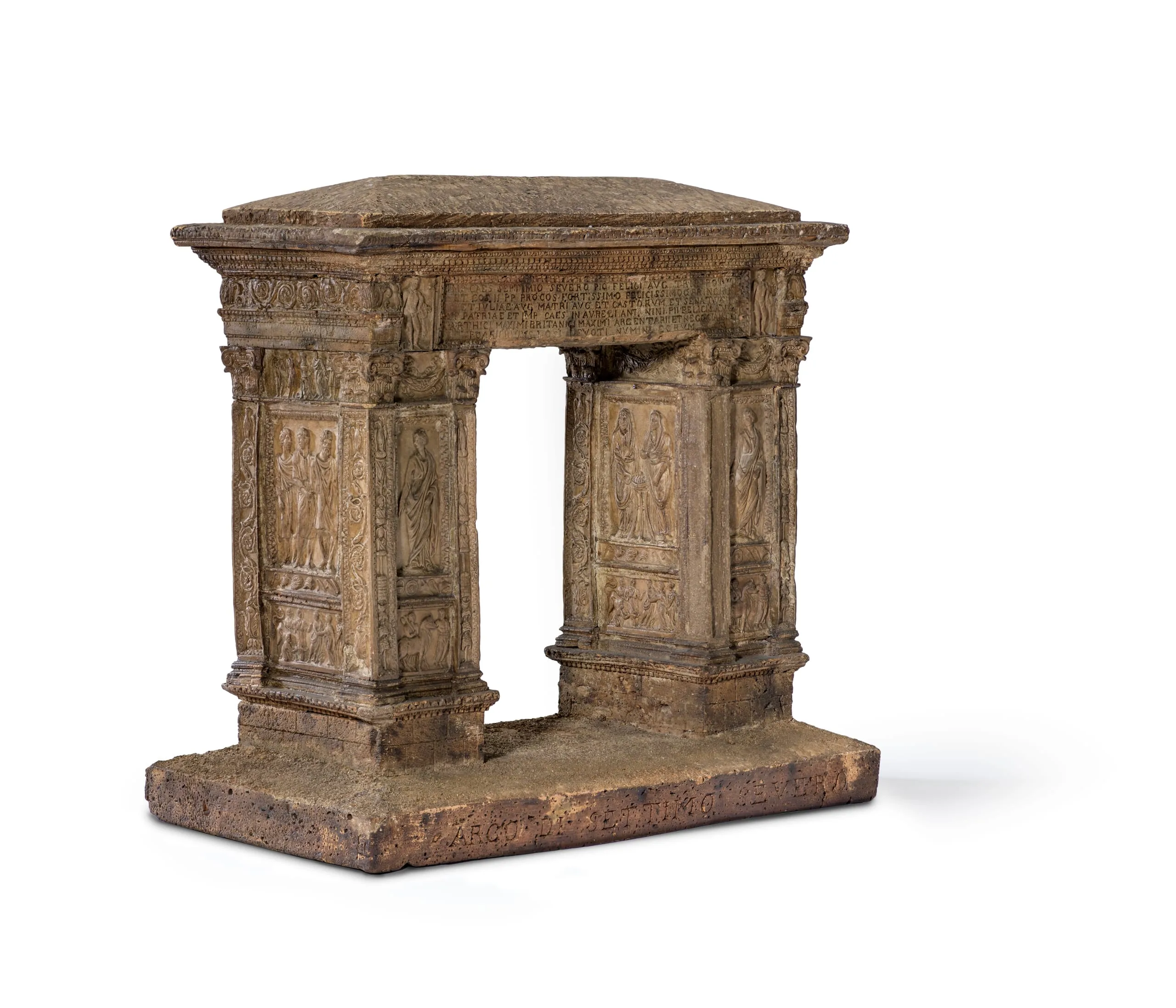
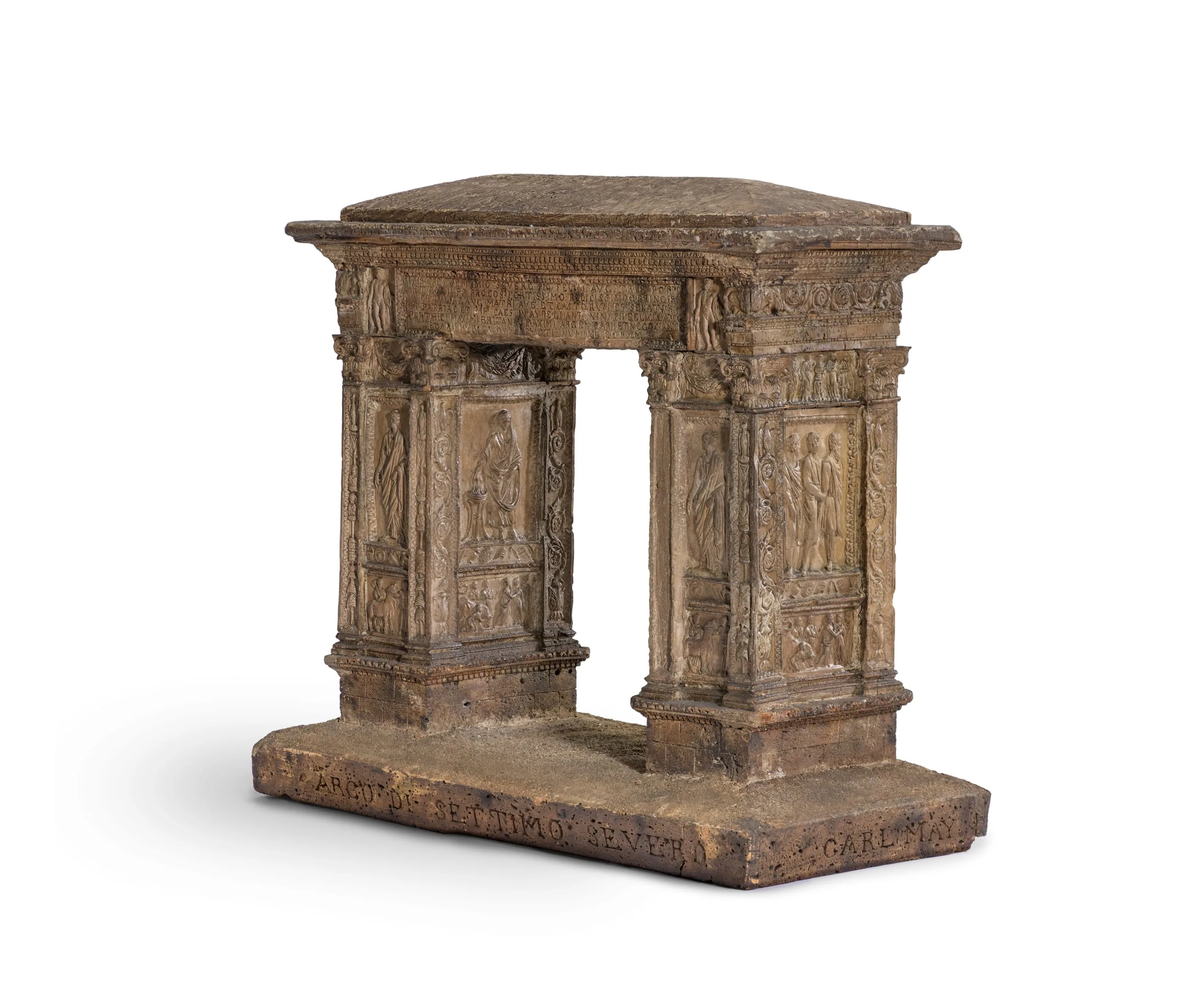
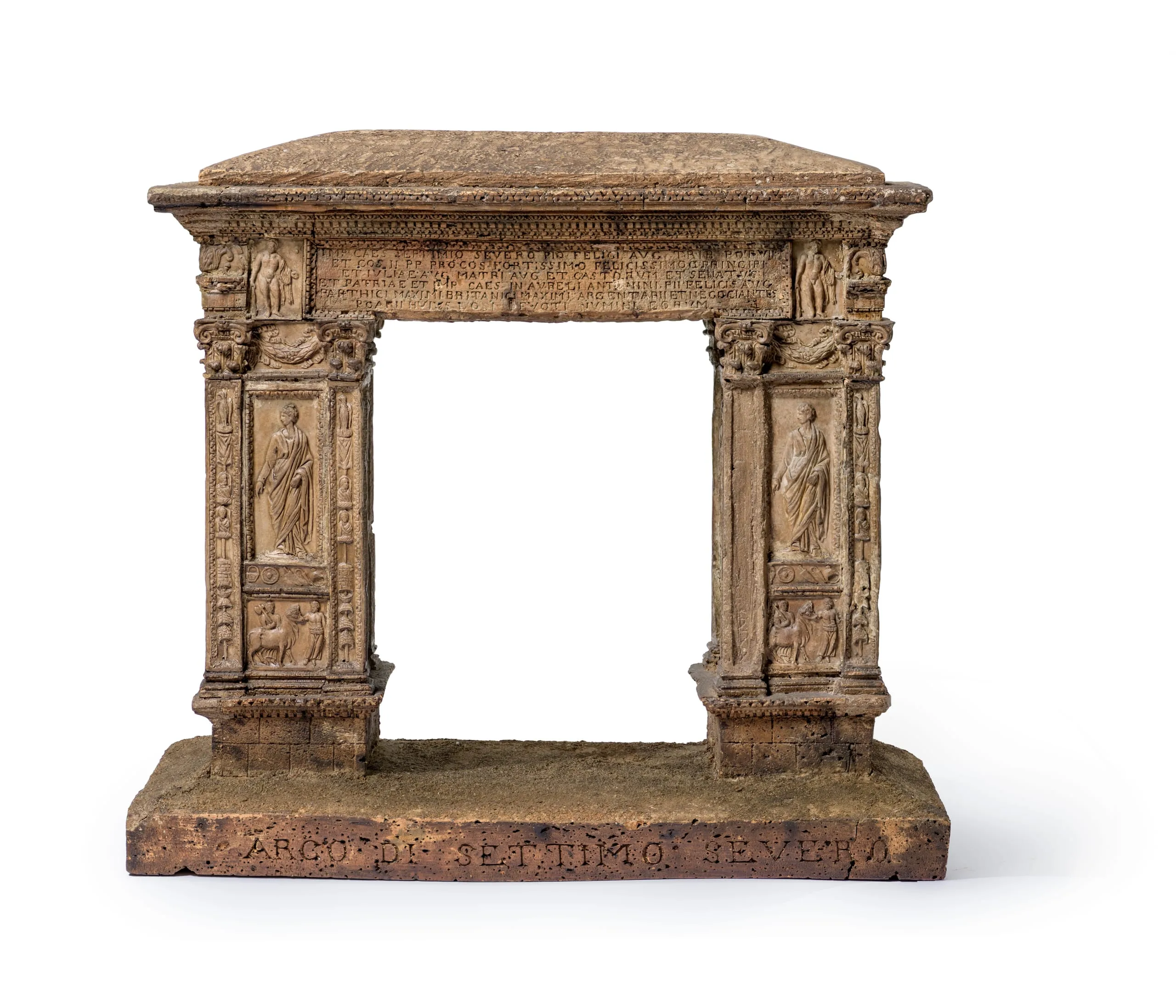
Model of the Arch of the Argentariicirca 1792-1795

On view:
Geffen Galleries, floor 2
Small-scale plaster or terracotta architectural model of a Roman triumphal arch with relief-carved piers, Latin inscription on the attic, and a base inscribed 'ARCO DI SETTIMIO SEVERO'
Small-scale stone or terracotta architectural model of a triumphal arch with flat roof, four piers, and a central opening; surfaces densely covered with relief carvings of standing figures, Corinthian pilasters, foliate friezes, and a Latin inscription band along the entablature; warm gray-brown tone throughout.
Small-scale architectural model of a Roman triumphal arch in tan-gray plaster or terracotta, with relief panels depicting standing figures on each pier, flanking columns with capitals, a flat entablature, and a Latin inscription along the rectangular base.

Carl May, Model of the Arch of the Argentarii, circa 1792-1795, Los Angeles County Museum of Art, Purchased with funds provided by Cary Grant by exchange, photo © Museum Associates/LACMA

Artist or Maker
Carl May
Germany, 1747-1822
Title
Model of the Arch of the Argentarii
Place Made
Germany
Date Made
circa 1792-1795
Medium
Cork, tinted stucco, and sand on modern wood base
Dimensions
Base (On base): 18 × 19 1/2 × 10 1/2 in. (45.72 × 49.53 × 26.67 cm) Overall: 18 x 19 1/2 x 10 1/2 in. (45.72 x 49.53 x 26.67 cm) Case (Glass presentation case): 17 1/8 x 18 x 9 1/8 in. (43.4975 x 45.72 x 23.1775 cm)
Credit Line
Purchased with funds provided by Cary Grant by exchange
Accession Number
M.2004.33
Classification
Architecture
Collecting Area
European Painting and Sculpture
Curatorial Notes

This small-scale rendering of the Arch of the Argentarii (money-changers), which was erected in Rome in 204 CE, features depictions of sacrificial scenes and victories of Roman emperors past. The highly detailed model is made of cork and finished in stucco, a technique that was used to create lightweight architectural monuments for collectors during the eighteenth century. Carl May was one of a handful of sculptors who specialized in the technique. The portability of these objects allowed for their circulation and study, and they signaled the owner’s interest in and connection to the classical world. This particular example is likely one of the only cork models of its kind in the U.S., as most are in European collections.

One of the ways that the various meanings of the classical past made their way into social consciousness in the late eighteenth and early nineteenth centuries was through objects such as this. In essence, collecting the classical city of Rome through referential artworks and luxury goods established a bridge between the collector and the spirit of the city, which, among many other qualities, represented knowledge, legitimacy, constancy, certitude, and strength. Savvy artists from Rome and beyond, such as Carl May, recognized the power granted to these representations, and deliberately created works for private collectors with these meanings in mind.

2025
Selected Bibliography
  • Mills, Rosie Chambers. Eternal Medium: Seeing the World in Stone. Los Angeles: Los Angeles County Museum of Art, 2023.