- Artist or Maker
- N. Sivappa
India, active circa 1870-1900 - Title
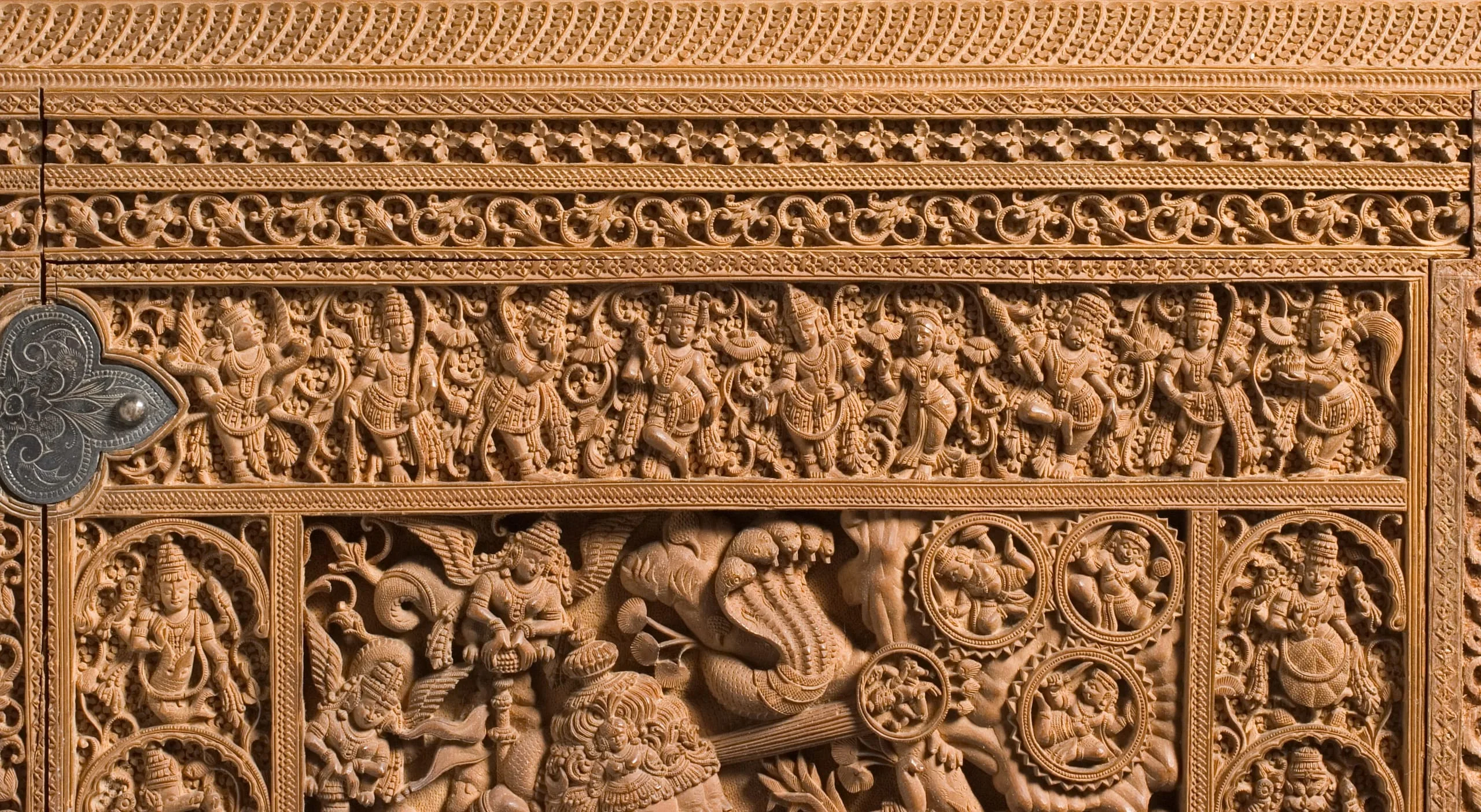
- Album Cover with Shiva as the Destroyer of the Three Cities of the Demons (Tripurantaka)
- Date Made
- circa 1875-1900
- Medium
- Sandalwood; silver fittings
- Dimensions
- 14 7/8 x 13 x 4 in. (37.78 x 33.02 x 10.16 cm)
- Accession Number
- M.2003.213
- Curatorial Notes
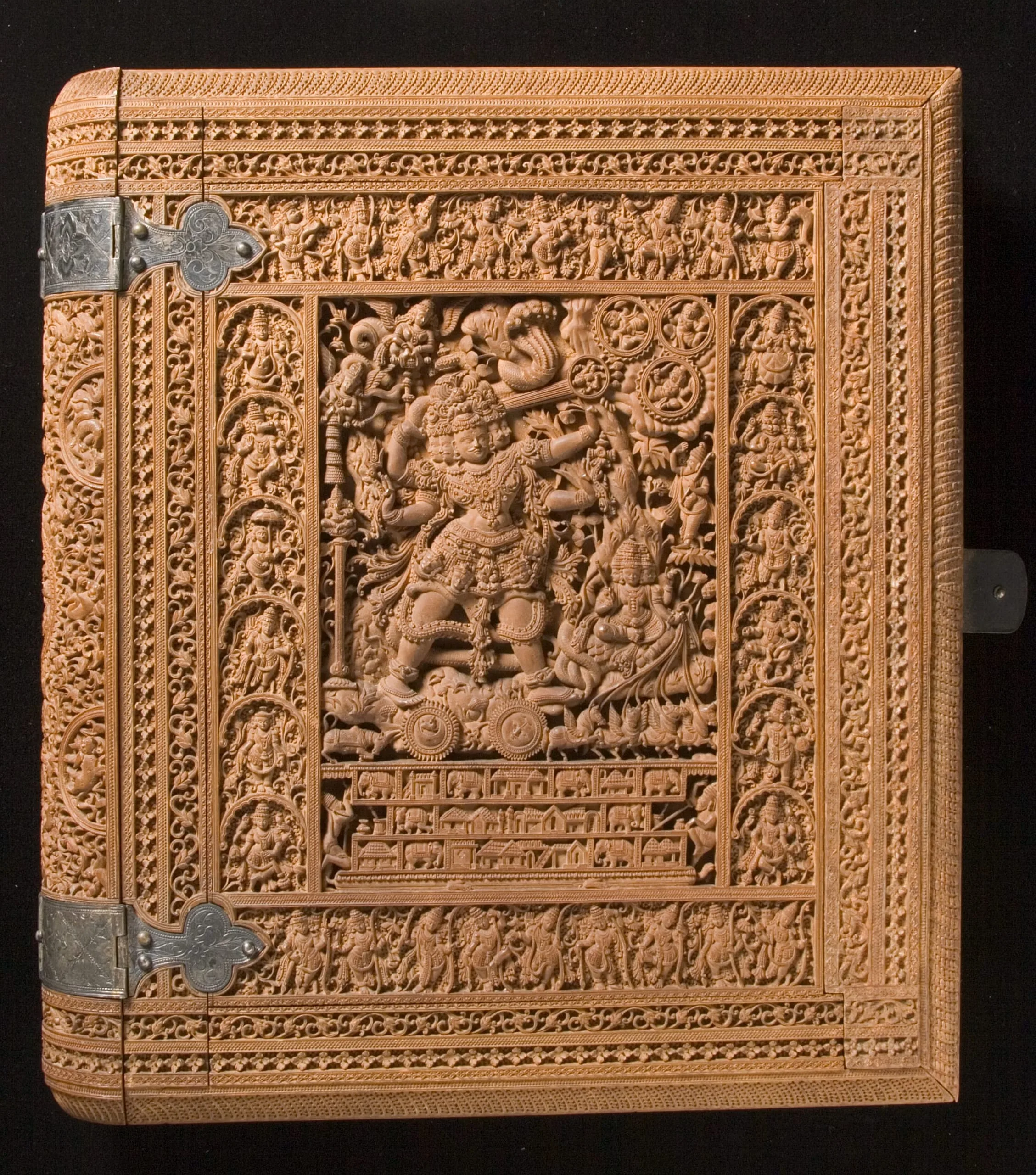
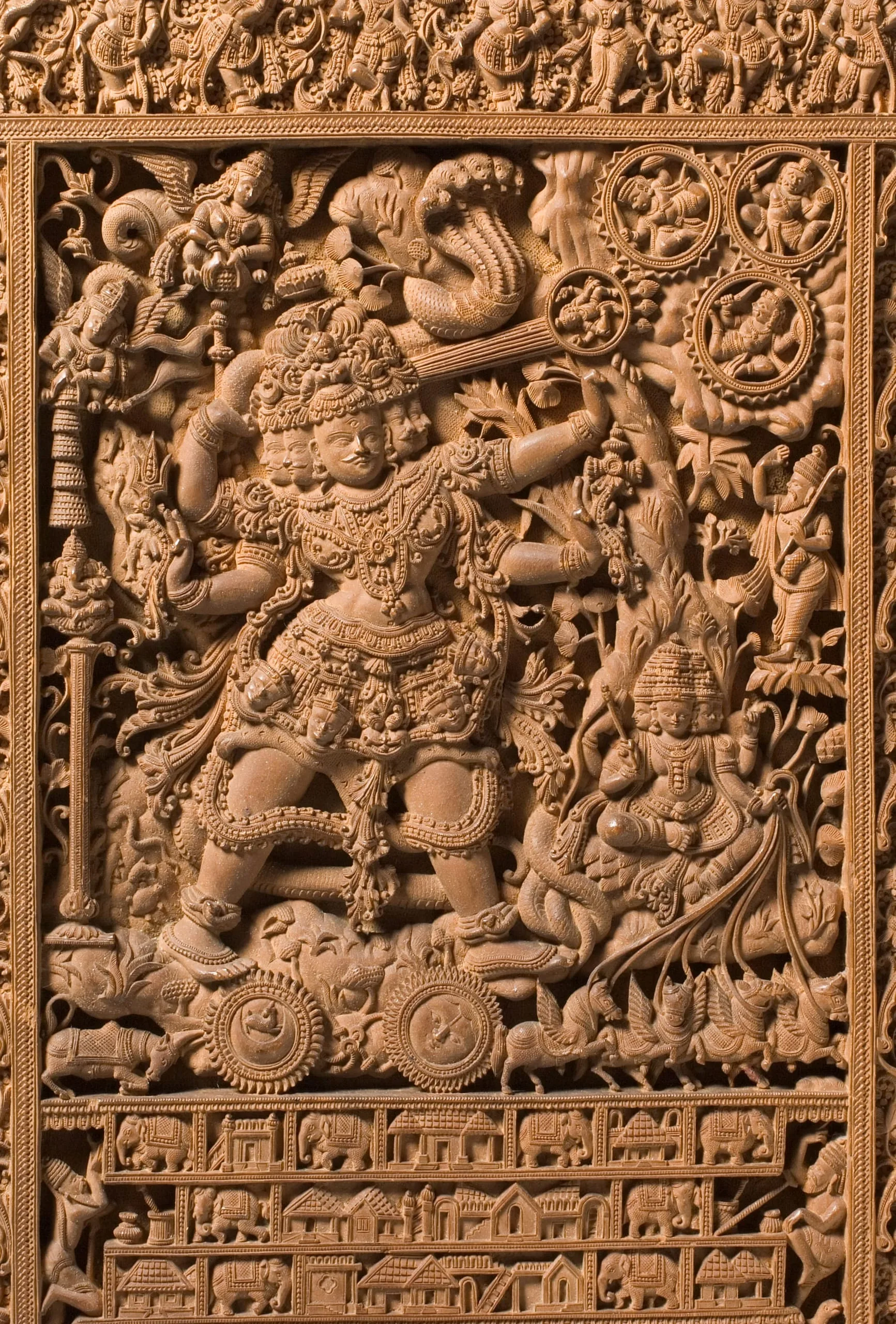
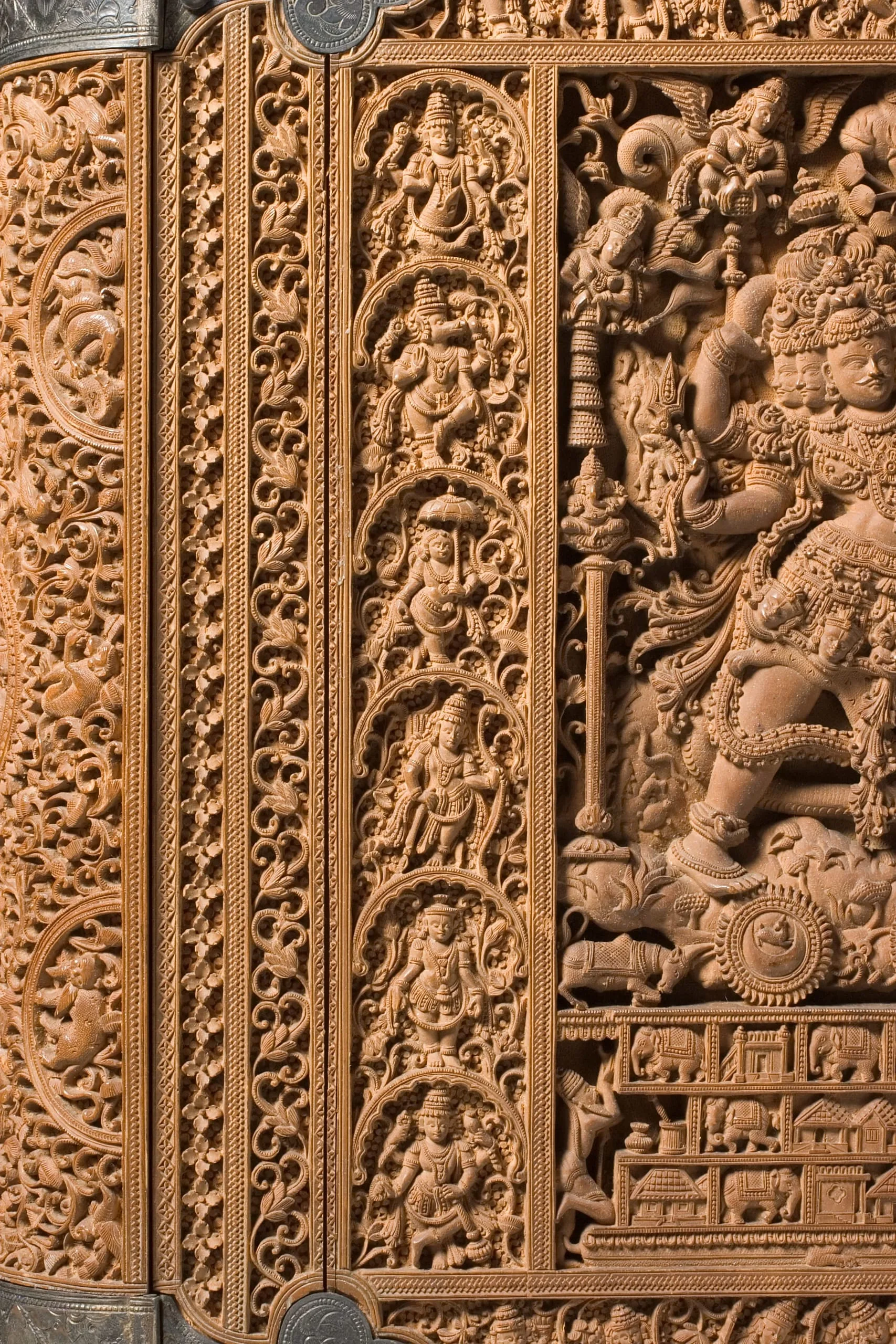
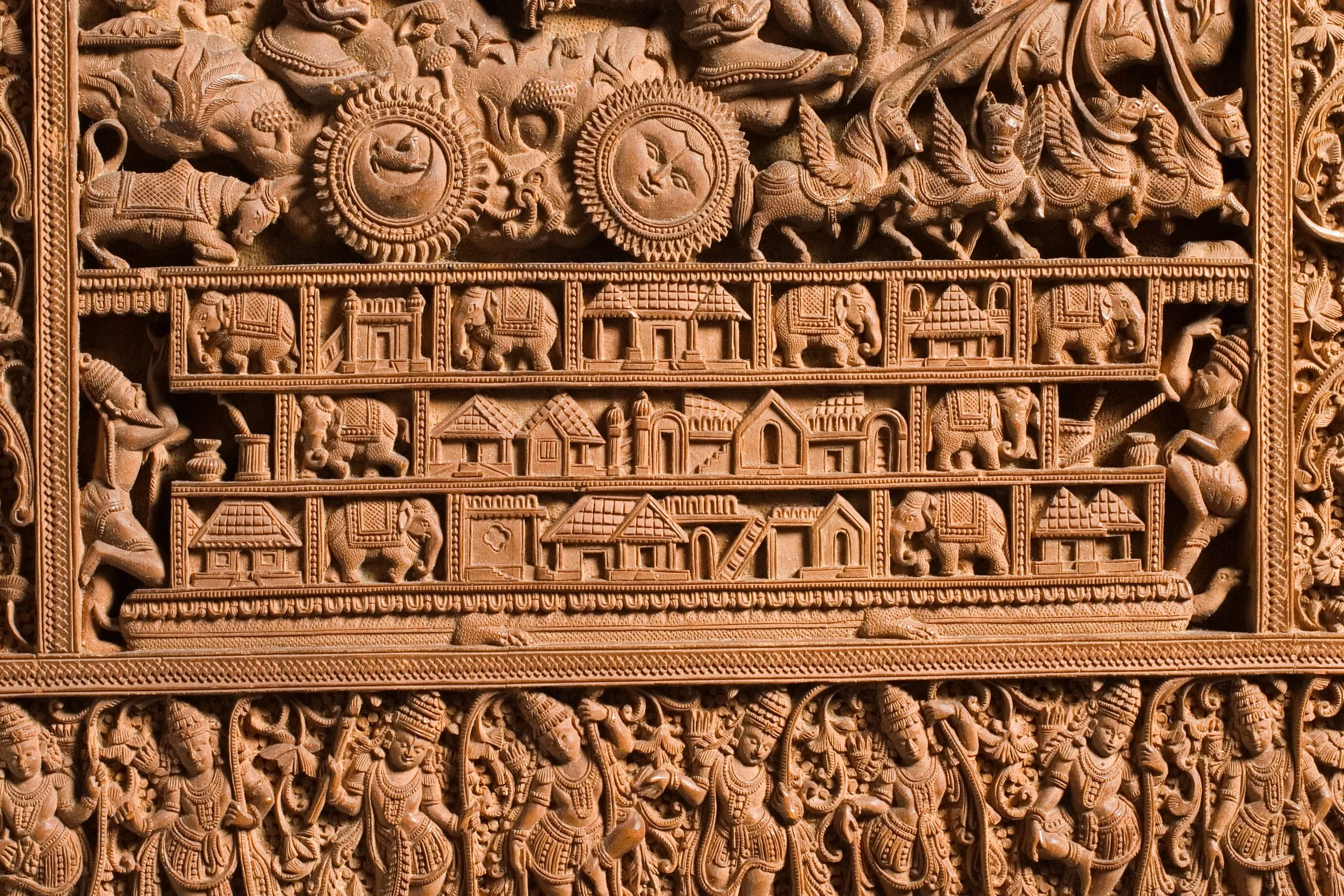
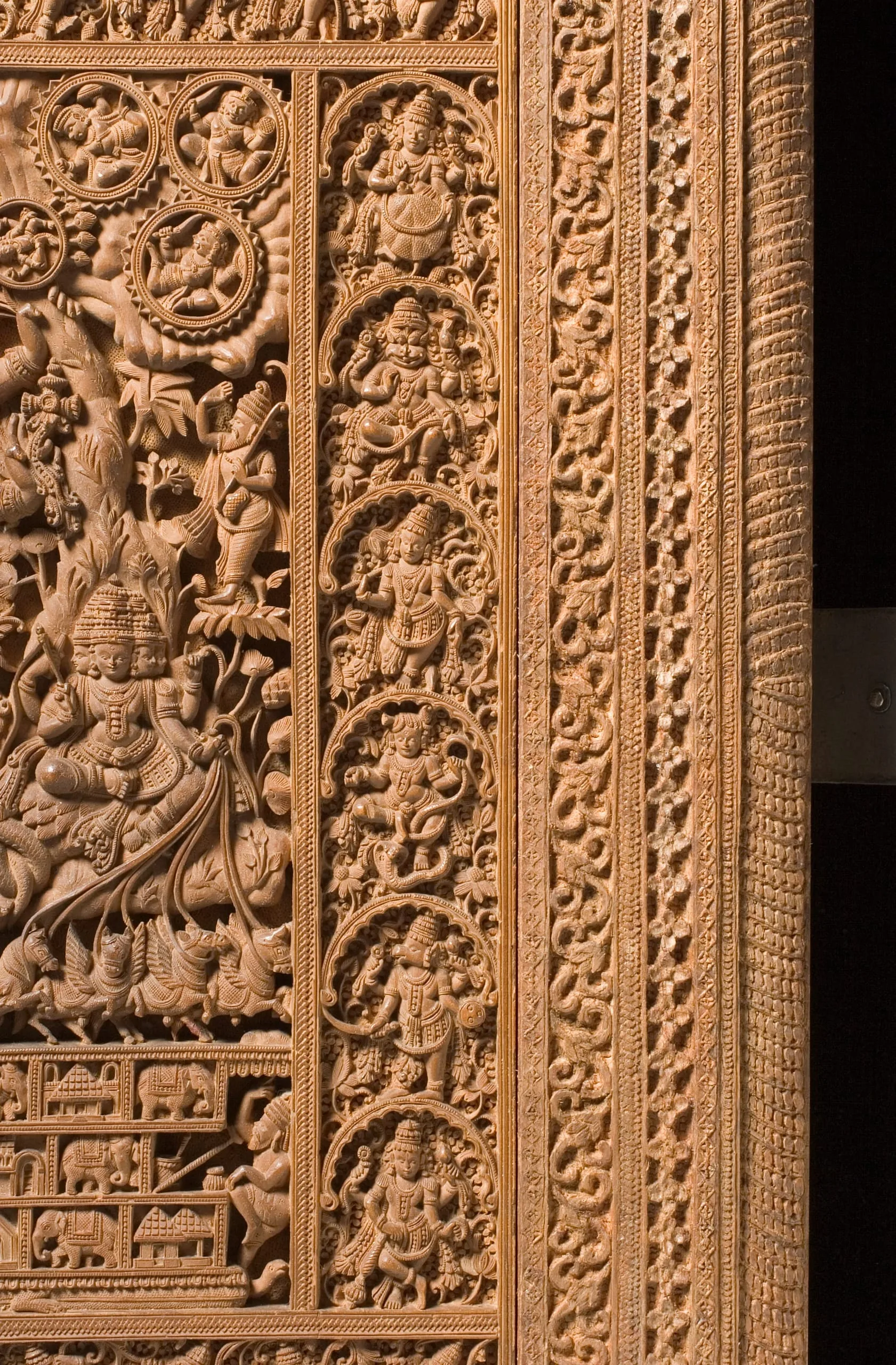
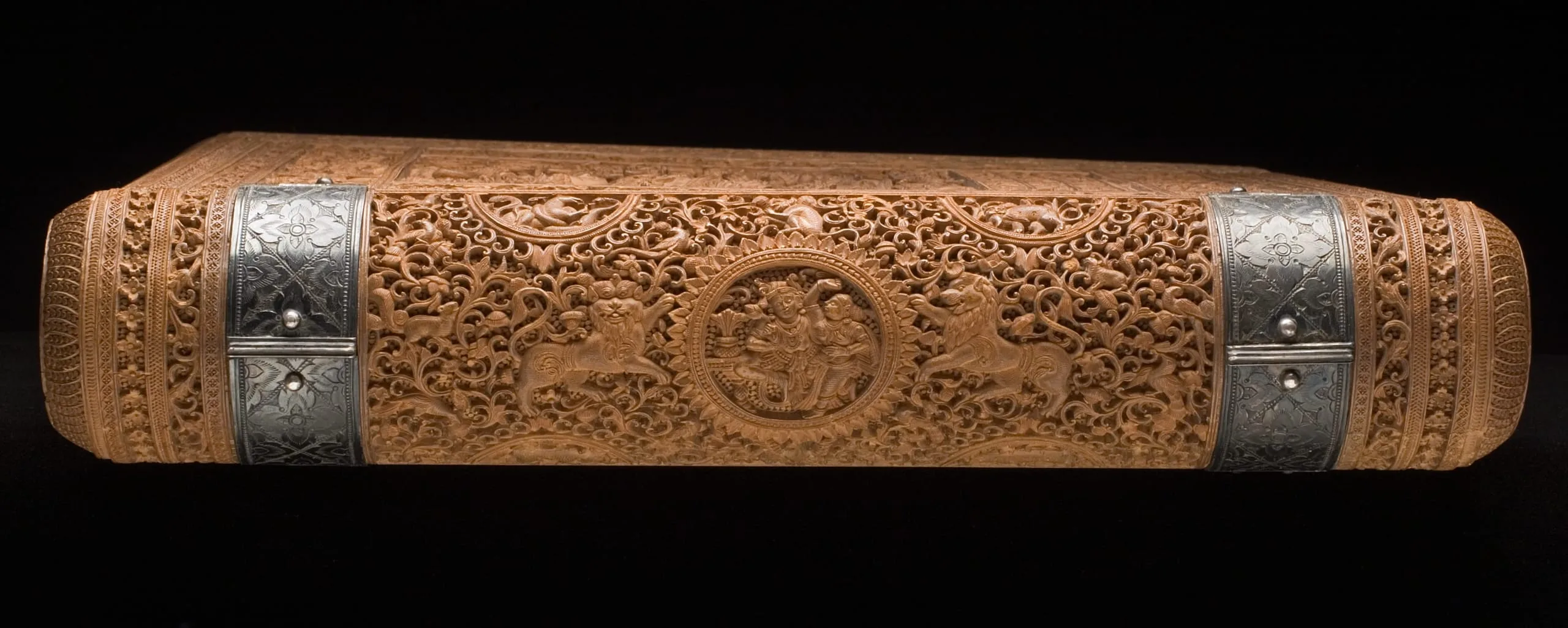
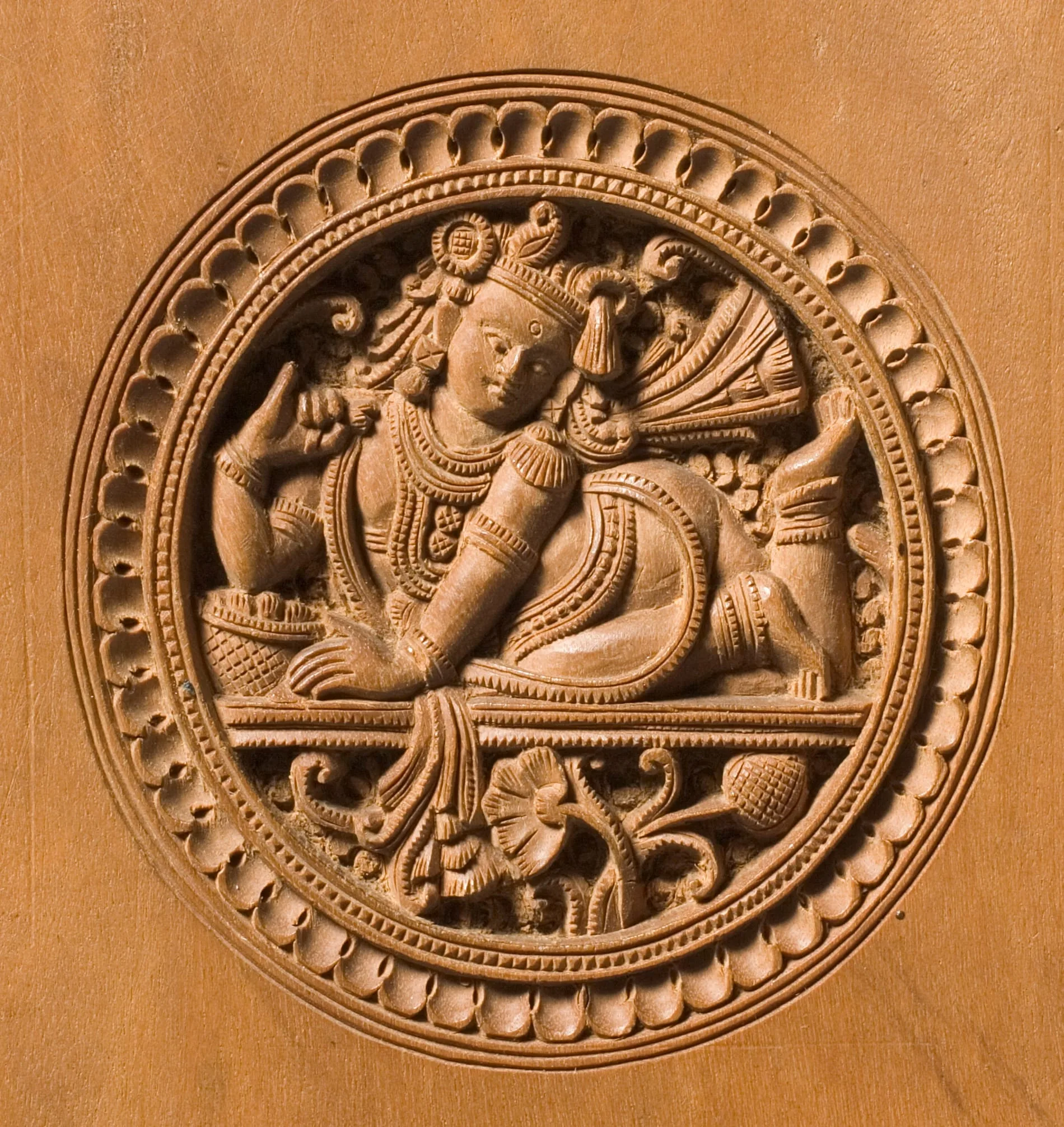
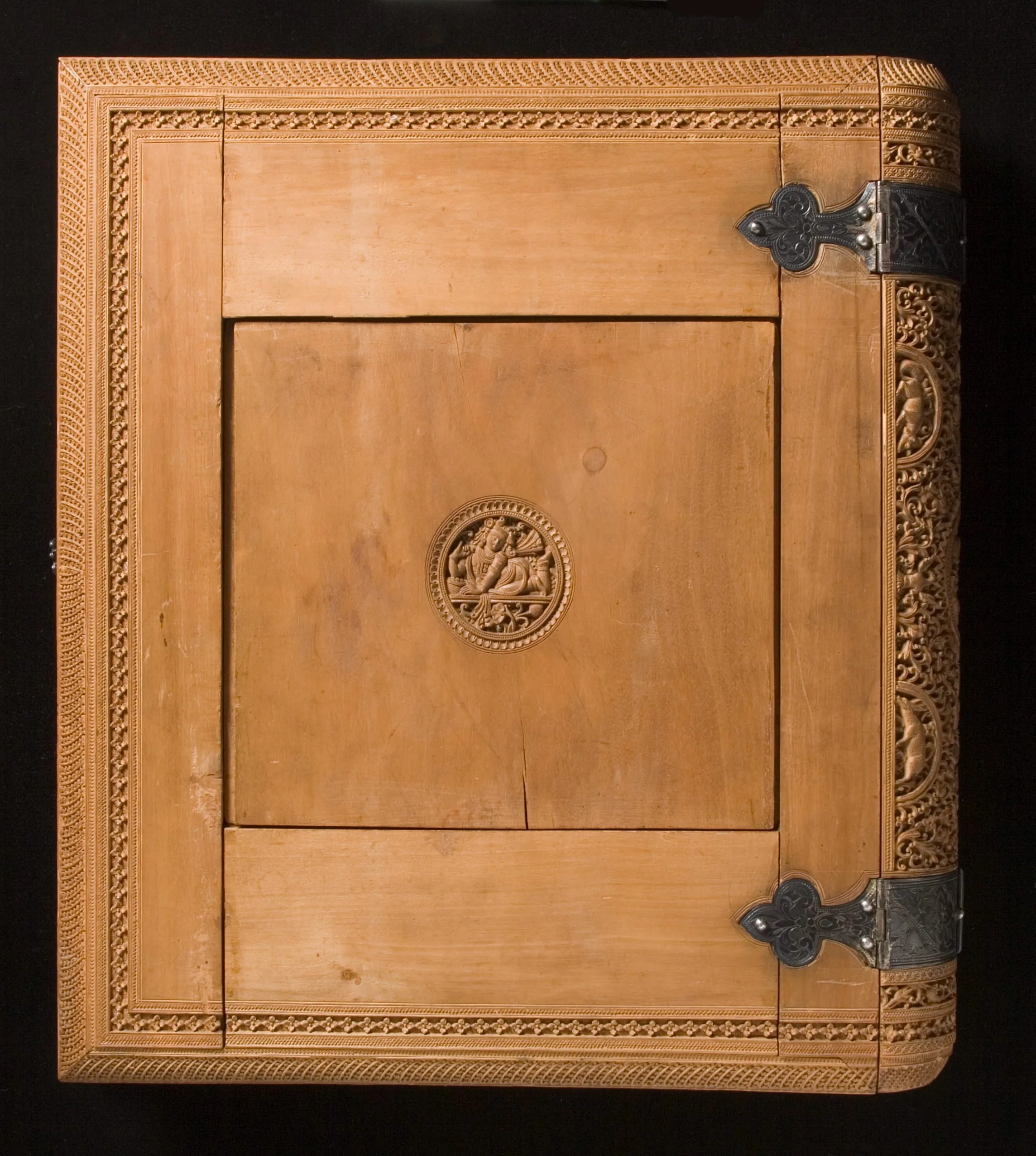
Complexly carved of fragrant sandalwood, the central panel of this album cover depicts the Hindu god Shiva in his major iconic form of Tripurantaka, the Destroyer of the Three Cities of the Demons. Shiva shoots an arrow at three demonic warriors in circular fortifications in the upper right corner. His bow is a tree and his bowstring is a serpent. Shiva stands in a celestial chariot with the sun and moon as its wheels. The chariot is drawn by four horses representing the four Vedas, the four sacred books of proto-Hindu mythology. His charioteer is Brahma, the four-headed priestly Hindu god of creation. Shiva’s bull mount is in the lower left corner. Beneath the main scene are three architectural registers representing the golden city of the demons. It was located under the ocean, which is symbolized by the tiny head, tail, and feet of a tortoise at its base. This principal tableau is flanked by the twelve avatars of Vishnu and, across the top, are heroes of the ancient Indian epics, the Ramayana and Mahabharata. The cover’s spine is adorned with Vishnu and his wife Lakshmi heralded by rampant lions. Baby Krishna is in a central medallion on the otherwise undecorated back cover.
This intricately carved album cover epitomizes the sophisticated sandalwood carving produced by the renowned families of artists working in the Mysore region of present-day Karnataka. According to the inscription on the inside cover, it was made by N. Sivappa in Sagar. Numerous hereditary families of carvers and painters reputed to have originally hailed from Goa had settled in Sagar and other nearby locales. By 1800 they were producing a wide range of sandalwood furniture and personal accoutrements for both domestic and foreign clientele. Mysore sandalwood carving was regarded by contemporaneous art historians and critics as the finest in all of India.