- Title
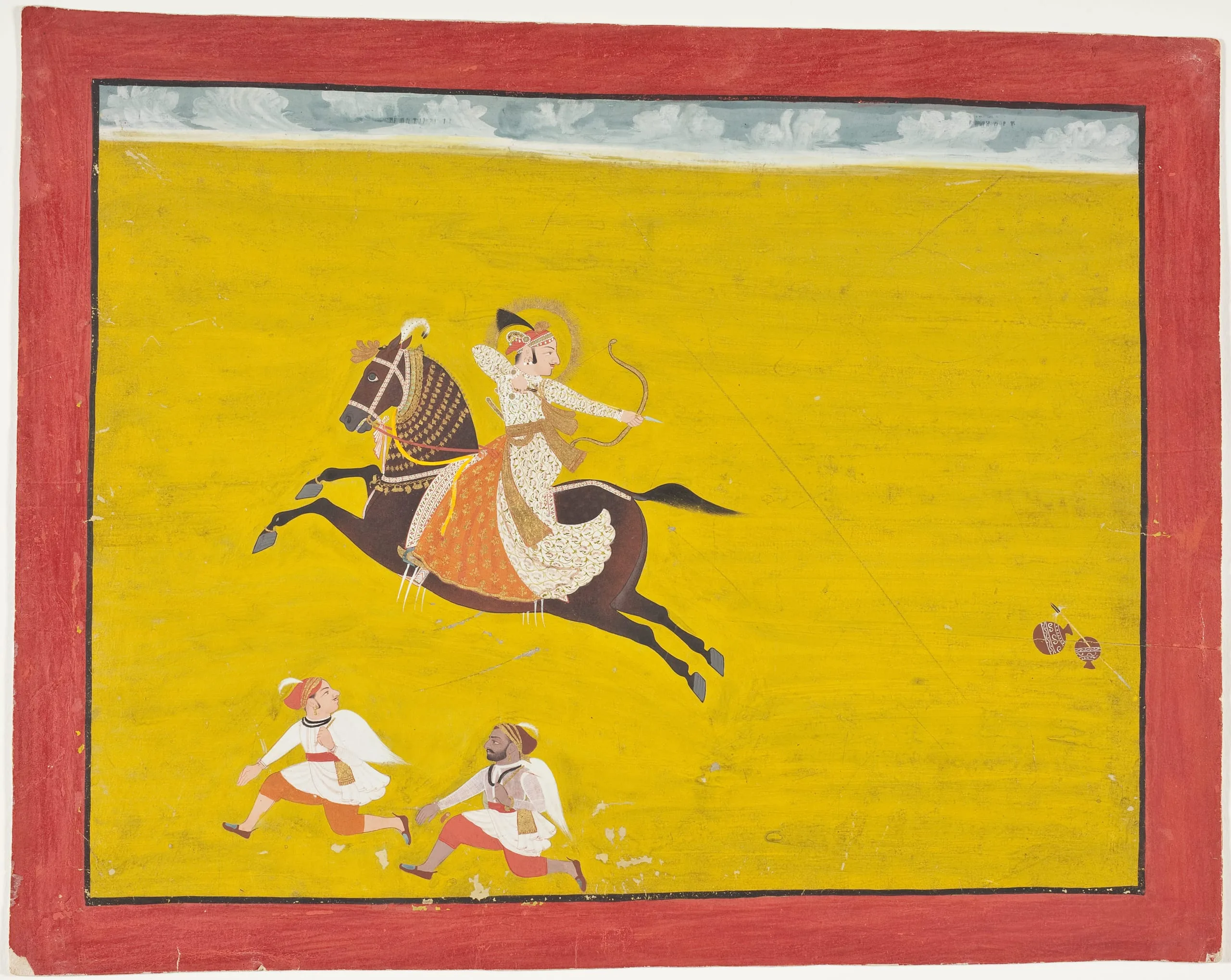
- Maharana Ari Singh II of Udaipur (r. 1761-1773) Displaying His Prowess in Archery
- Date Made
- circa 1761-1762
- Medium
- Opaque watercolor and gold on paper
- Dimensions
- Image: 14 x 18 in. (35.56 x 45.72 cm); Sheet: 16 3/4 x 20 3/4 in. (42.55 x 52.71 cm)
- Accession Number
- M.2003.214.1
- Curatorial Notes
This painting and its companion M.2003.214.2 are products of the royal atelier in Udaipur, Rajasthan. They belong to a rich tradition of royal Rajput portraiture that began at the Udaipur court during the reigns of Jagat Singh I (r. 1628-52) and his son, Raj Singh I (r. 1653-80). The paintings depict a regal display of martial and equestrian skills featuring Maharana Ari Singh II (r. 1761-73). Probably painted in the first seven years of his reign while he was a prolific patron of painting and the arts, the works epitomize the ‘action portrait’ compositions of the period. Such images of the ruler’s expertise in riding, battle, and/or hunting were commissioned to demonstrate his bravery and right of leadership.
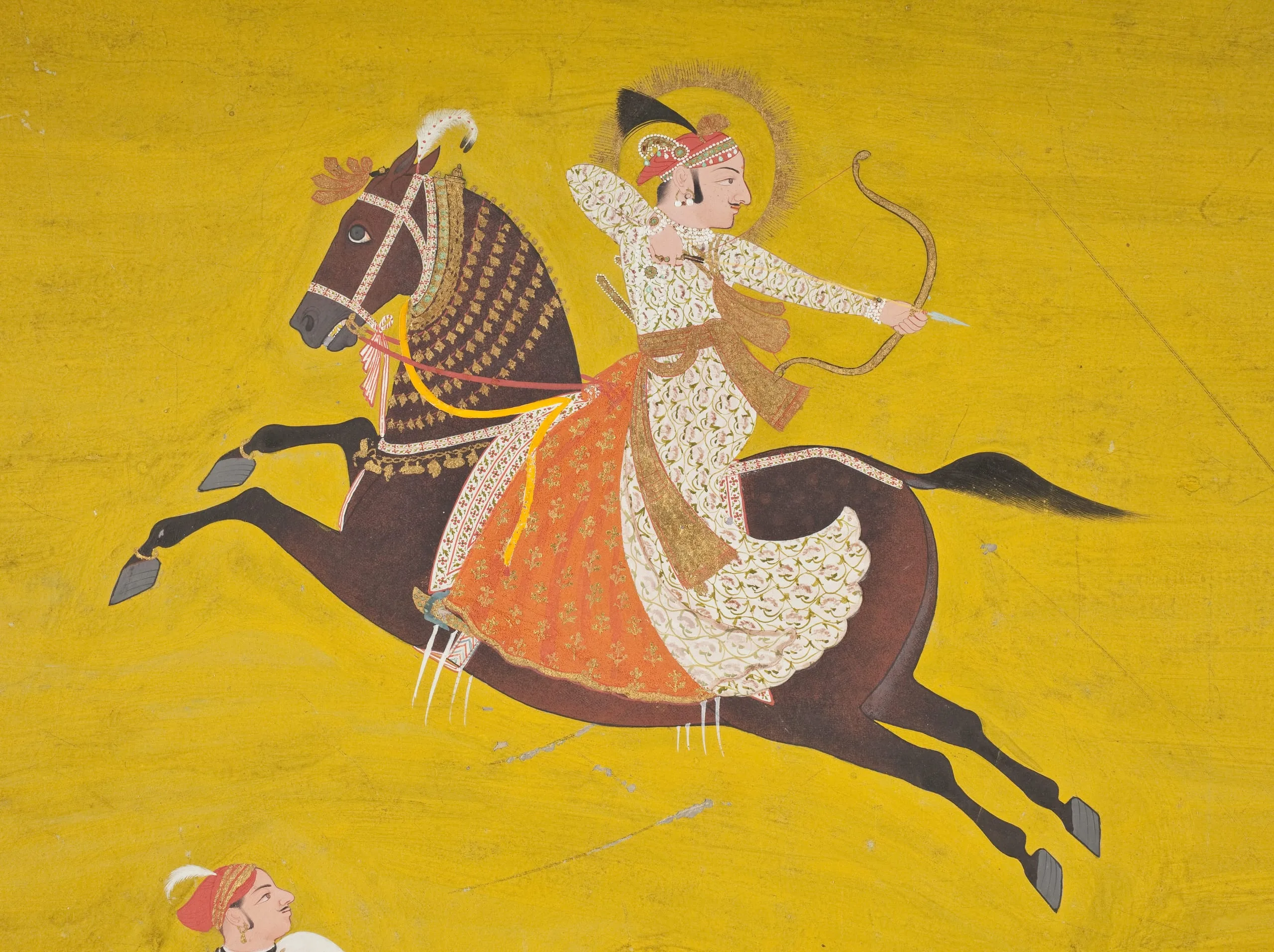
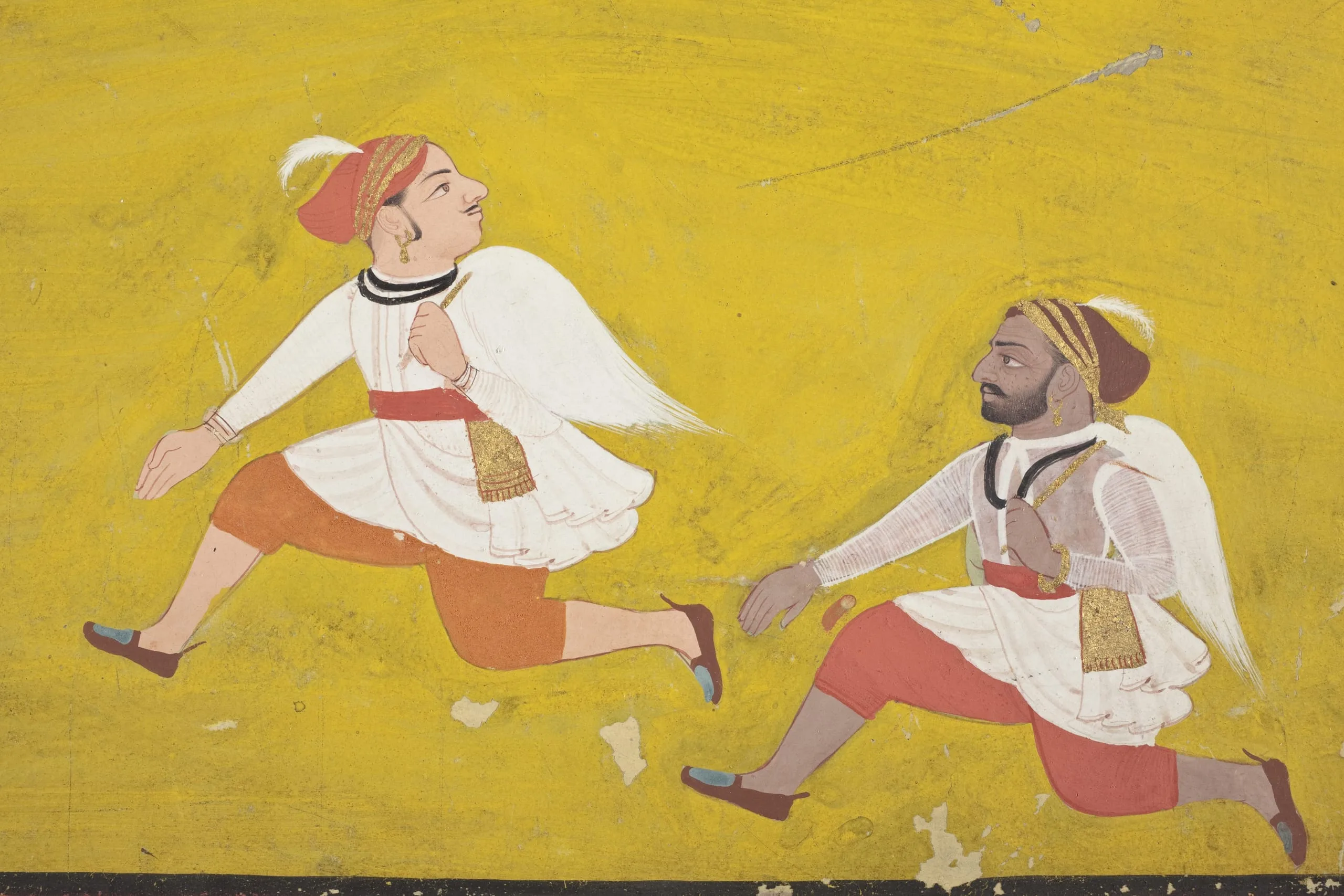
In this painting, Ari Singh II is shown displaying his prowess in archery and horse-riding by making a “Parthian shot,” in which archers on horseback at full gallop turn around in their saddle to shoot at a pursuing enemy. Made famous by the Parthians (Iran, 3rd century CBE–3rd century CE), this cavalry tactic was also utilized by succeeding Central Asian and Muslim armed forces. Here, while riding a charging steed, the nimbate Ari Singh II shoots an arrow through a painted earthenware vessel stacked on top of another one. Two retainers carrying flywhisks scurry to keep pace with the king. The identifying text in Hindi on the painting’s verso has yet to be translated.