LACMA

ShopMembershipMyLACMATickets
LACMA
Los Angeles County Museum of Art
5905 Wilshire Blvd.
Los Angeles, CA 90036
info@lacma.org
(323) 857-6000
Sign up to receive emails
Subscribe
© Museum Associates 2025

Museum Hours

Monday

11 am–6 pm

Tuesday

11 am–6 pm

Wednesday

Closed

Thursday

11 am–6 pm

Friday

11 am–8 pm

Saturday

10 am–7 pm

Sunday

10 am–7 pm


  • About LACMA
  • Jobs
  • Building LACMA
  • Host An Event
  • Unframed
  • Press
  • FAQs
  • Log in to MyLACMA
  • Privacy Policy
© Museum Associates 2025
Collections

Unknown
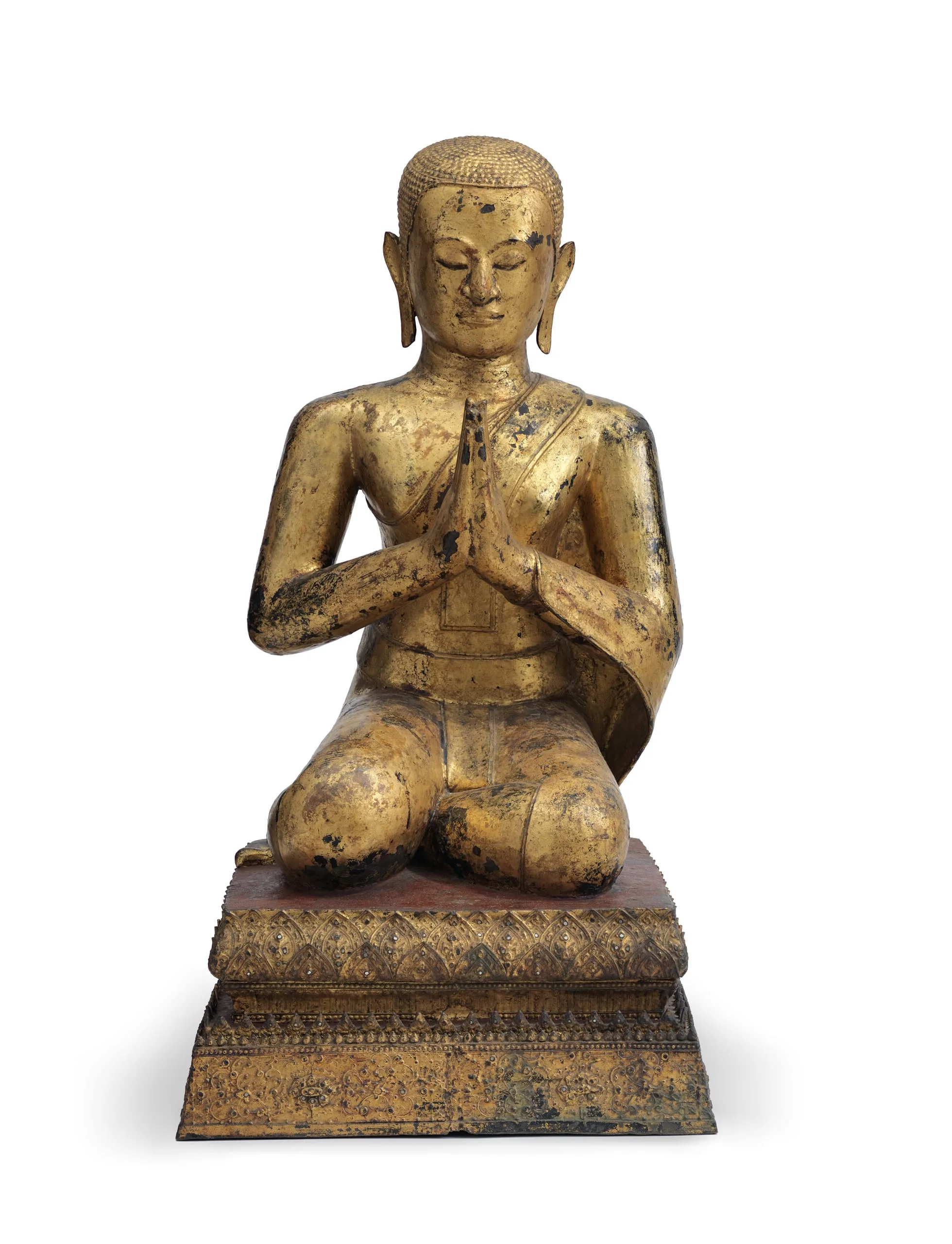
Monk Devotee19th century

On view:
Resnick Pavilion, floor 1
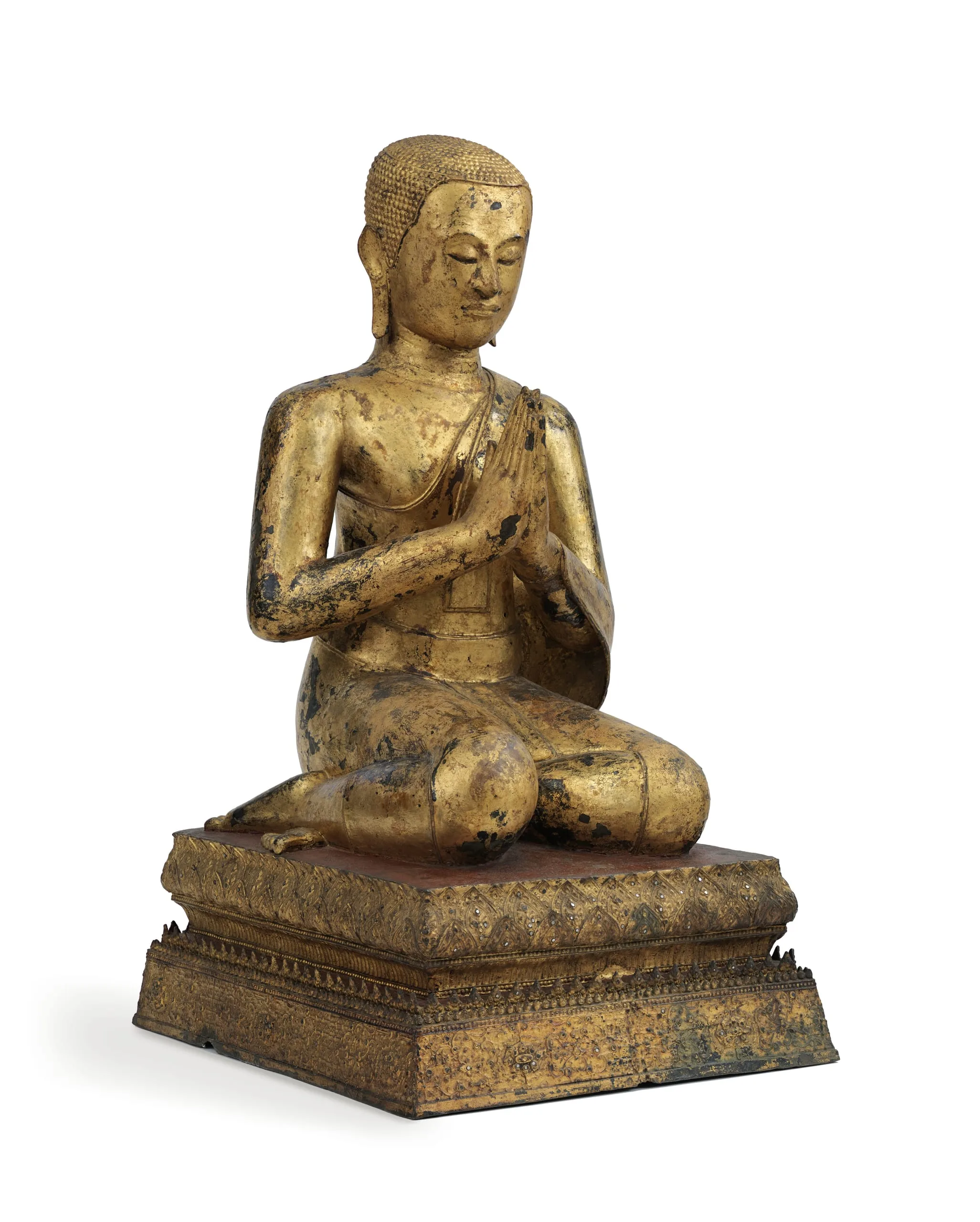
Gilded seated figure in a prayer gesture, cross-legged on a tiered decorative base, with worn gold-leaf surface revealing dark underlayer
Gilt lacquer sculpture of a kneeling figure in anjali mudra, hands pressed together at chest height, wearing a draped monastic robe, seated on a tiered decorative base with embossed patterns; gilding shows areas of wear revealing darker underlayer.
Artist or Maker
Unknown
Title
Monk Devotee
Place Made
Thailand, Bangkok Period
Date Made
19th century
Medium
Gilt copper alloy
Dimensions
29 5/8 x 15 1/4 x 18 5/8 in. (75.25 x 38.74 x 47.31 cm)
Credit Line
Gift from Doris Duke's Southeast Asian Art Collection
Accession Number
M.2003.231.2
Classification
Sculpture
Collecting Area
South and Southeast Asian Art
Curatorial Notes

This gilt copper alloy representation of a kneeling monk, and its mate M.2003.231.1, were created to be placed on each side of the main image of Buddha Shakyamuni in a Buddhist temple. This compositional triad was popular in Southeast Asia (see M.86.342.2 and M.90.57). As determined by the direction of the monk’s lower legs, this sculpture was intended to be placed to the proper right of the Buddha. He is likely intended to represent Shariputra, one of his two principal disciple monks. The second monk, Maudgalyayana, would have been on the proper left side.

The monk has shorn hair and empty elongated earlobes, both symbolic of his renunciation of the material world when he joined the monastery. His robe is worn over his left shoulder only. He holds his hands together in the gesture of adoration (anjali mudra). He sits on a lotus base atop a multitiered pedestal adorned with floral motifs.

See also M.82.132.2, M.83.254, and M.89.101.1.
Selected Bibliography
  • Little, Stephen, Tushara Bindu Gude, Karina Romero Blanco, Silvia Seligson, Marco Antonio Karam. Las Huellas de Buda. Ciudad de México : Instituto Nacional de Antropología e Historia, 2018.
  • Little, Stephen, and Tushara Bindu Gude. Realms of the Dharma: Buddhist Art across Asia. Los Angeles: Los Angeles County Museum of Art, 2025.