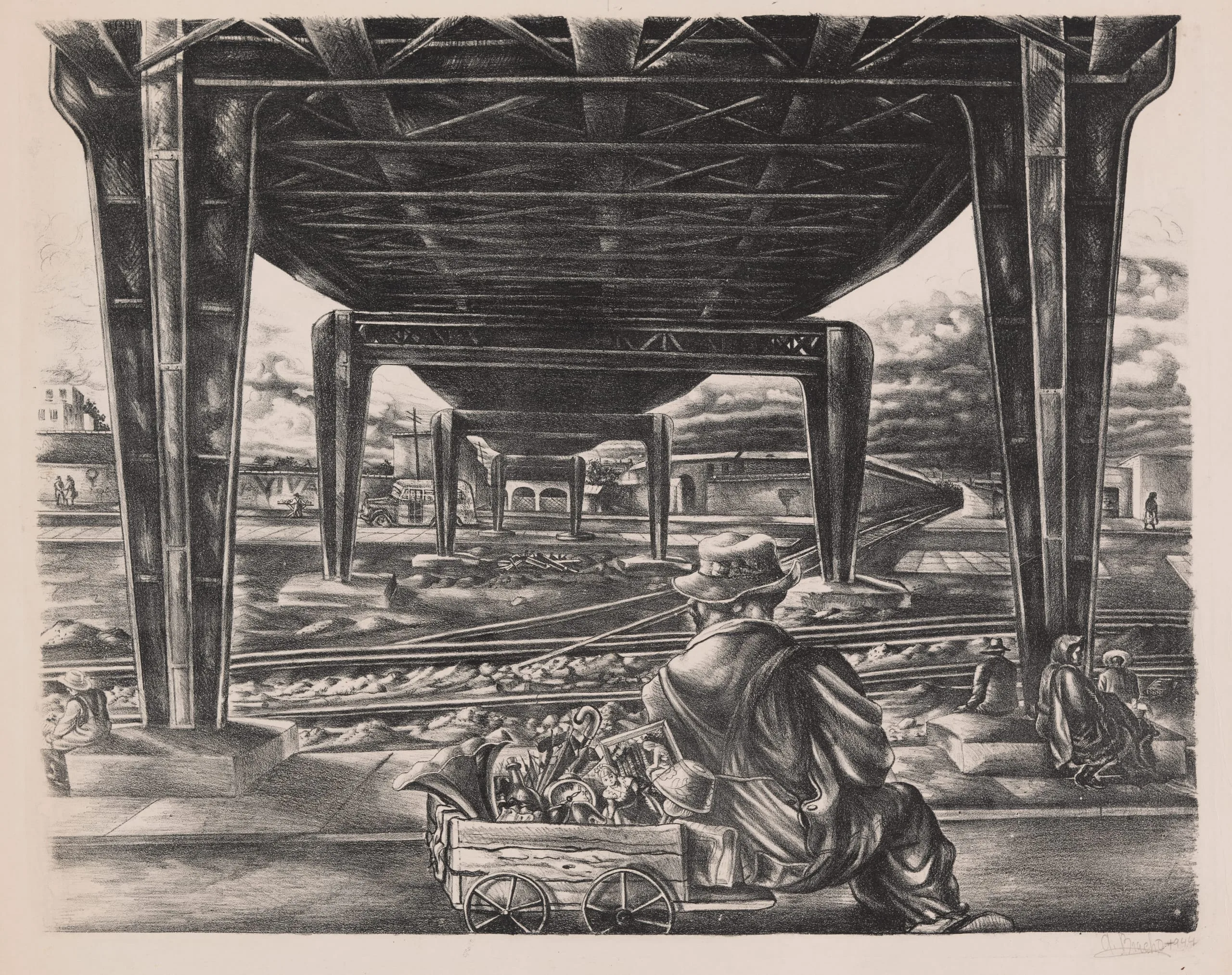
In late 1940, construction finished on the Nonoalco overpass, Mexico’s first elevated highway. Located in the northern outskirts of Mexico City, the bridge quickly became a symbol of urban growth and national development, signaling modern industrial progress as well as its ill effects. The overpass offered cars entry into the city over the railyards and factories located in the Nonoalco neighborhood, which was home to communities of displaced rural migrants, workers, and low-income residents.
Four years after the completion of the overpass, Ángel Bracho depicted its underside, focusing on the lives lived beneath the bridge. In the foreground of this print a peddler sits with his back to the viewer, resting on the wagon that contains his latest wares, previously collected and discarded by the city’s wealthier citizens. As the bridge looms overhead, Bracho questions the progress it represents, with economic and industrial development being prioritized over social reform and well-being.
For more information see the catalogue entry by Rachel Kaplan in Pressing Politics: Revolutionary Graphics from Mexico and Germany, 2022, pp. 78–79.