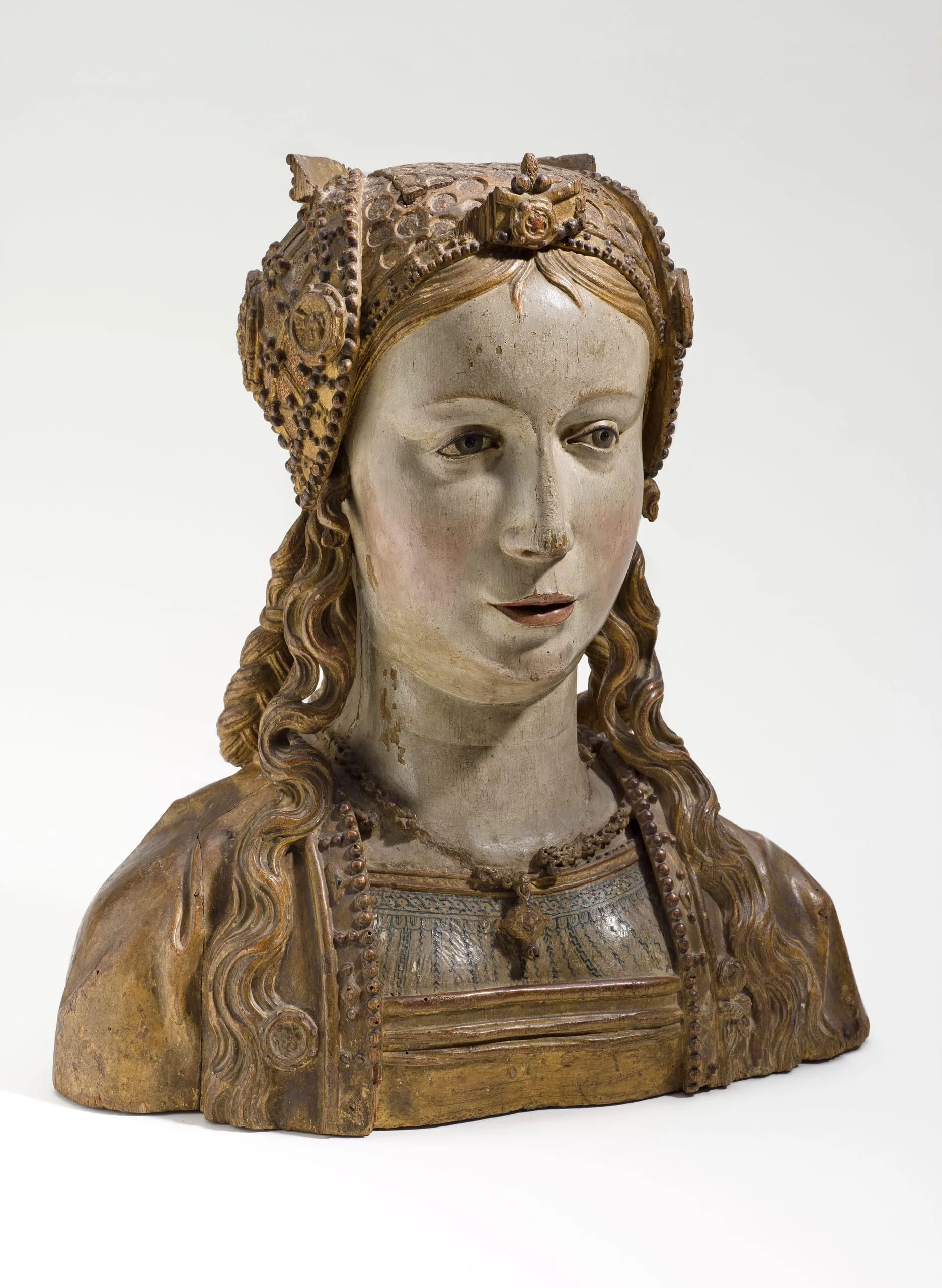
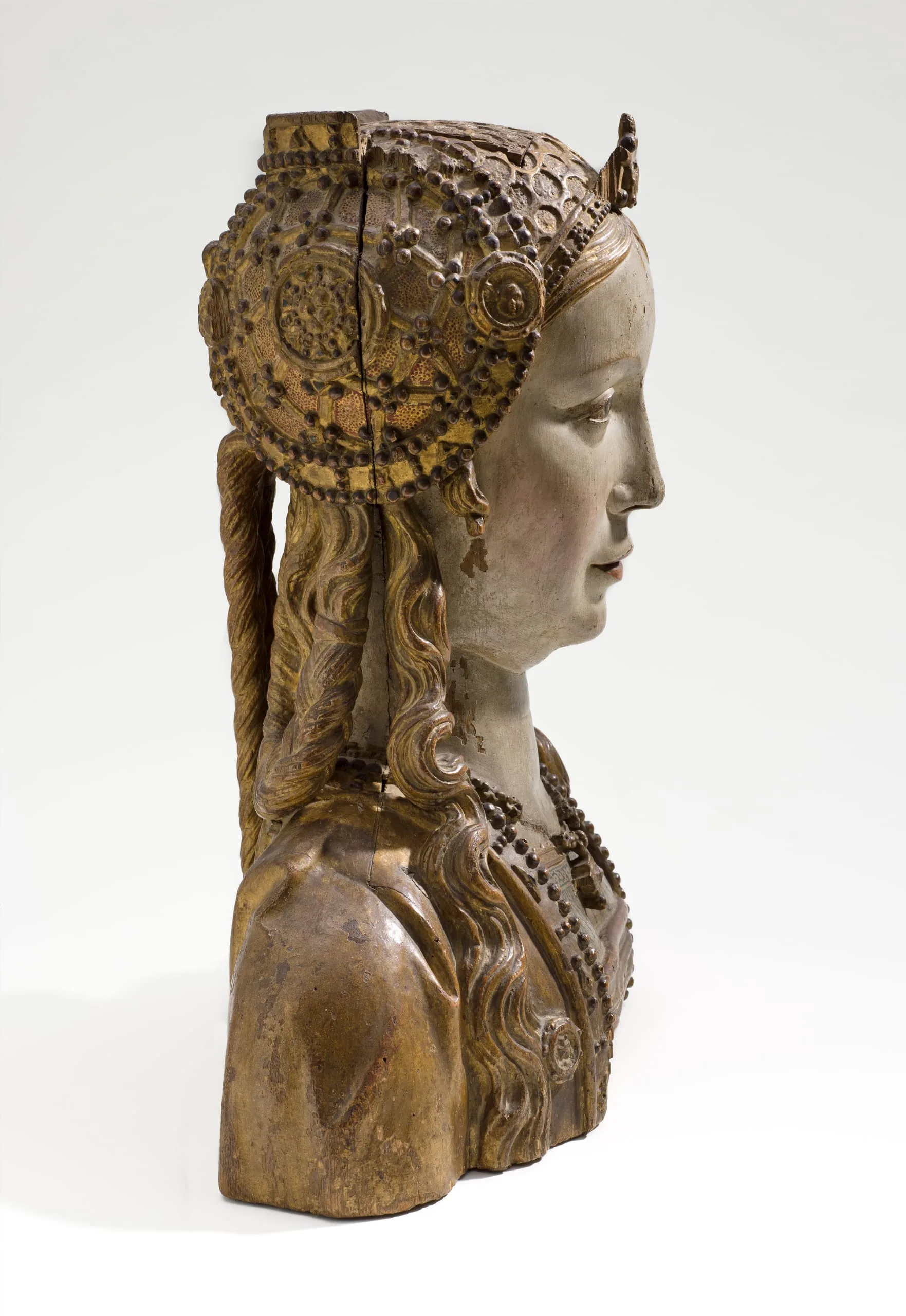
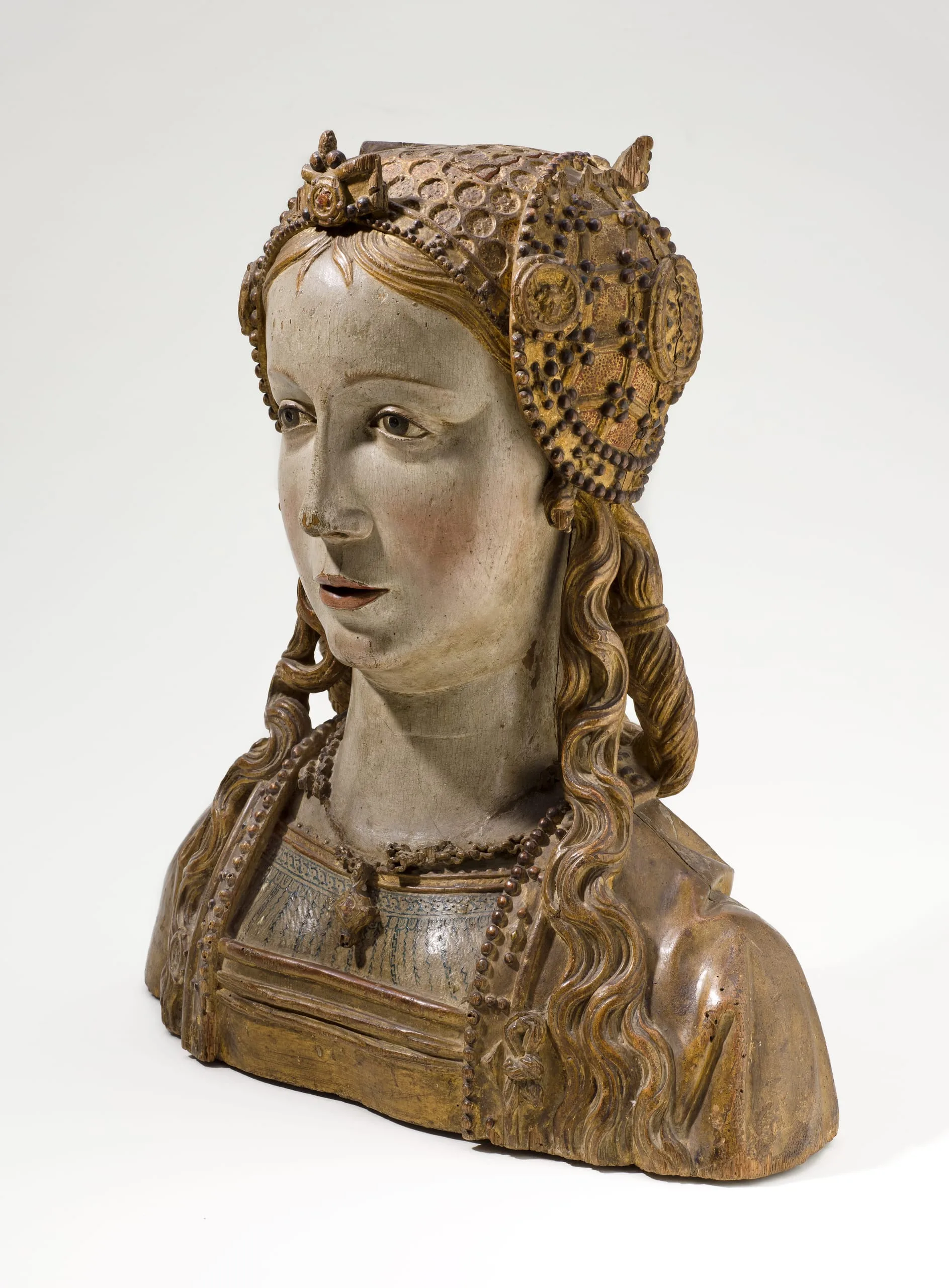
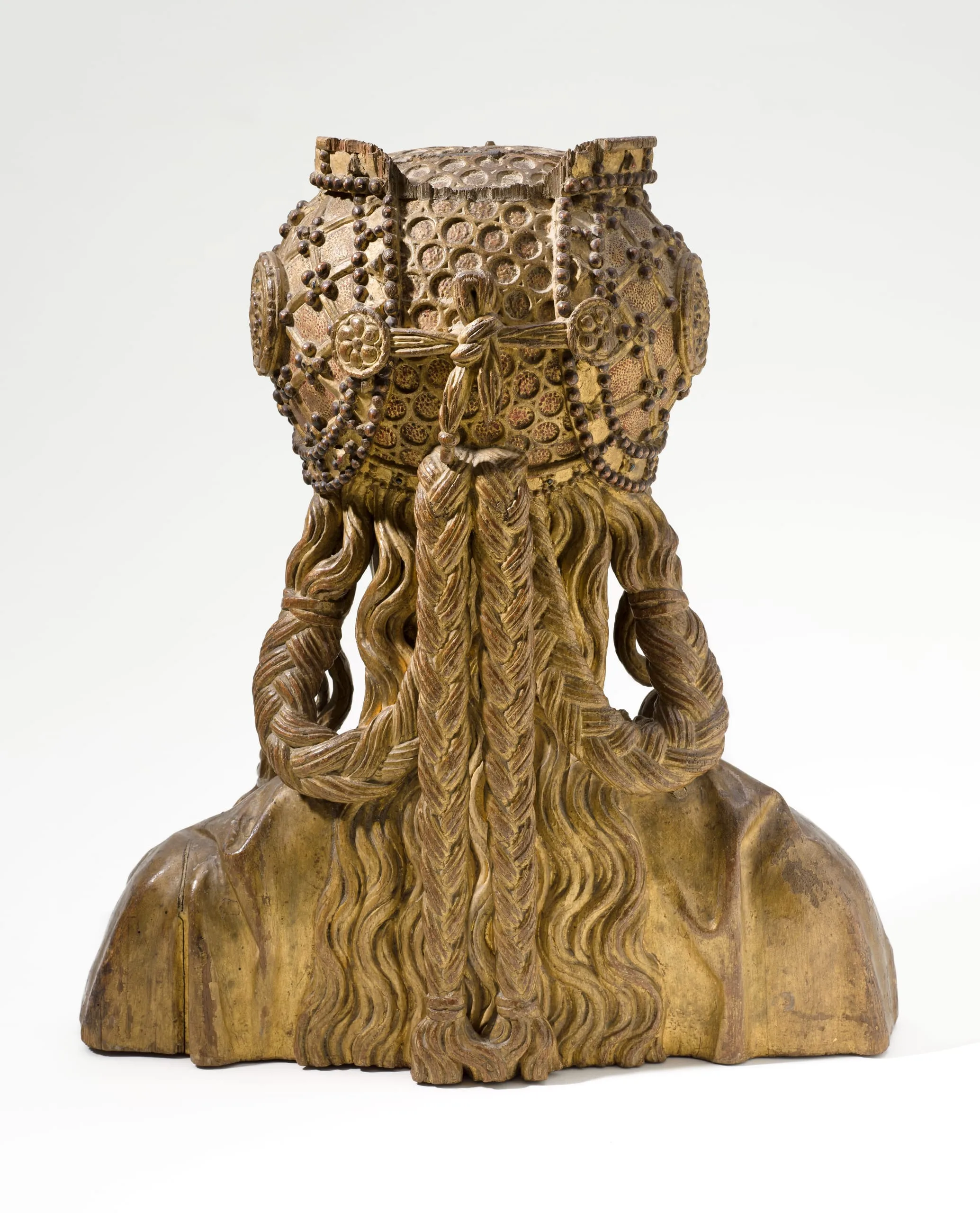
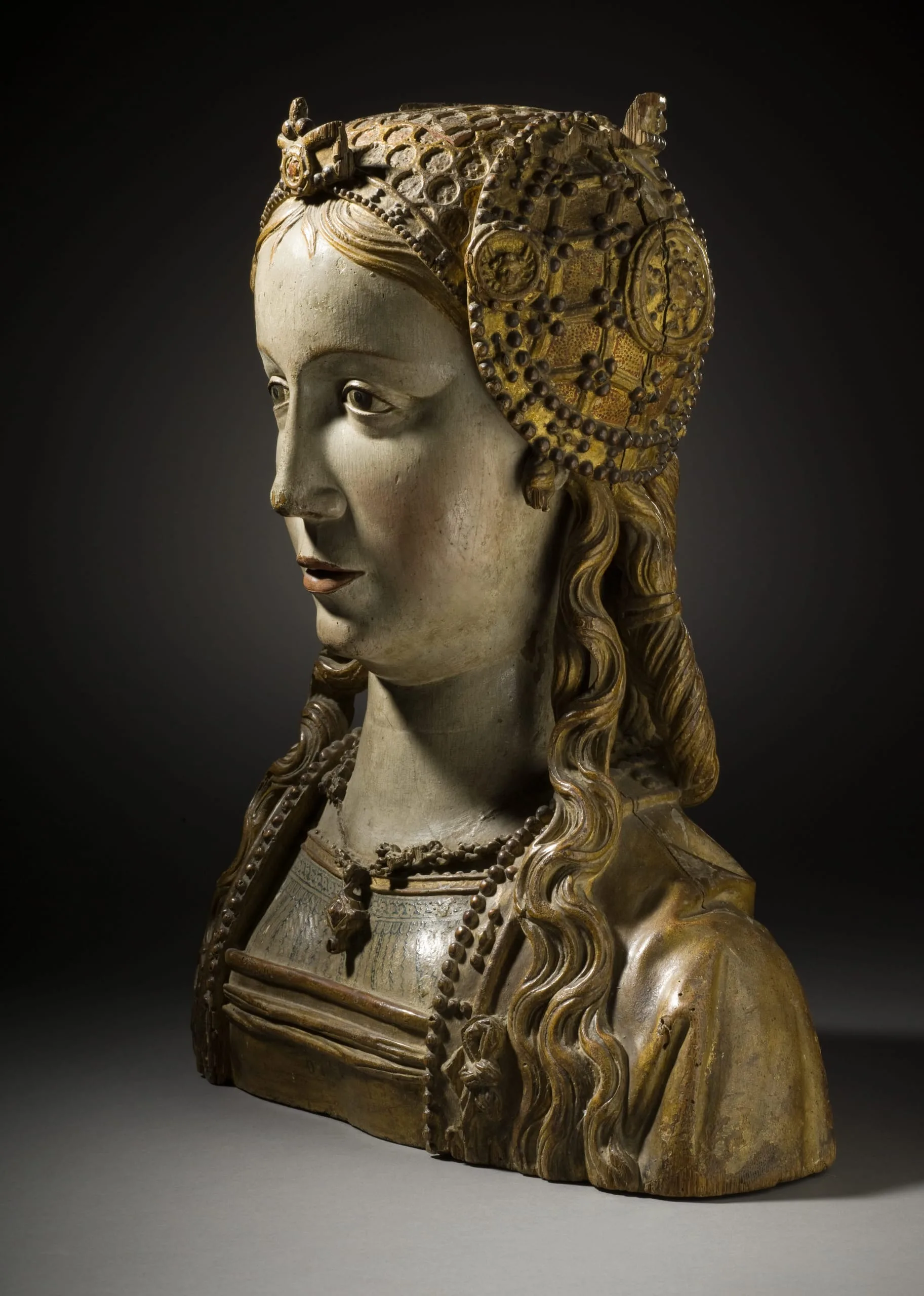
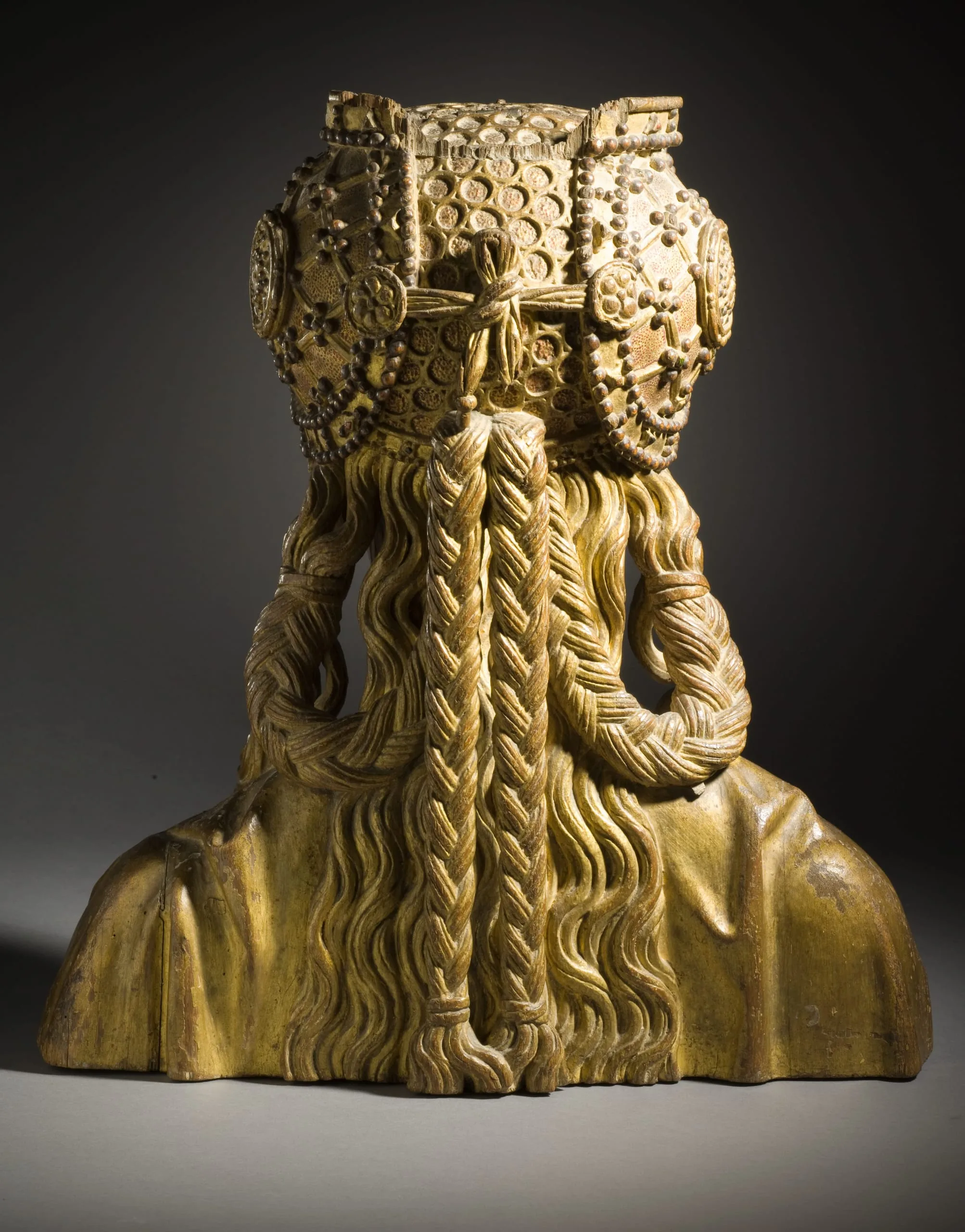
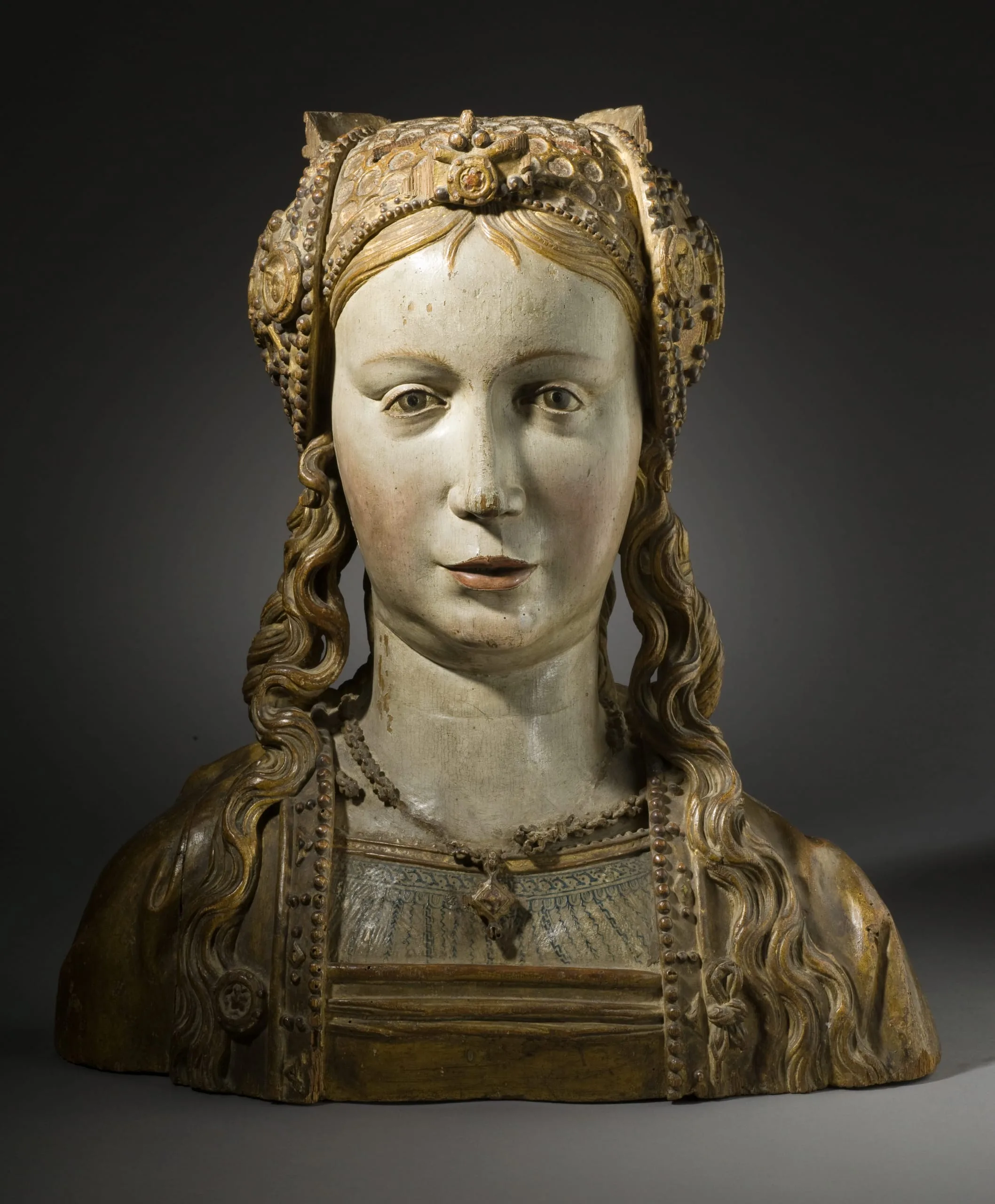
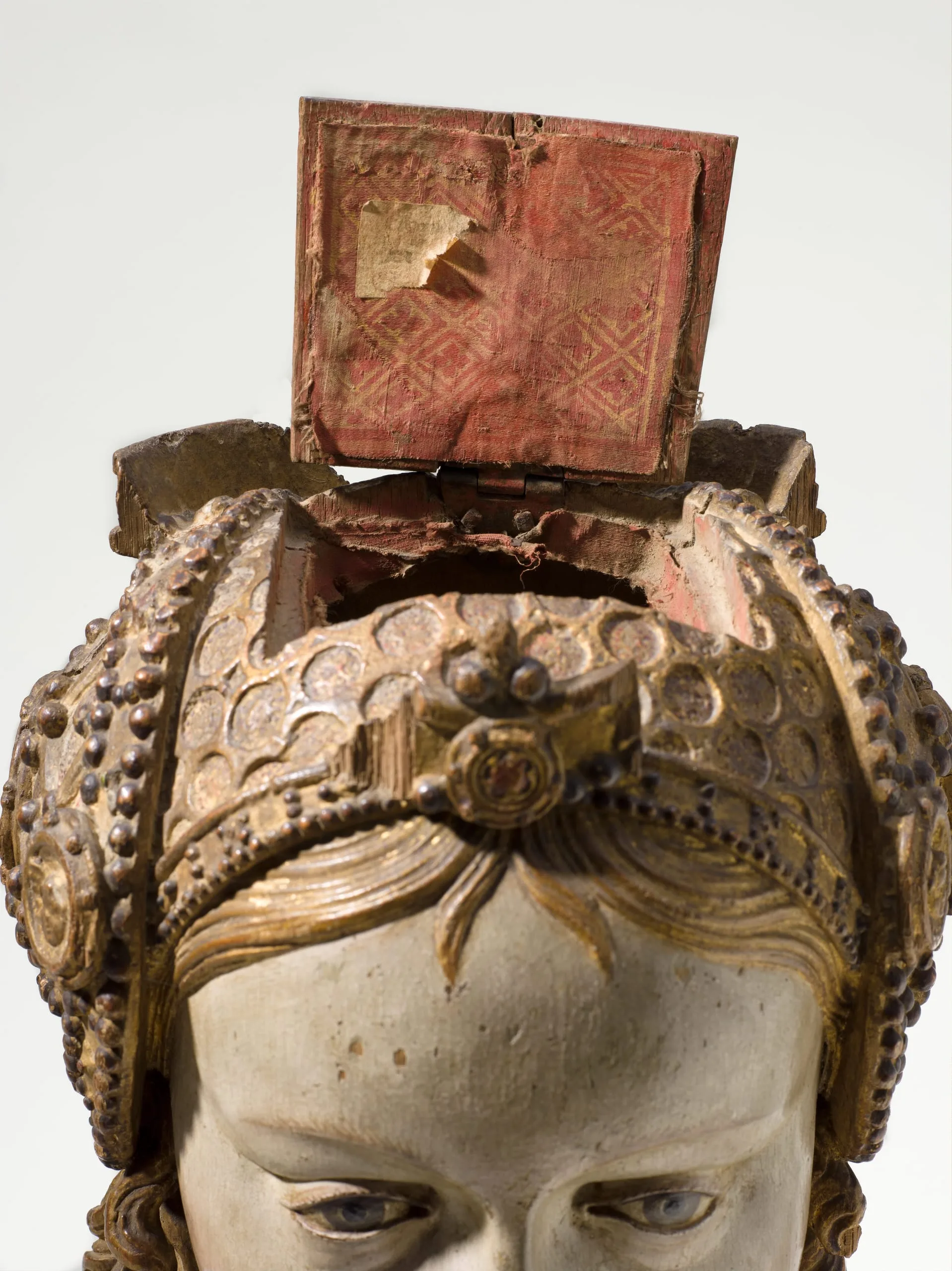
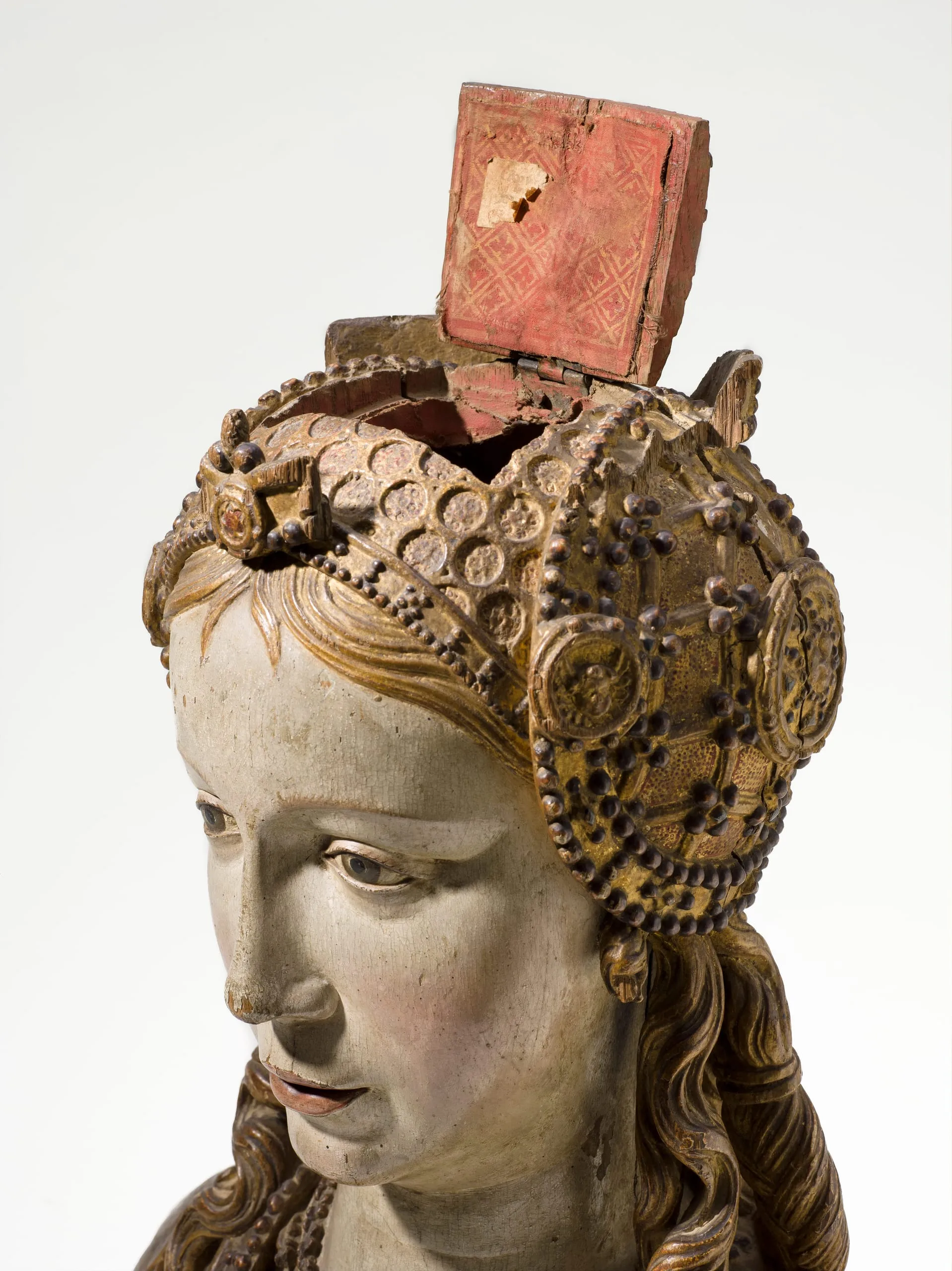
With softly painted blue eyes, elaborately plaited hair, and luxurious costume, this polychromed reliquary was designed to enliven the sacred contents once hidden within. Objects such as this are part of a long tradition in devotional art of creating elaborate containers to house holy relics, like a piece of the True Cross or a saint’s finger bone. In Catholic practice, these relics were thought to represent the entire body of the saint, an idea called pars pro toto (Latin: “part for the whole”), allowing holy figures to exist fully in multiple places at once despite their bodily fragmentation. Reliquaries thus became vehicles for prayer, intercession, and miracle making.
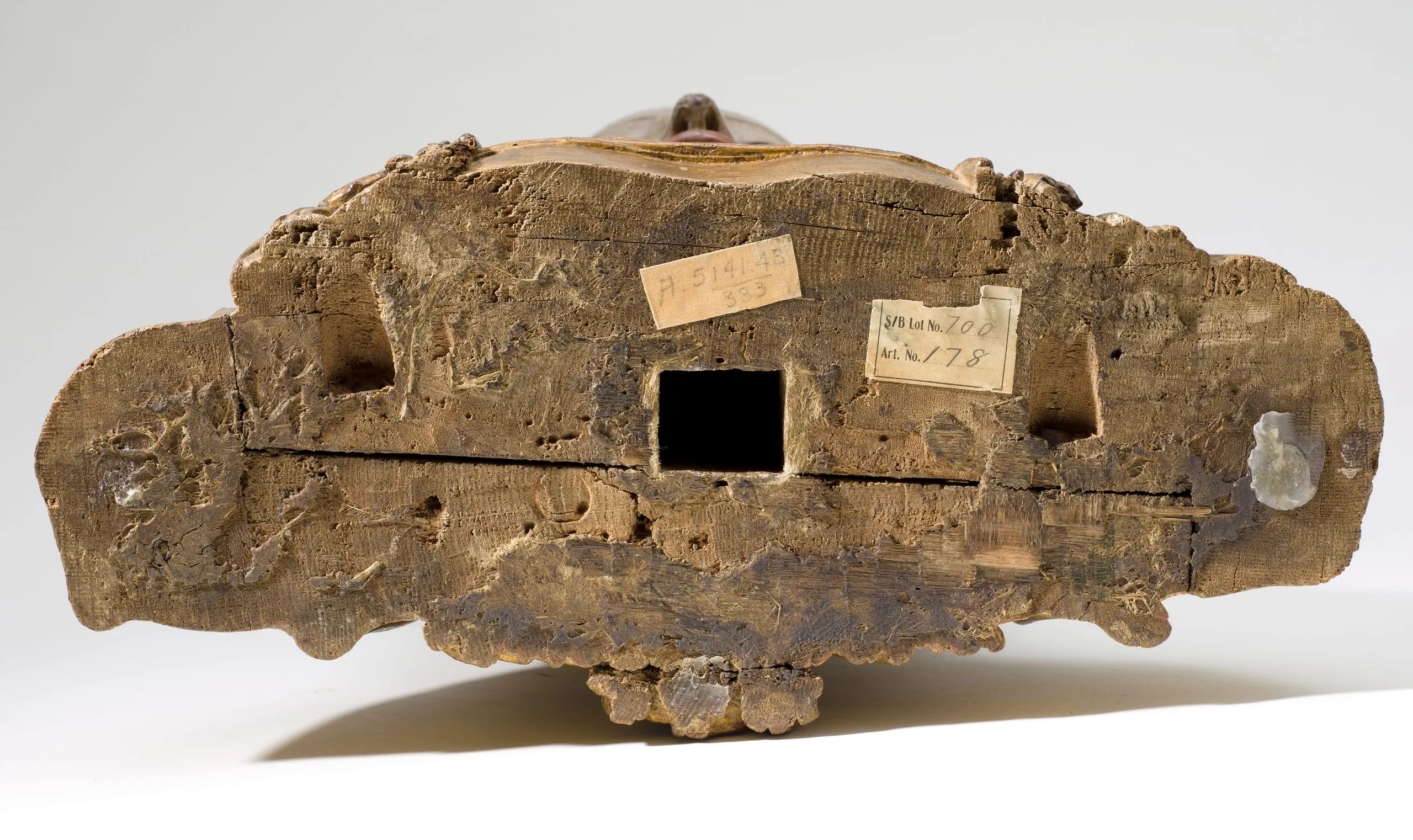
While some reliquaries visually reveal their contents, this one conceals and contains. A latch at the top of the bust’s head opens to reveal a hollow cavity once filled with a skull purportedly belonging to a Christian martyr. Clues to the saint’s identity survive on a fragmented inscription inside the latch: the first letters of the word caput (“capu”), Latin for “head,” and possibly the letters “XI.” Inscriptions preserved on similar reliquary busts, such as one of Saint Balbina (67.155.23), have led scholars to conclude that LACMA’s bust likely represents an attendant of Saint Ursula. According to legend, the Christian British princess Ursula undertook a pilgrimage to Rome accompanied by 11,000 virgins, all of whom were slaughtered as they passed through Cologne.
Reliquaries like this could be placed on altars or set into architectural niches, or even processed on specific feast days. Here, the exceptionally preserved polychrome paint and realistic costume not only honor the glory of the saint contained within but evoke feelings of awe and intimacy in the viewer.