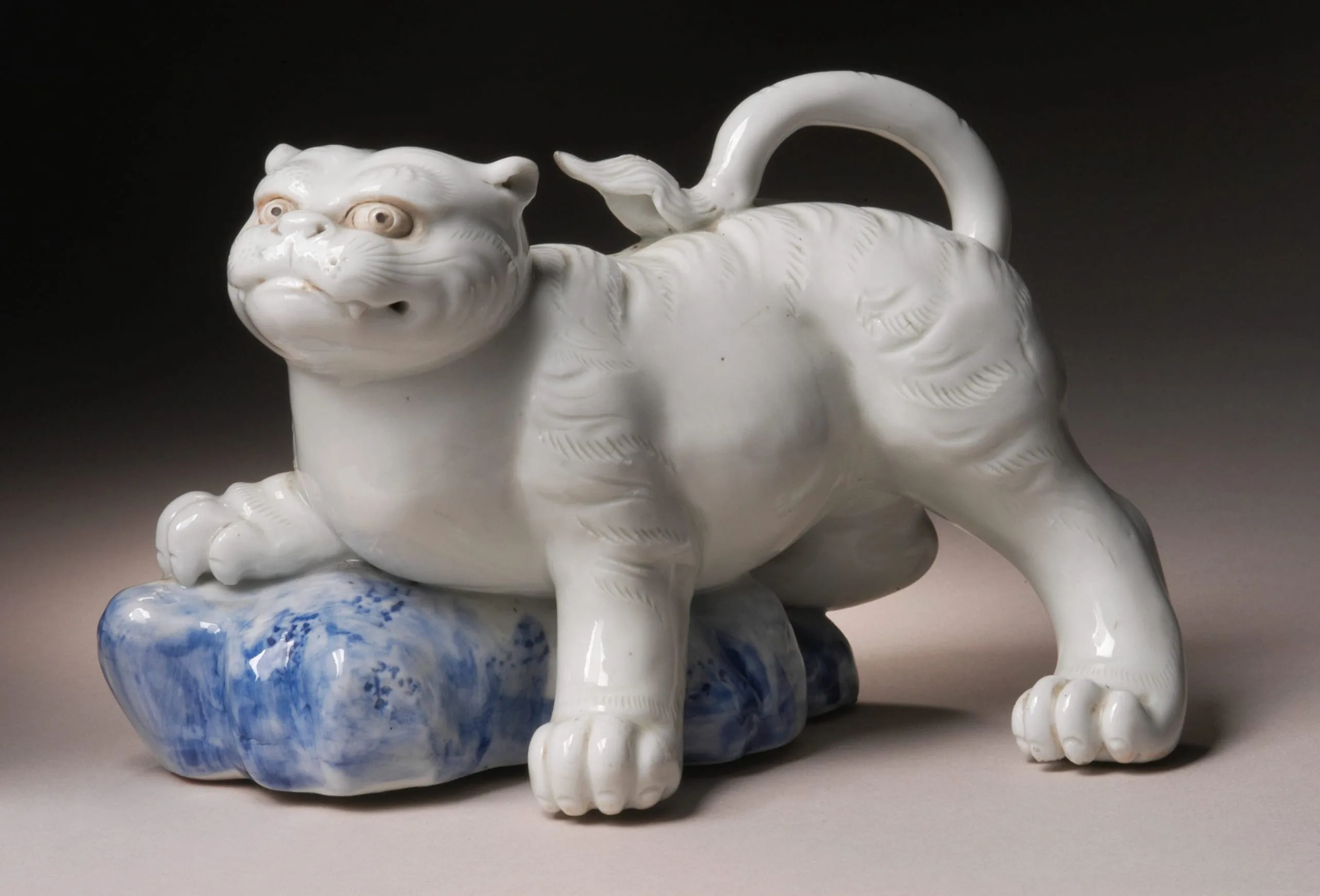
A tokonoma is a small alcove within a traditional Japanese home. From early on, scrolls were hung on the wall of the tokonoma; over time, however, its features and function evolved. Raised off the floor, it could include one or more small shelves, and eventually it was used to showcase wares such as incense burners, vases, or okimono. The word okimono combines oku, to place or put out, and mono, a thing or article, and identifies decorative objects meant for display, in particular small figurines, statues, and other items admired purely for their beauty and skilled craftsmanship. Made in a range of sizes and various materials, okimono took the form of figures, plants, animals, mythical creatures, and religious motifs. The season or occasion would have dictated the appropriate okimono to be displayed.
Here, fine linework indicates the tiger’s fur, eyebrows, whiskers, and tail. This type of detailing, as well as the bright white of the porcelain and the rock’s soft blue underglaze, are hallmarks of Hirado Mikawachi ware. The kilns of Hirado were established in the first half of the seventeenth century and relocated to an area called Mikawachi in 1650. By the end of the century, wares produced in these kilns were of such exceptional quality that the local fief lord offered them as gifts to the shogun, emperor, and other dignitaries. Extremely strong and pliable, Hirado clay accommodates modeling and intricate carving, and the discovery of finer-quality kaolin in 1712 resulted in works of even greater whiteness for which Hirado Mikawachi wares are known.
2024