The Persian album, or muraqq‘a, which flourished from the fifteenth to the seventeenth century in Iranian lands, is a compendium of calligraphy and paintings bound in a booklike format, with facing pages of each medium arranged in alternate fashion. A form of collecting, the album is an idiosyncratic gathering of diverse materials organized by the compiler to reflect multilayered meanings that would have resonated with the elite, erudite audience for which it was intended. Like many Persian illustrated manuscripts, albums were likewise frequently unbound and dispersed.
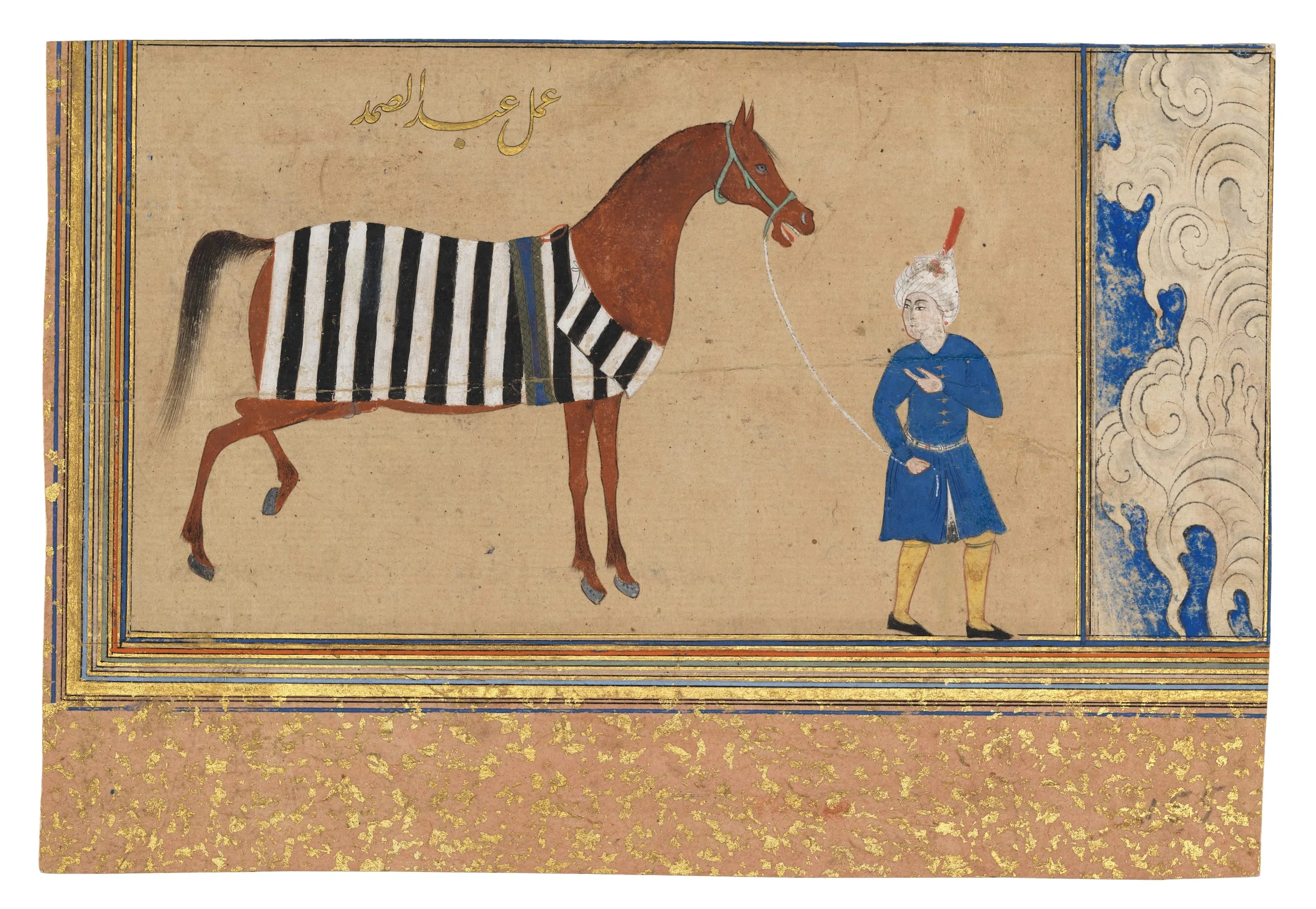
By the sixteenth century, a tradition existed in Iran for depicting royal horses either with or without their grooms for inclusion in albums. That these are prized horses is demonstrated by the fact that they have been singled out as the subject of a painting and that they are covered, as here, by decorative blankets and other elegant fittings. The well-dressed little groom in this painting wears the distinctive headdress associated with the early Safavid dynasty.
The composition is ascribed in gold nasta‘liq to ‘Abd al-Samad, who produced several other works on the same theme made not only in Iran but in India, where the artist spent the latter years of his life at the Mughal court (see M.78.9.11). It is generally believed that ‘Abd al-Samad was trained at the famed Tabriz atelier of Shah Tahmasp (r. 1524−76) and that he carried this style of painting with him to India, along with several other Iranian artists (see M.90.141.1).
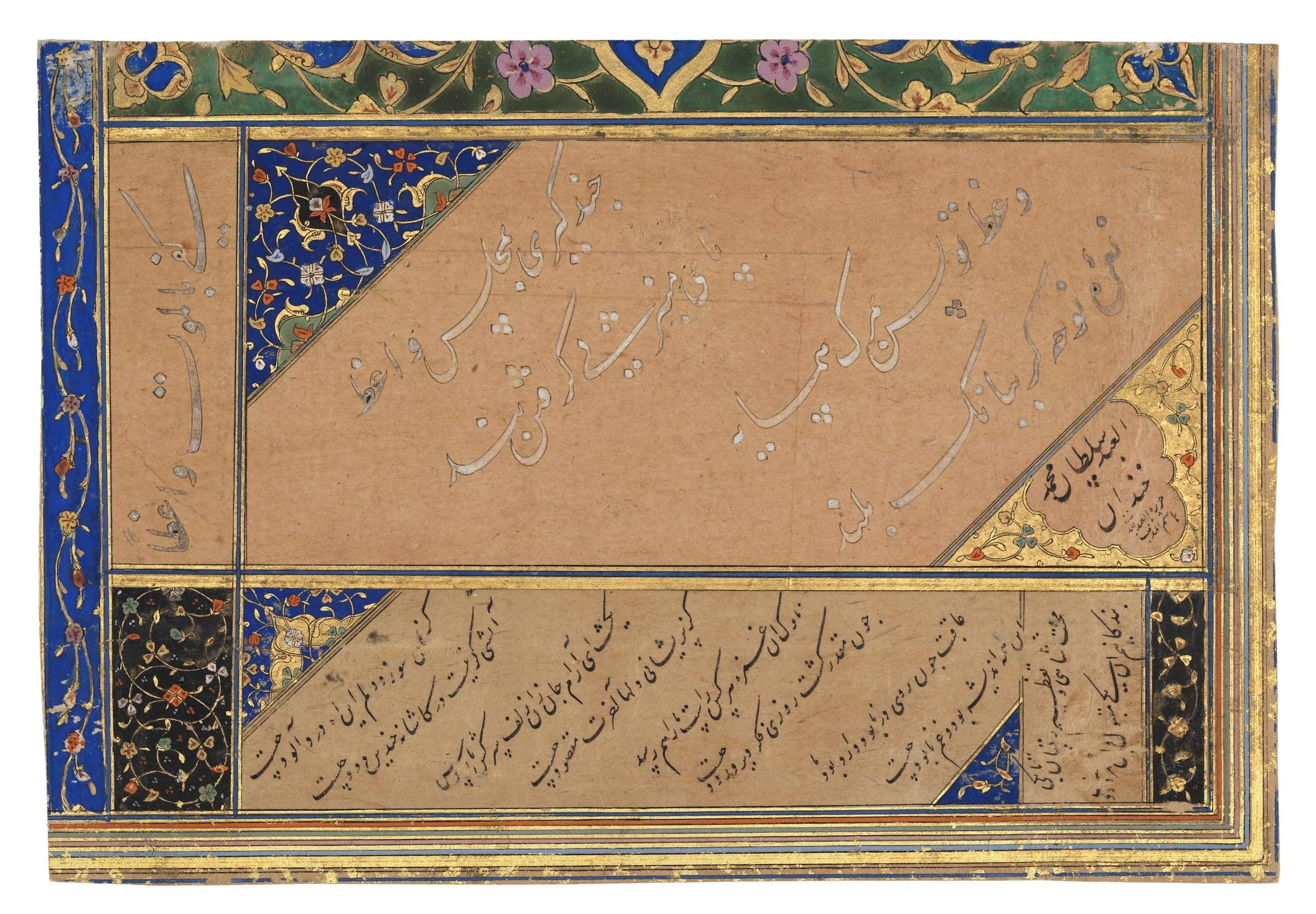
On the reverse are two calligraphies, one in white nasta‘liq signed by Sultan Muhammad Khandan and Hashim Mudhahhib (the gilder). It has been proposed that this painting and calligraphy, along with several others, once was affixed to a page in an album compiled for Bahram Mirza (1517−1549), brother of Shah Tahmasp, by the calligrapher Dust Muhammad in 1544−45.
2024