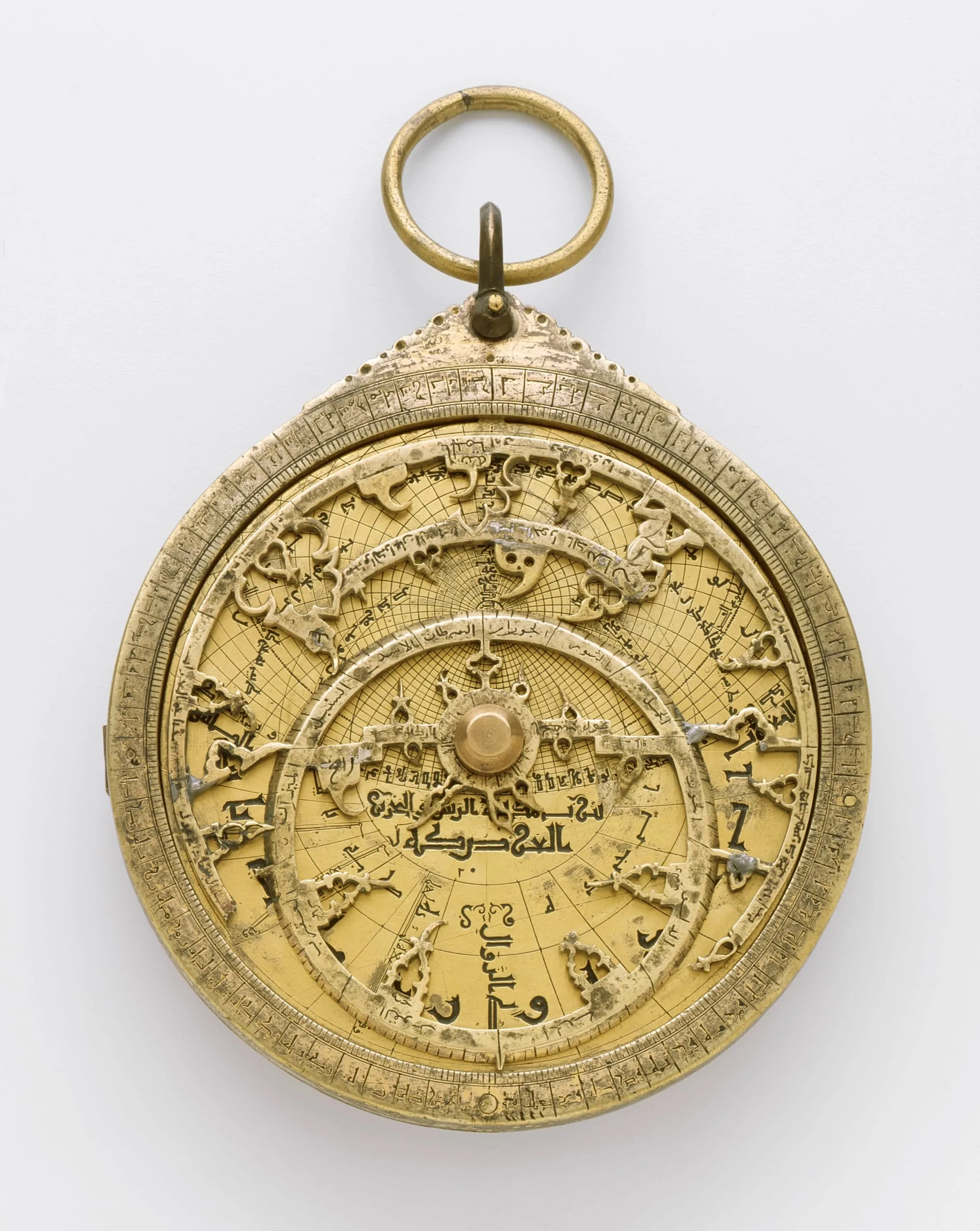
The astrolabe is an astronomical device that Muslims inherited from the Hellenistic world, which they further refined and passed on to medieval Europe. According to its inscriptions, this handsome gilt brass astrolabe was made by Muhammad ibn ‘Abd al-‘Aziz al Khama’iri in Seville, in southern Spain, which was part of the western frontier of the Islamic world until 1248. Exceptionally, according to a subsequent inscription, it seems to have been altered nearly seventy years after it was made, possibly in Egypt or Syria. Like all such instruments, it was designed to measure the altitude of the stars, sun, or moon and to establish different astronomical and topographic associations without resorting to calculations or formulas. It was particularly valuable in a religious context, to determine the qibla, or direction of prayer, and especially the Muslim times of prayer throughout the year, which are astronomically determined.
2025