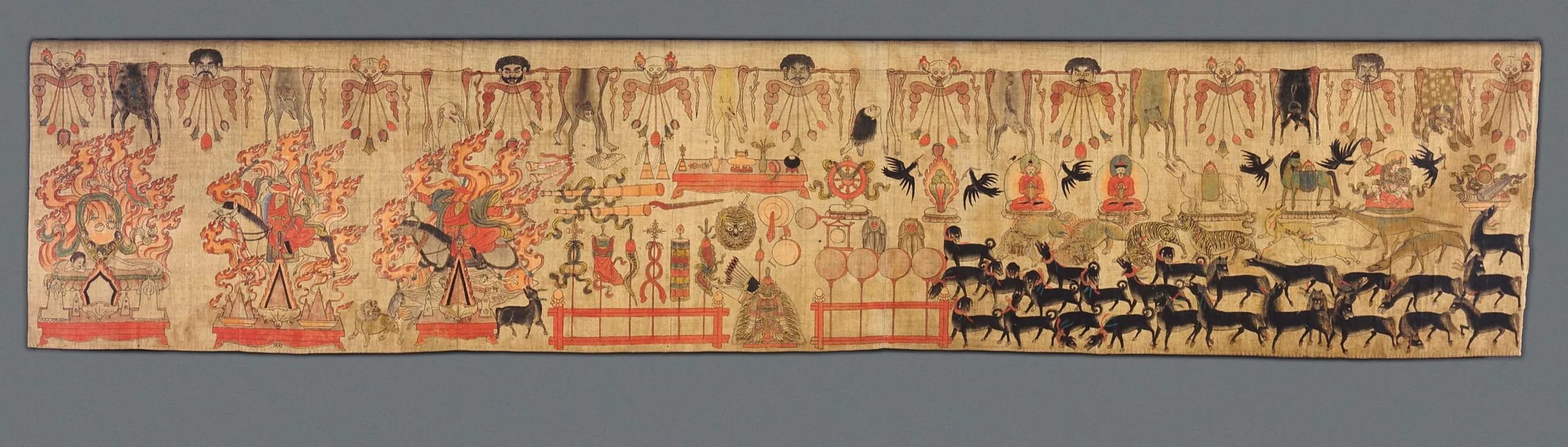
Images of offerings to the Buddhist protective deities (dharmapala) constitute a special type of Tibetan painting known as 'sets of ornaments' (gyantshog) or 'material for the banquet' (kangdze). Along the top border, festive swags of kirttimukha (‘Face of Glory’), skeleton heads, flayed skins, and entrails emphasize the destructive abilities of the dharmapala and their association with charnel grounds. Intriguingly, the protective deities that are the primary focus of worship are not physically portrayed. Rather, their divine omnipresence is represented by disembodied sets of clothing, ornaments and accompanying attributes (on viewer’s left). The sacred offerings include ritual objects (priests' bells, thunderbolts, ascetic's or tantric staffs and mirrors, water ewers and vases, and conch shells) and ritual musical instruments (drums, trumpets, hand cymbals, and a lute). The seven precious possessions of the Universal Monarch (chakravartin) are also depicted: the wheel, elephant, horse, jewel, queen, chief minister and general of the army. The esoteric ensemble includes a host of wild animals to be ritually presented to the protective deities, such as horses, snow lions, tigers, jackals, crows, and monkeys. Many offerings paintings also include Mount Meru, which is both the physical axis mundi of Buddhist cosmology and the metaphysical landscape of meditative transformation that lies in the 'heart-mind' of each Vajrayana Buddhist practitioner. See also M.81.211 and M.81.8.5.