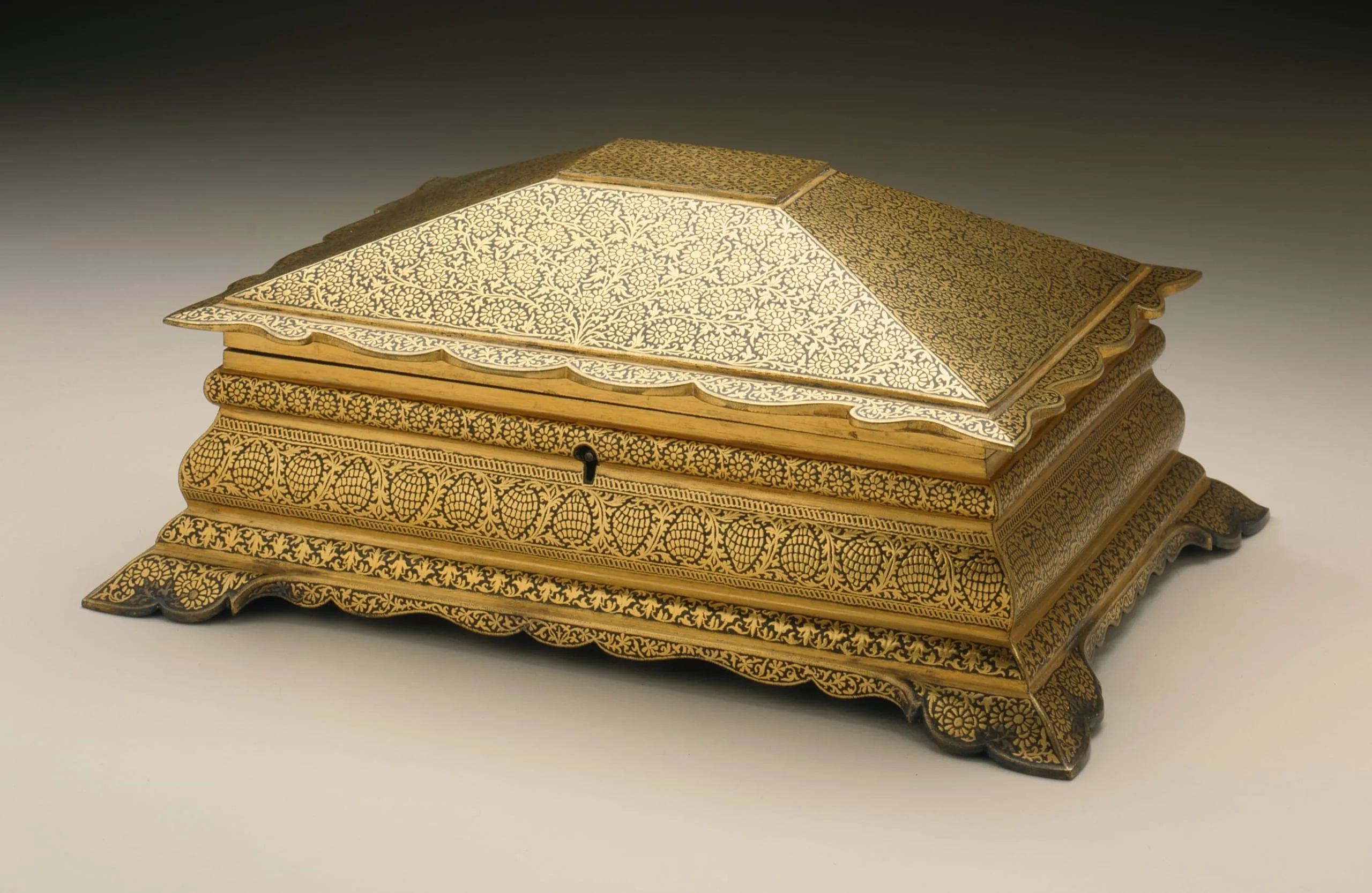
This radiant casket is made in the damascene inlay technique known as koftgari (made by beating). It features fine gold wire and gold leaf overlay hammered into patterns incised into the surface of the iron ground. The rectangular casket is surmounted by a pyramidal shaped lid with a flat crown. The primary decoration on the lid is a flowering tree, with a secondary geometric pattern displayed on the crown. The motifs featured on the horizontal registers are a flowering vine (top), large jackfruit on a scrolling vine (middle), and a series of lilies with foliate stems (bottom).
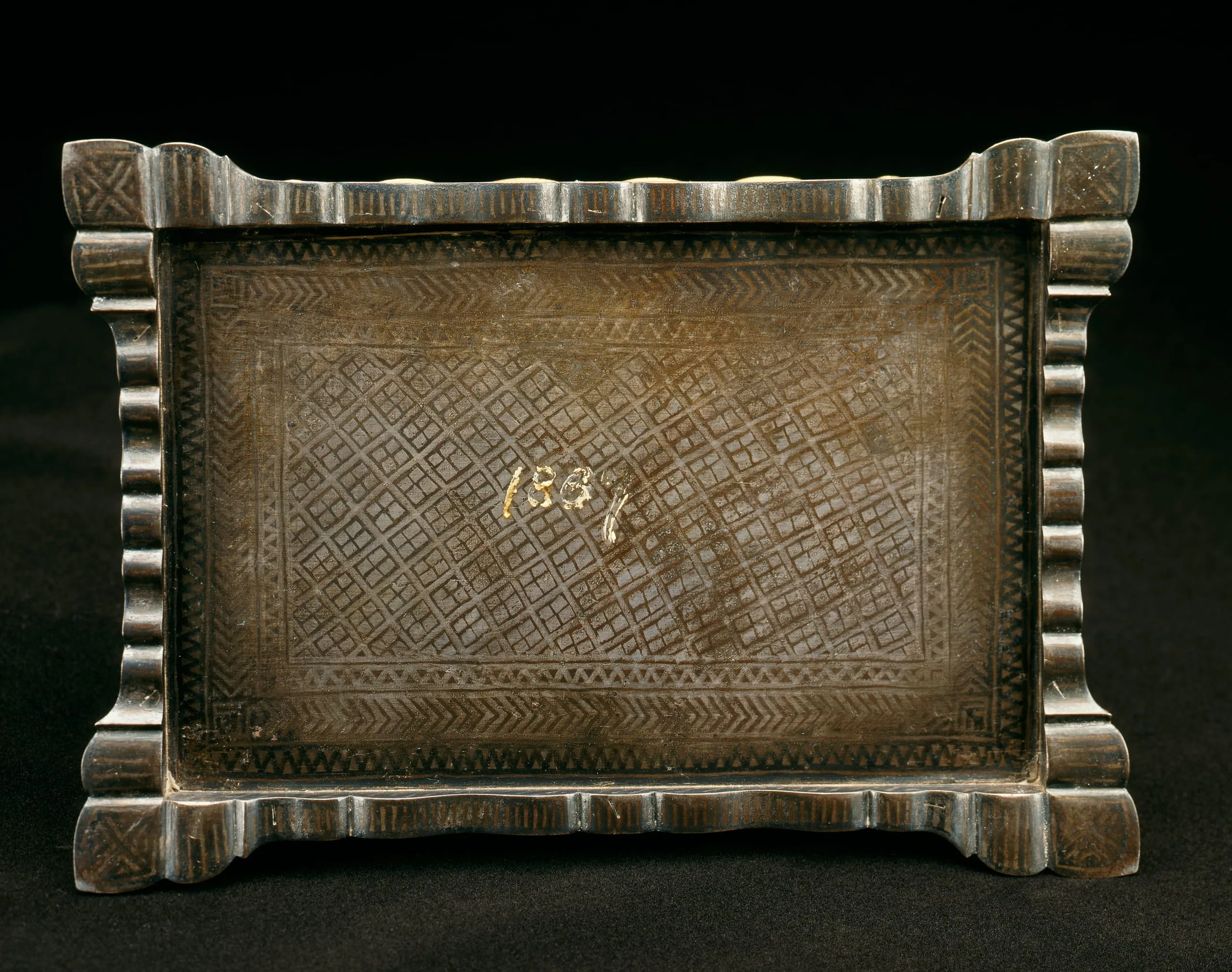
In contrast to its gold-encrusted top, the base features a silver sheet hammered over the iron surface. There is a design of cross-hatching and chevrons overlaid in silver alloy foil, which has oxidized to black. This distinctive bottom decoration is significant for helping to date such works, as by 1872 the bottoms of koftgari vessels were being finished with electro-plating. The bottom of the LACMA casket has a painted inscription, 1867, which is likely the date when it was made or acquired.
The Koftgari technique originated in Iran and was brought to India, where it was first used to embellish fine arms and armor produced for Rajput and Sikh rulers and warrior nobles in northern India. After the British annexed the Panjab in 1849 and banned the indigenous production of firearms, the technique was used chiefly by metalworkers in the northern Panjab districts of Sialkot and Gujrat (located in the in Panjab district of present-day Pakistan) to make myriad types of decorative objects intended for sale to Westerners and for the great exhibitions and world's fairs that were held in Europe and South Asia in the late 19th and early 20th centuries.