LACMA

ShopMembershipMyLACMATickets
LACMA
Los Angeles County Museum of Art
5905 Wilshire Blvd.
Los Angeles, CA 90036
info@lacma.org
(323) 857-6000
Sign up to receive emails
Subscribe
© Museum Associates 2026
  • About LACMA
  • Jobs
  • Building LACMA
  • Host An Event
  • Unframed
  • Press
  • FAQs
  • Log in to MyLACMA
  • Privacy Policy
© Museum Associates 2026
Collections

Vessel with Codex-Style Scene1350–1500

Not on view
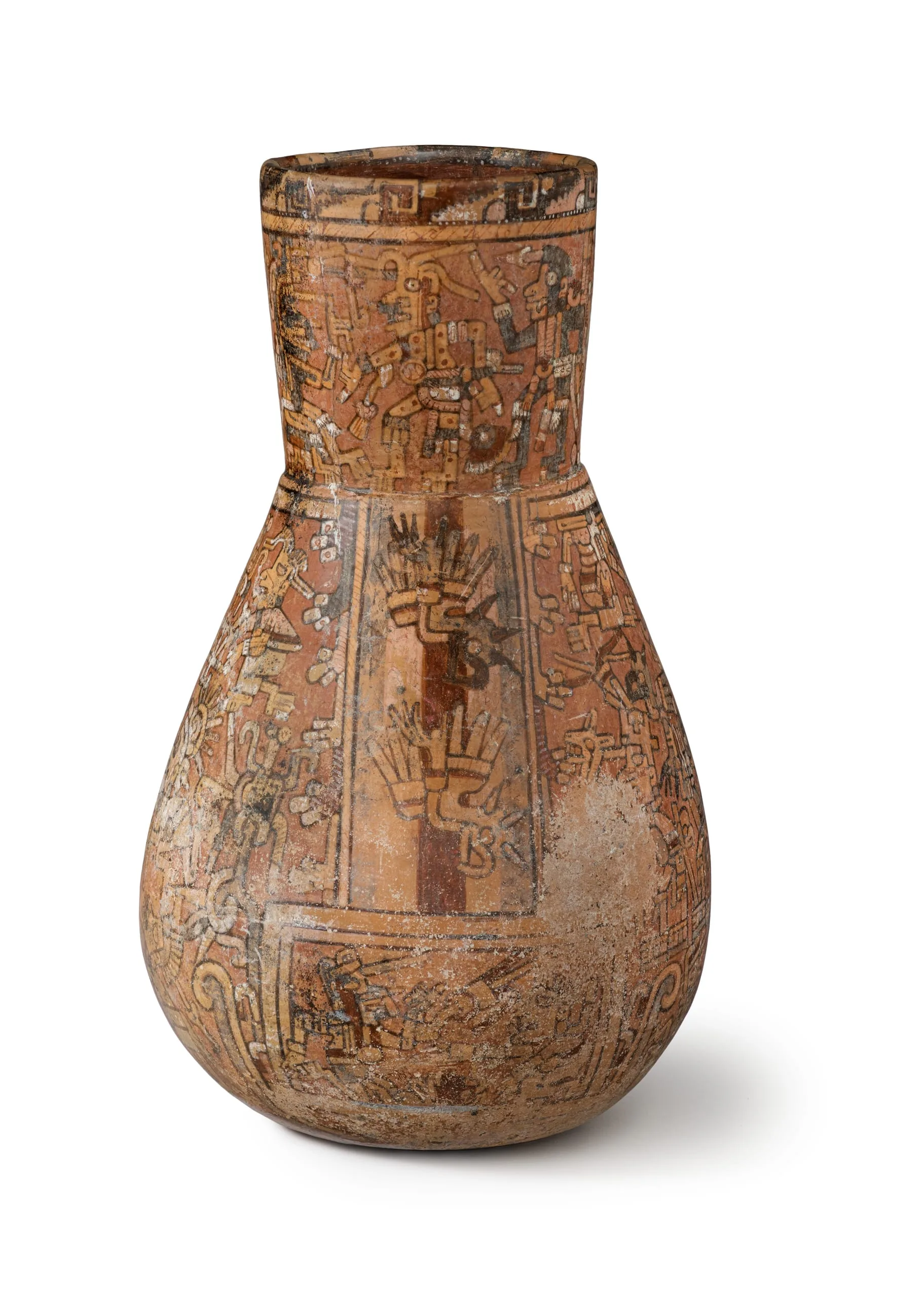
Ceramic vessel with pear-shaped body and tall cylindrical neck, covered in painted terracotta, russet, and brown figural and glyphic motifs in vertical panels
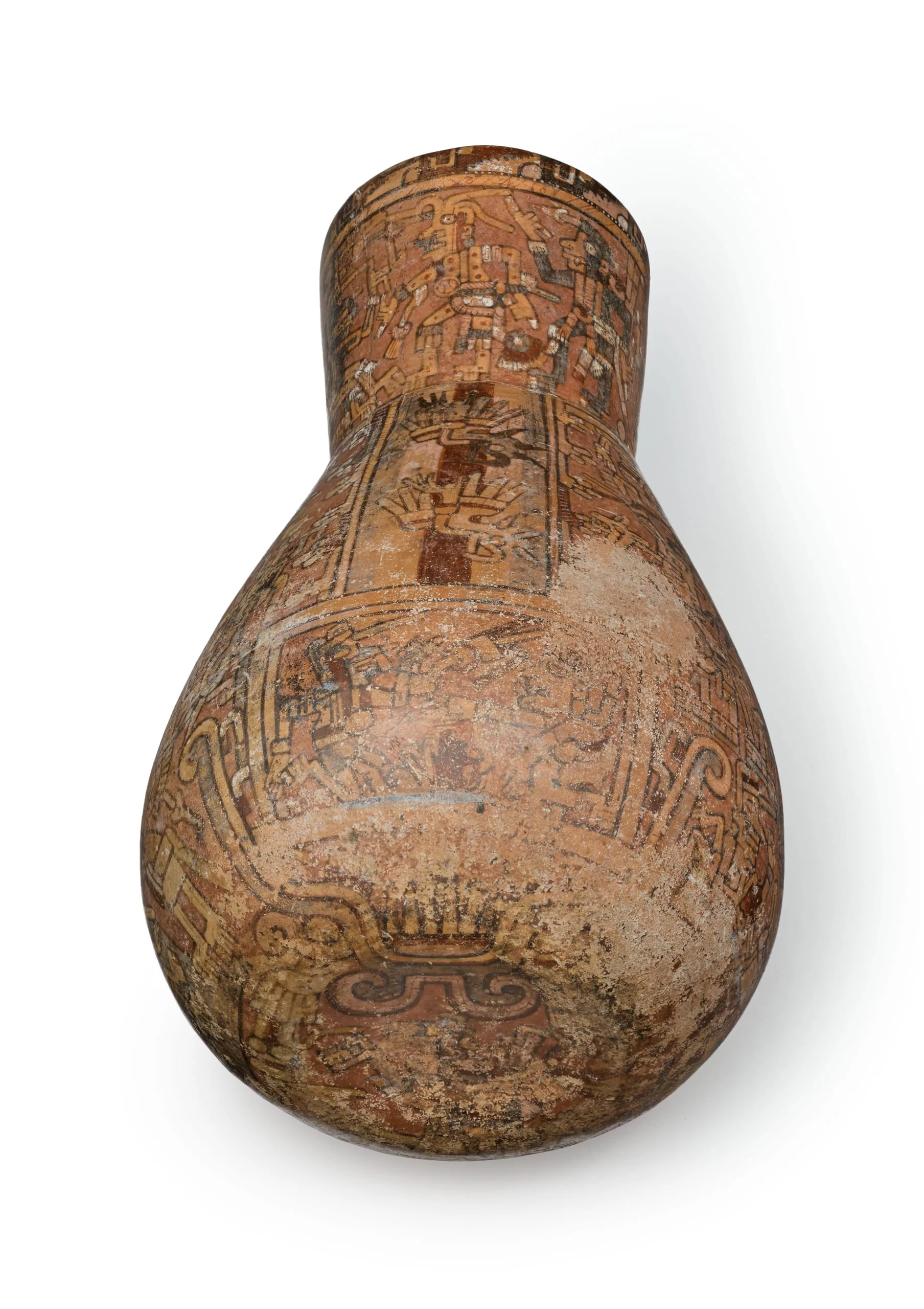
Ceramic vessel with bulbous body and narrow cylindrical neck, painted overall in red, orange, black, and white slip with densely packed figural and geometric imagery including anthropomorphic figures, step-fret motifs, and horizontal register bands.
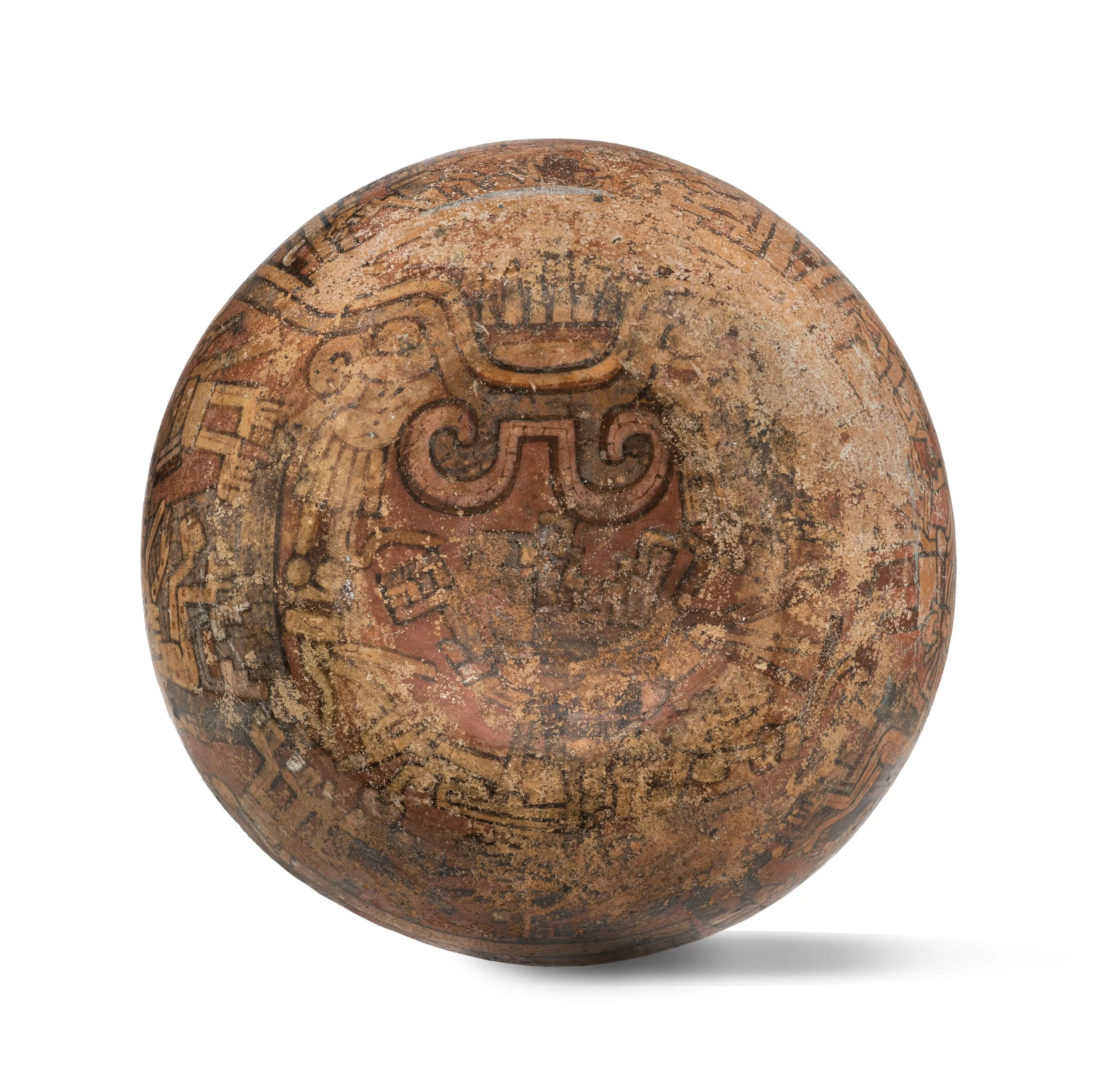
Ceramic sphere with painted and incised Mesoamerican glyphs and figural motifs in red, brown, and tan, with a central scrollwork design encircled by banded geometric and zoomorphic patterning; aged surface with visible wear.
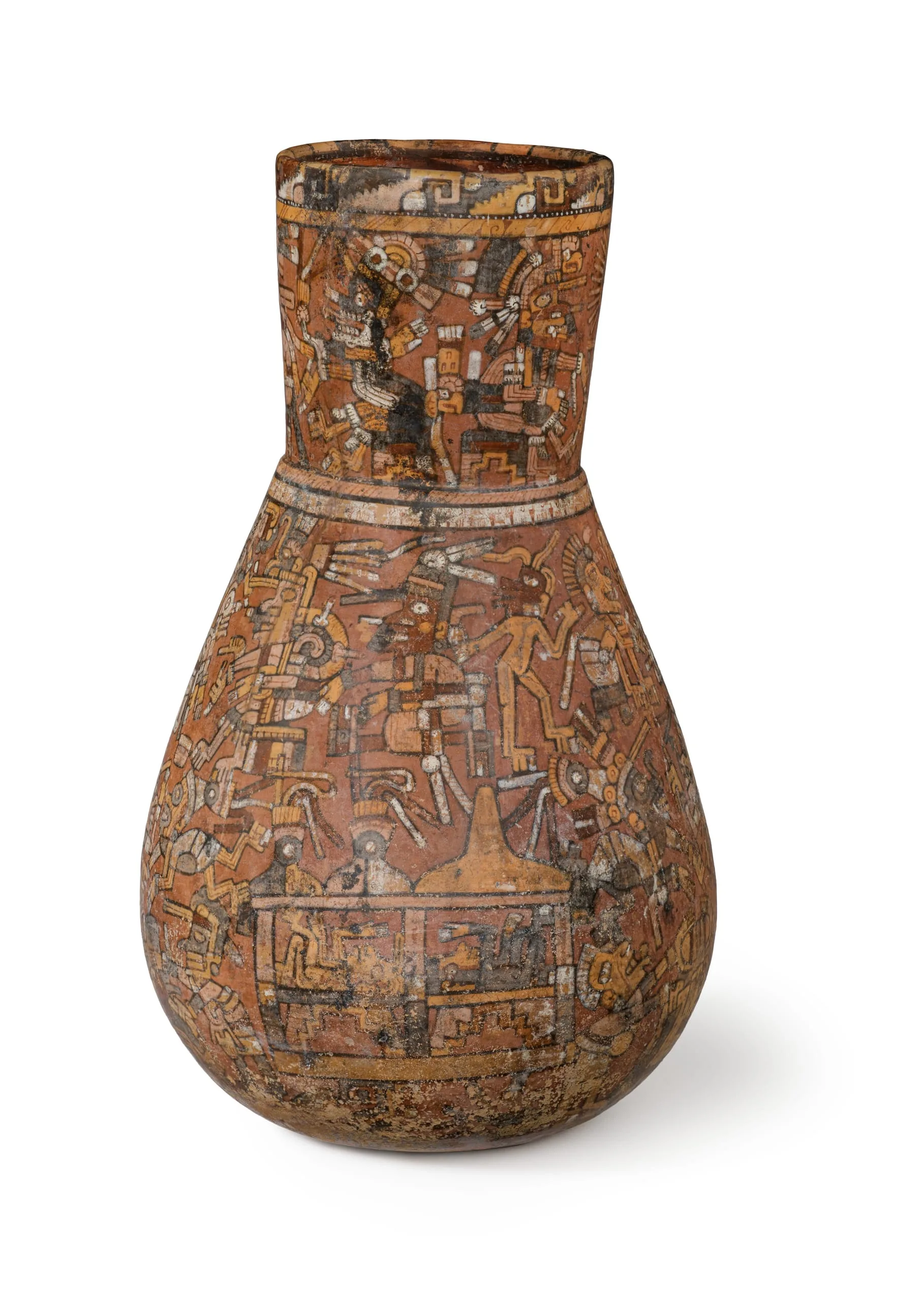
Ceramic vessel with bulbous body and narrow cylindrical neck, painted with polychrome figural and scrolling geometric motifs in red, brown, and black; surface shows age-worn slip typical of ancient Mesoamerican or Andean pottery.

Unknown, Vessel with Codex-Style Scene, 1350–1500, Los Angeles County Museum of Art, Purchased with funds provided by Camilla Chandler Frost, photo © Museum Associates/LACMA

Title
Vessel with Codex-Style Scene
Culture
Aztatlan
Place Made
Mexico, West Mexico, Nayarit
Date Made
1350–1500
Style
Postclassic International
Medium
Engobe-painted earthenware
Dimensions
Diameter: 7 1/2 in. (19.05 cm) Height: 13 1/4 in. (33.66 cm)
Credit Line
Purchased with funds provided by Camilla Chandler Frost
Accession Number
M.2000.86
Classification
Ceramics
Collecting Area
Art of the Ancient Americas
Curatorial Notes

This vessel, painted in the style of a Mixtec codex, plays with both form and design to represent cosmic space and time. A complex scene envelops the curved surface of the vase, including its base. The narrative begins with two creator deities conversing in a stylized mountain within a personified cave, whose fanged maw curls onto the base. Two birds descend into the cave, perhaps to deliver an important message, a common trope elsewhere in Mesoamerican art. The scene that unfolds on the rest of the main body of the vessel involves the parallel baptismal rites of two infants; one wears a red mask and the other has bright yellow hair. The yellow-haired figure, a local culture hero, also appears on the neck of the vase with other cultural leaders, directly above a band of skeletal women who represent celestial bodies. The form of the vessel undergirds the cosmic narrative painted on its surface. Its rounded, upwardly constricted body mimics a mountain, bounded above by the celestial imagery on the neck and below by the cave on its base. With sky, earth, and underworld (via the cave) represented, the vessel re-creates the whole of the cosmos.

Alyce de Carteret

2024

Selected Bibliography
  • Los Angeles County Museum of Art. New York: Thames and Hudson, 2003.
  • Fields, Virginia M. Children of the Plumed Serpent: the Legacy of Quetzalcoatl in Ancient Mexico. London: Scala; Los Angeles: Los Angeles County Museum of Art, 2012.
  • Magaloni, Diana, Davide Domenici, and Alyce de Carteret. We Live in Painting: the Nature of Color in Mesoamerican Art. Los Angeles: Los Angeles County Museum of Art, 2024.
Related Unframed

Highlights from the Mixpantli Companion Exhibitions
  • June 10, 2022
  • Diana Magaloni, Alyce de Carteret