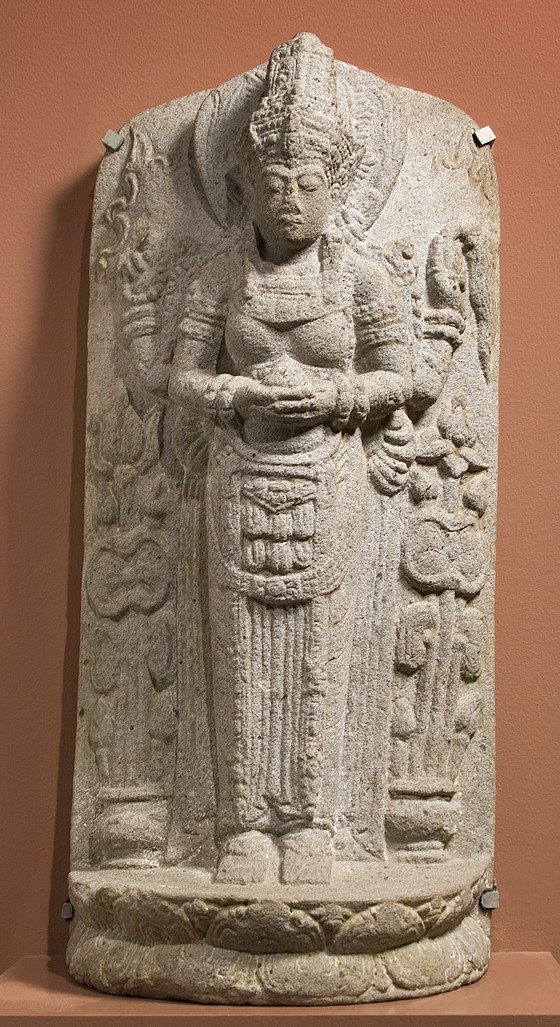
Memorial Statue of a Deified Queen
* Nearly 20,000 images of artworks the museum believes to be in the public domain are available to download on this site. Other images may be protected by copyright and other intellectual property rights. By using any of these images you agree to LACMA's Terms of Use.

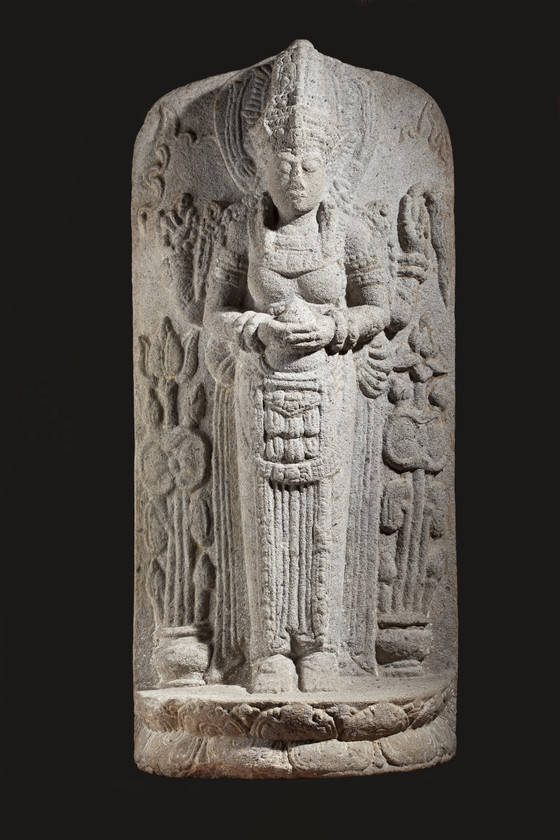
Memorial Statue of a Deified Queen

Indonesia, Eastern Java, 14th-15th century
Sculpture
Volcanic stone
30 1/4 x 13 3/8 x 9 1/4 in. (76.83 x 33.97 x 23.49 cm)
Gift of Mr. Jerry Heymann (M.81.273)
Not currently on public view

Curator Notes

...
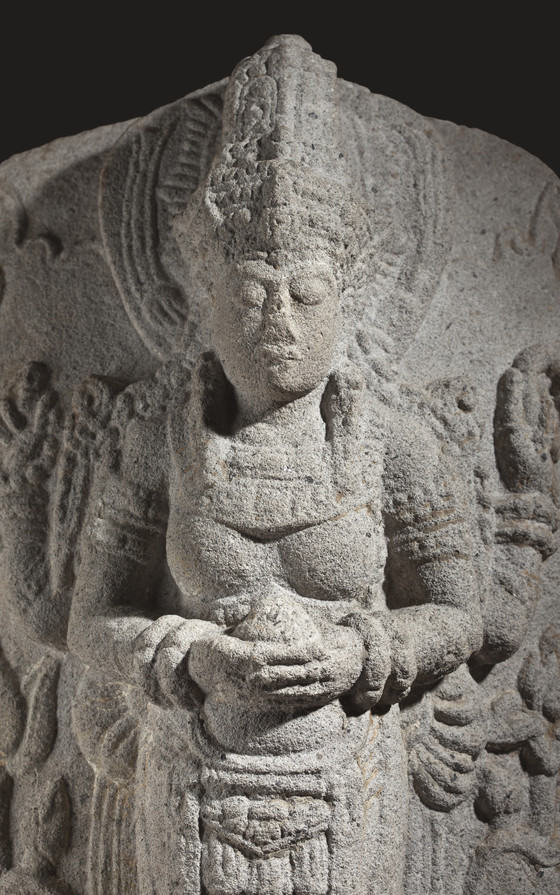
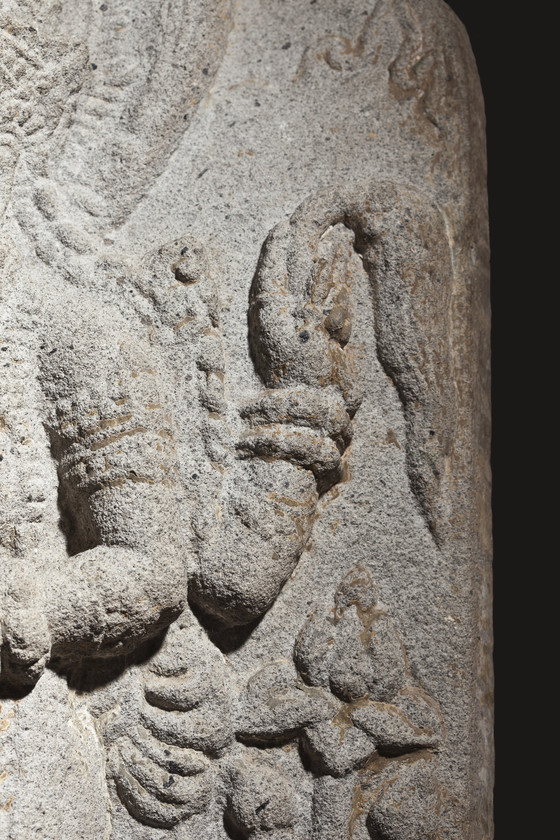
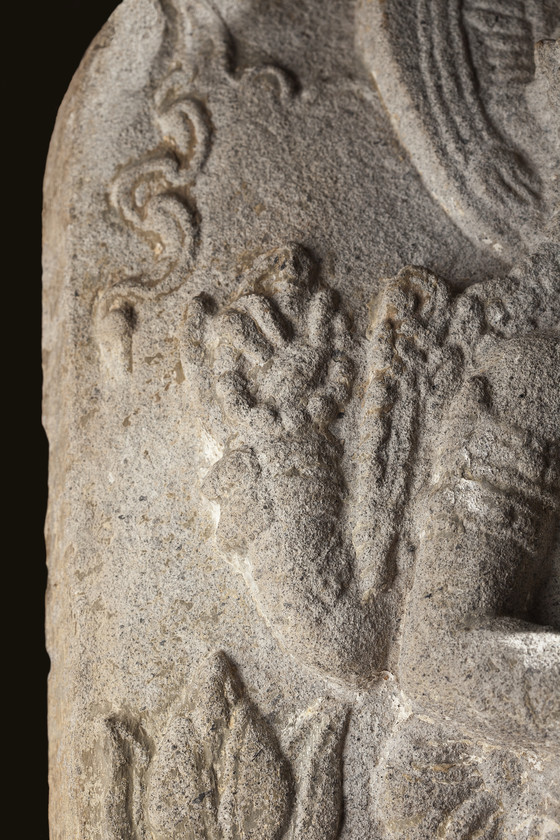
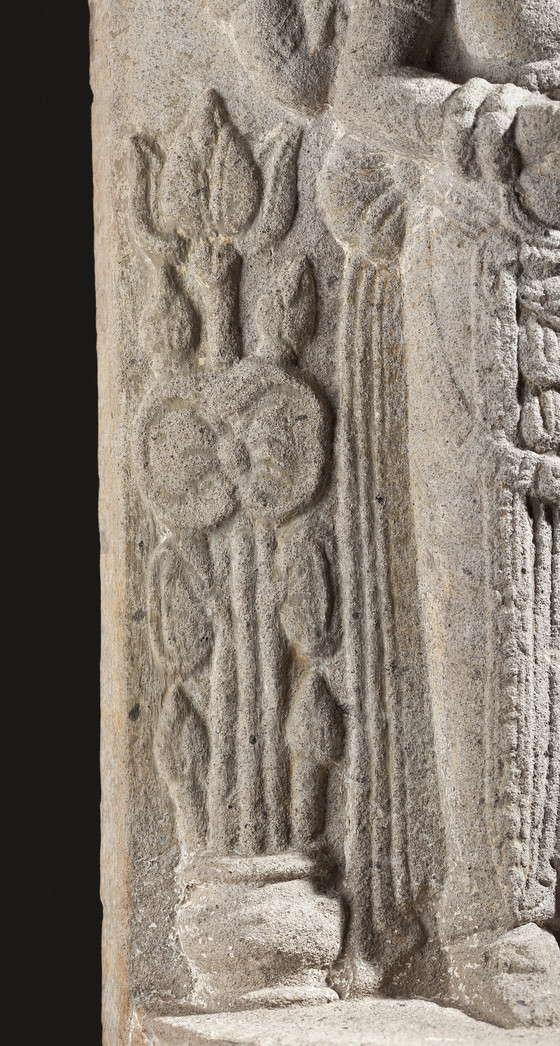
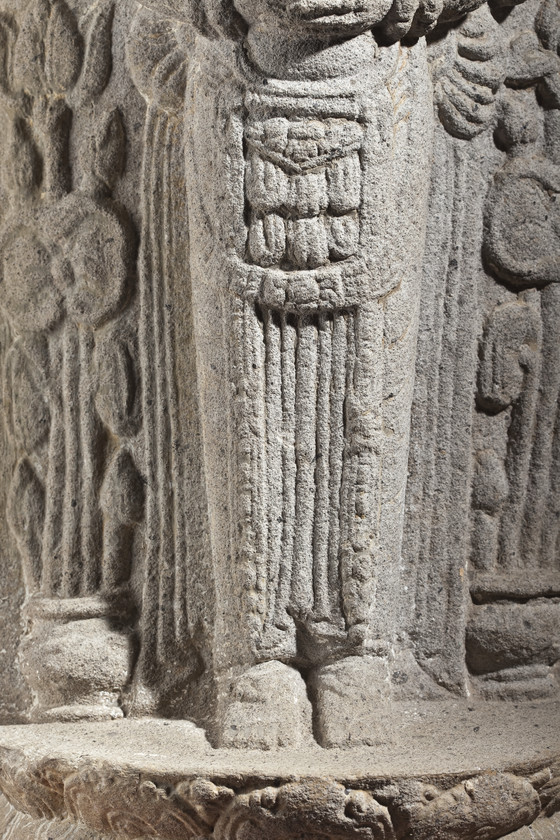
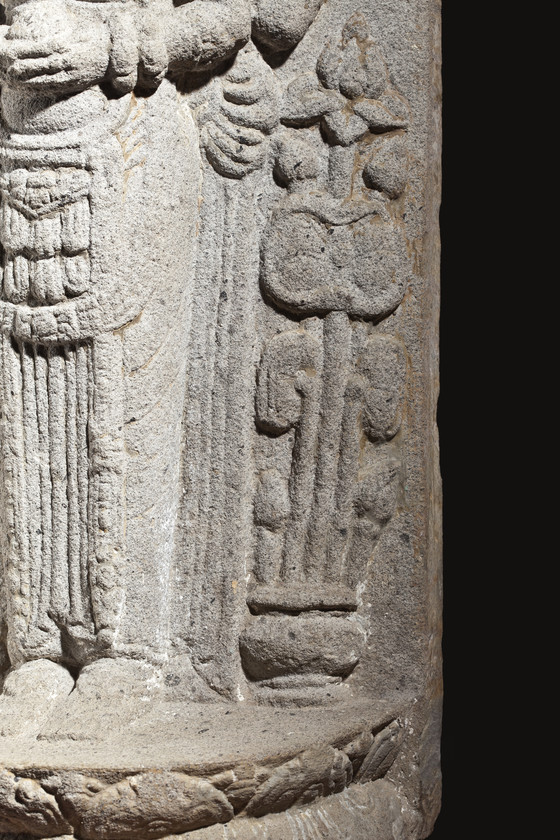
Ancestor worship in eastern Java during the Majapahit empire (1293–1527) blended Hindu-Buddhist beliefs and connected the royal ancestral lineage to the veneration of the gods as a basis for the traditional authority of the monarchy. Memorial sculptures such as this indicate the subject’s ultimate oneness with a Supreme Divinity. Used for both male and female deceased sovereigns, they were intended to represent the attainment of an abstracted absolute knowledge and deification. "This Javanese sculpture is a deification image that represents Supreme Divinity. It dates to the fourteenth–fifteenth century and comes from Eastern Java. The formula for this image type developed during the Majapahit period (1293–1519) and was used for both males and females. Characteristics include the lotuses that grow out of pots on each side of the figure, the flying ribbons of the headdress, the downturned eyes, and the way the body disappears under the thick clothing and heavy decoration. The figures are meant to represent an abstracted supreme knowledge and deification that was initially open only to royalty but was increasingly expanded to include everyone. The depictions had both Hindu and Buddhist qualities, and this figure holds prayer beads and a fly whisk in her upper hands, attributes primarily associated with Shiva. Sculptures such as this were intended to represent asceticism and abstraction, indicating their ultimate accomplishment of oneness with a supreme deity. The image’s formal characteristics and lack of body definition (her deemphasized breasts are the only indication of her gender) produce an ambiguous figure in which sexual identification is not of importance. Indeed, it can be difficult to identify some deification figures as either male or female." Quoted from Robert L. Brown, "Female Deities in Ancient Cambodian and Indonesian Art," Southeast Asian Art at LACMA: An Online Scholarly Catalogue (Los Angeles: Los Angeles County Museum of Art, 2013), Figure 9. http://seasian.catalog.lacma.org/#section/340/p-340-15 A comparable idealized portrait of a Majapahit deified queen is in the Metropolitan Museum of Art, New York (2001.407). Another portrait statue of a Majapahit queen, purported to be Queen Regent Tribhuwana (r. 1328-1350), originally from Chandi Rimbi in Jombang, East Java, is in the National Museum of Indonesia, Jakarta. See also AC1993.239.13 and AC1994.234.3.
More...

Bibliography

  • Brown, Robert L. Southeast Asian Art at LACMA: An Online Scholarly Catalogue. Los Angeles: Los Angeles County Museum of Art, 2013. Accessed June 25, 2024. http://seasian.catalog.lacma.org/.

  • Brown, Robert L. Southeast Asian Art at LACMA: An Online Scholarly Catalogue. Los Angeles: Los Angeles County Museum of Art, 2013. Accessed June 25, 2024. http://seasian.catalog.lacma.org/.

  • Larson, Gerald et al.  In Her Image:  The Great Goddess in Indian Asia and the Madonna in Christian Culture.  Santa Barbara:  UCSB Art Museum, University of California, 1980.
  • Phil Freshman. Los Angeles County Museum of Art Report, July 1, 1981-June 30, 1983. Los Angeles: Los Angeles County Museum of Art, 1984.
More...