

Curator Notes
The use of gold and silver to cast sculptures in mainland Southeast Asia and Indonesia is well known from various inscriptional records and geographical names mentioning gold are commonplace, such as U Thong (Cradle of Gold) in central Thailand. Few such solid precious metal images survive today. Most are presumed to have been melted down for their costly metal. More common than images cast in solid gold or silver were copper alloy or wooden images covered with gold or silver sheets. But even these have left few extant examples.
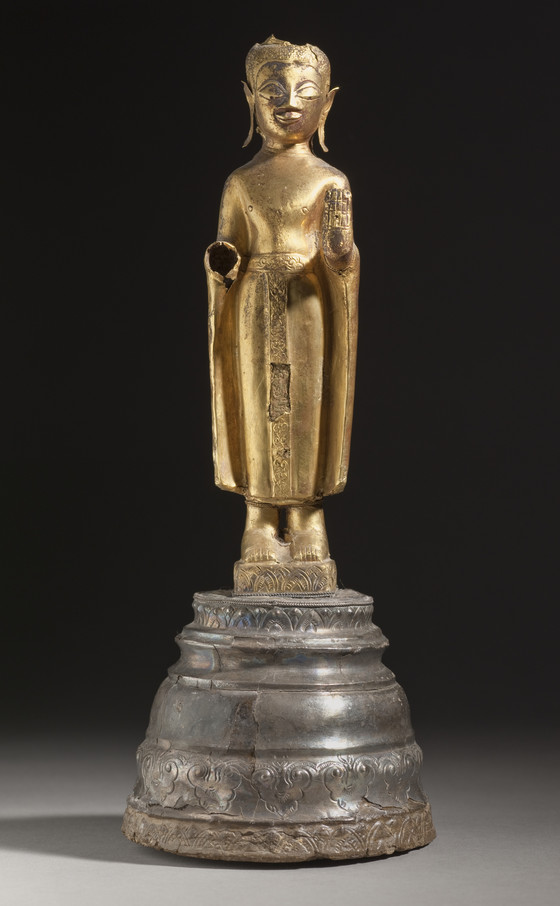
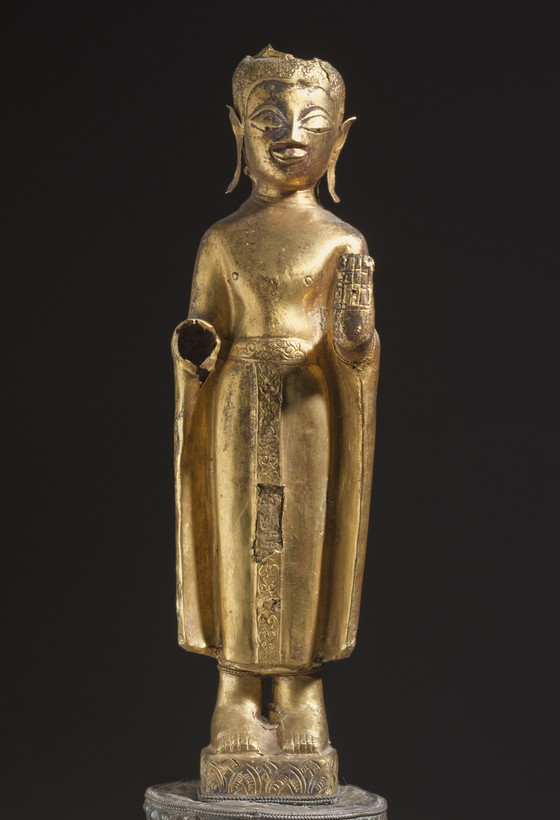
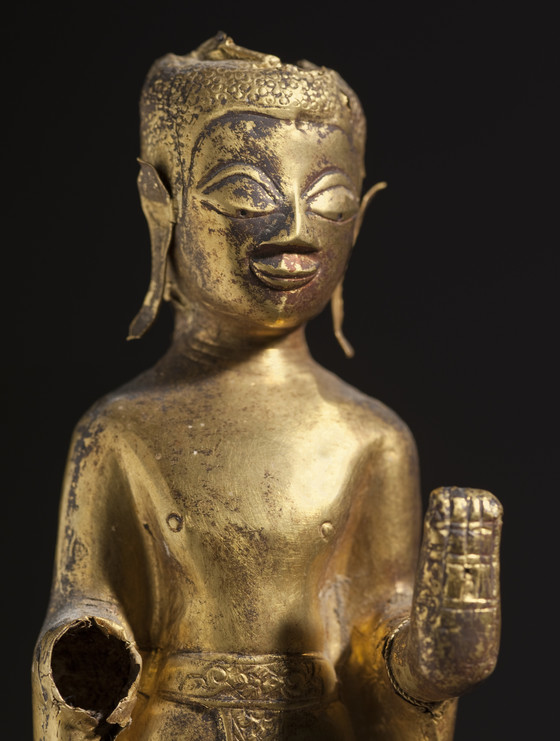
This standing image of Buddha Shakyamuni is made of sheet gold over a wood core. He originally had a cranial protuberance symbolizing his omniscience (ushnisha). He has snail curl hair and distended earlobes, which symbolize his renunciation of his princely life when he had long hair and wore heavy golden ear ornaments. He gazes downward and smiles with compassion. He wears a lungi with a floral decorated waistband and pendant flap, rather than a monastic robe that would have covered one or both shoulders. His left hand is held in the ‘fear-not’ gesture (abhaya mudra). His right hand is now missing, but judging from the position of the forearm it would have likely displayed the same gesture. The dual gesture was often displayed by Buddhas in Thailand, Cambodia, and Laos, but its specific meaning is unknown. The image’s tiered circular base is made of sheet silver over a wood core decorated with bands of scrolling lotus leaves and a repeating floral motif.
See also M.2005.213a-b.
More...