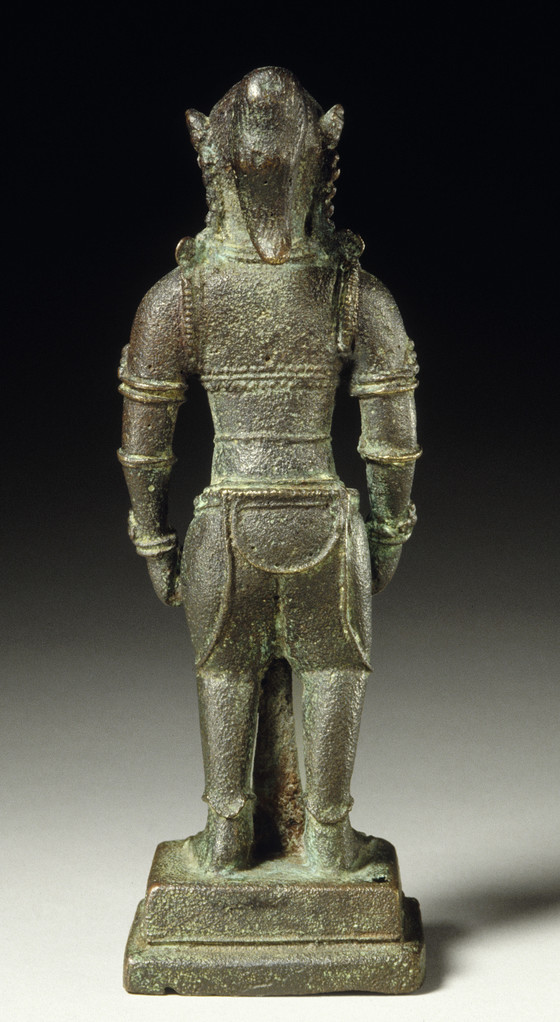
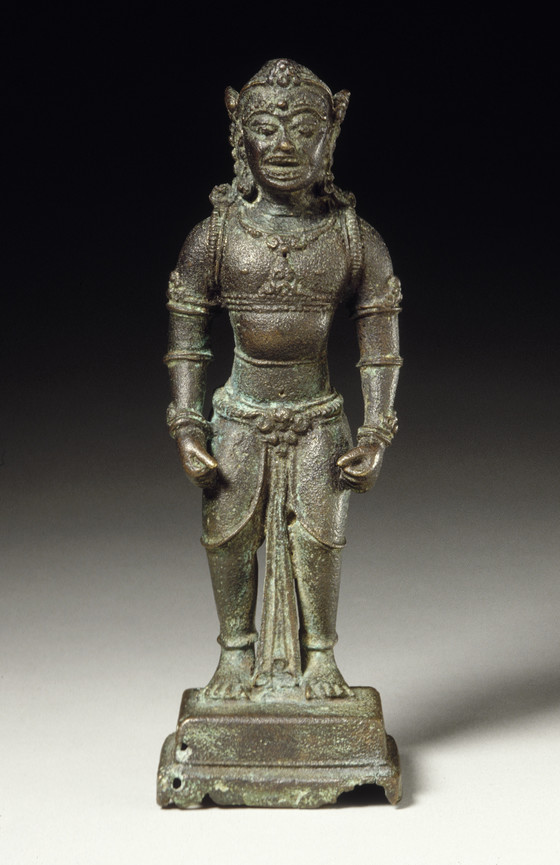
Male Demonic Figure (Rakshasa)
* Nearly 20,000 images of artworks the museum believes to be in the public domain are available to download on this site. Other images may be protected by copyright and other intellectual property rights. By using any of these images you agree to LACMA's Terms of Use.

Male Demonic Figure (Rakshasa)

Indonesia, Eastern Java, 14th-early 16th century
Sculpture
Copper alloy
5 3/4 x 2 in. (14.6 x 5.1 cm)
Indian Art Special Purpose Fund (M.80.61)
Not currently on public view

Curator Notes

...
In Hindu Puranic mythology, demons (asuras or rakshasas [male] and rakshasis [female]) were created by Brahma, the God of Creation. They were born at night from his thigh or buttocks in a moment of darkness or spiritual passion. Due to their bloodlust and voracious hunger, the demons represent the chaos and dark negative energy (tamas) necessary to balance the positive forces of the gods. Rakshasas have the power to change their shape at will and appear as animals, monsters, or seductive beautiful women. In Indonesian art, large stone statues of rakshasas or rakshasis were placed at entrances as protective gatekeepers (dvarapala) to temples and doorways to sacred spaces. Designed to ward off evil spirits, they are typically depicted with fearsome features, including bulging eyes, fangs, and a potbellied physique. They often carry a club or a chopper. Unlike stone demonic guardians (see M.76.126), small bronze (copper alloy) rakshasas were portable personal or household protective deities and also used in rituals. The LACMA rakshasa stands at attention with his clenched fists held by his hips. He is grimacing with a fierce expression. He has a ponytail and wears heavy ornaments and a jeweled warrior’s cross-chest belt (channavira) symbolic of valor and power. It crosses his chest beneath his breasts in the front and continues across his back. He wears a dhoti and is barefoot.
More...