Miniature Water Vessel (Kendi)
* Nearly 20,000 images of artworks the museum believes to be in the public domain are available to download on this site. Other images may be protected by copyright and other intellectual property rights. By using any of these images you agree to LACMA's Terms of Use.

Miniature Water Vessel (Kendi)

Vietnam, 15th century
Furnishings; Accessories
Wheel-thrown stoneware with cream slip, underglaze blue painted decoration, and clear glaze
3 7/8 × 6 × 4 in. (9.84 × 15.24 × 10.16 cm)
Gift of Mr. and Mrs. Harry Lenart (M.74.32.3)
Not currently on public view

Curator Notes

Kendis (derived from Sanskrit: kundika) are the ubiquitous water vessels of Southeast Asia. They are pouring vessels with a spout of various shapes on the side of the vessel body....
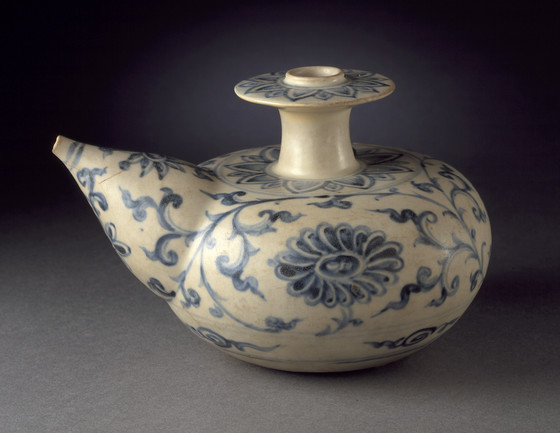
Kendis (derived from Sanskrit: kundika) are the ubiquitous water vessels of Southeast Asia. They are pouring vessels with a spout of various shapes on the side of the vessel body. The bodies are globular with or without a low foot. The spouts the spouts can be straight, curved, bulbous (or mammary), or in the form of an animal head. They have no handles, so the pot is held by its neck while pouring. The shape of the necks varies but generally has a flared mouth. Kendis are made in a variety of materials, including earthenware, stoneware, glazed ceramic, porcelain, pewter, brass, bronze, and silver alloy. They were produced in Indonesia, Thailand, Vietnam, Malaysia, and in China as export ware. Kendis were made in different sizes, with small vessels typically used for dispensing medicine and magic potions, or as children toys. Besides their everyday usage, they were also used for ceremonial purposes. Representations of kendis are replete in the stone narrative panels of Borobudur and other Southeast Asian monuments. This kendi is from Vietnam and was produced in the 15th century. It is made of stoneware with a cream slip, underglaze blue painted decoration, and clear glaze. It has a compressed globular body without a foot ring, bulbous spout, and a curved neck. It is decorated with lotus petals and chrysanthemum scrolls. The diminutive size of the vessel suggests it was used for dispensing medicine.
More...