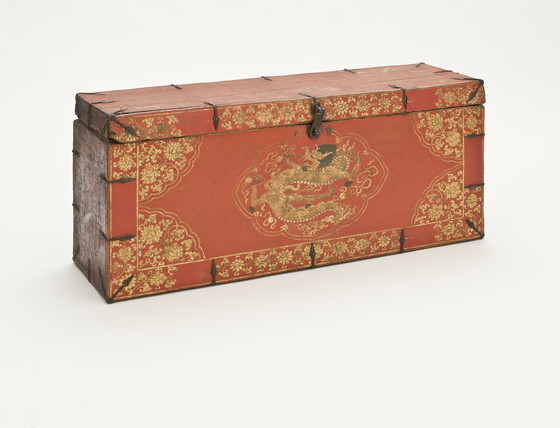
Trunk with a Five-Clawed Dragon

https://collections-images.lacma.org/remote_images/ma-13419-O3.jpg


Please log in to add this item to your gallery.
View comments
No comments have been posted yet.
Add a comment
Please log in to add comments.
Please log in to add tags.
* Nearly 20,000 images of artworks the museum believes to be in the public domain are available to download on this site.
Other images may be protected by copyright and other intellectual property rights.
By using any of these images you agree to LACMA's Terms of Use.
Trunk with a Five-Clawed Dragon
Tibet, circa 1650-1700
Furnishings; Furniture
Wood with mineral pigments, gilding, and gesso on cloth; metal fittings
17 1/2 x 39 1/2 x 11 1/2 in. (44.45 x 100.33 x 29.21 cm)
Gift of the 2010 Collectors Committee (M.2010.81.3)
Not currently on public view