

Curator Notes
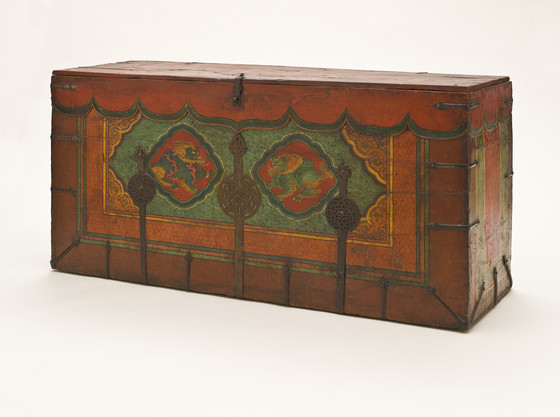
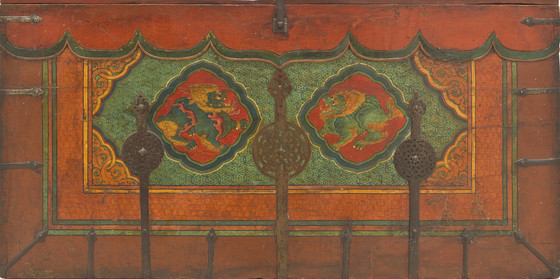
This exceptionally large and high quality painted trunk is adorned with confronting snow lions (Tibetan: gangs seng ge). An ancient legendary creature of Tibet, the snow lion was a powerful guardian symbol of the Imperial Tibetan Empire (618–842) prior to the introduction of Buddhism in Tibet in the 7th century. It is a national emblem of Tibet and in Buddhist belief symbolizes fearless joy and spiritual purity and transformation. See also AC1992.75.1 and M.2006.62.1.
The snow lions are highlighted in lobed cartouches set against a field of interlocking coins or circles with scrolling corner designs. Surrounding this central panel of decoration are several borders, especially a large one embellished with a tortoiseshell pattern. See Dale Carolyn Gluckman, "A Multifaceted Relationship: Textiles and Tibetan Painted Furniture," in David Kamansky, ed., Wooden Wonders: Tibetan Furniture in Secular and Religious Life (Pasadena: Pacific Asia Museum and Chicago: Serindia Publications, 2004), pp. 81-84, figs. 22a and 25a.
The trunk has the standard metal reinforcement fittings on the corners and edges of the trunk, and a hasp latch. Particularly noteworthy are the three prominent escutcheons with medallions and tongues in scrolling designs derived from Central Asian Islamic metalworking.
Along the top of the trunk is a faux overhang replicating the actual overhangs on Tibetan leather trunks (see M.2010.78.10 and M.2010.81.2). The ends of the trunk have plain multicolored borders.
See Kamansky, ed., Wooden Wonders, pp. 246-247, no. 69.
More...