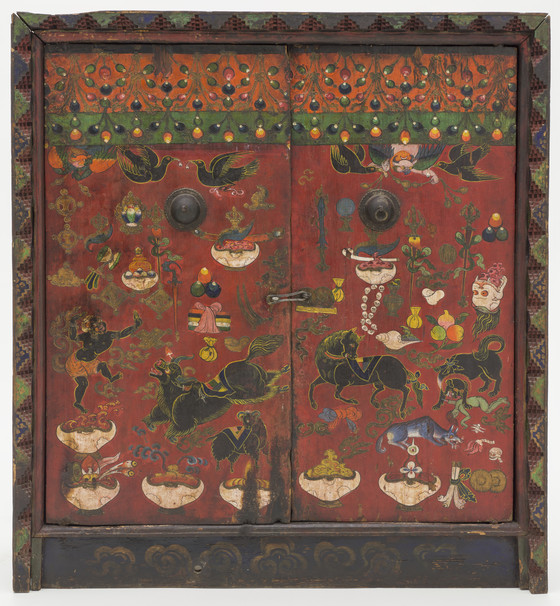
Offering Cabinet (Torgam) with Tantric Offerings to Mahakala
* Nearly 20,000 images of artworks the museum believes to be in the public domain are available to download on this site. Other images may be protected by copyright and other intellectual property rights. By using any of these images you agree to LACMA's Terms of Use.

Offering Cabinet (Torgam) with Tantric Offerings to Mahakala

Tibet, 19th century
Furnishings; Furniture
Wood with mineral pigments; metal fittings
36 x 34 x 13 3/4 in. (91.44 x 86.36 x 34.93 cm)
Gift of Ruth Sutherlin Hayward and Robert W. Hayward in honor of the museum's 40th Anniversary and the Dalai Lama's 70th birthday (M.2005.94.1)
Not currently on public view

Curator Notes

This cabinet (torgam) would have been used in the Protectors’ Chapel (gonkang) of a Tibetan monastery to protect consecrated cakes made of butter and dough (torma) that were offered to the Buddhist pr...
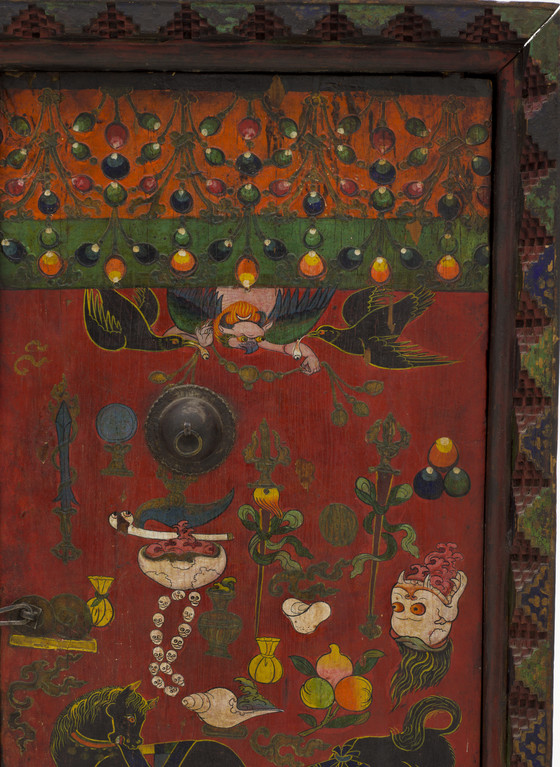
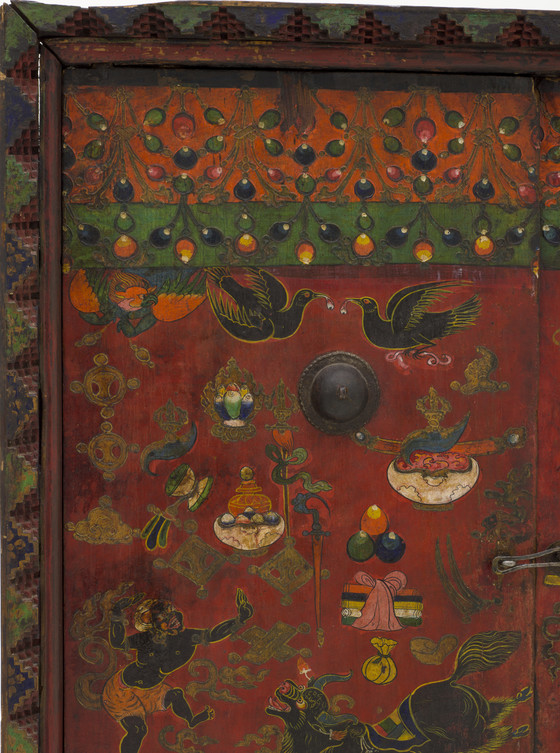
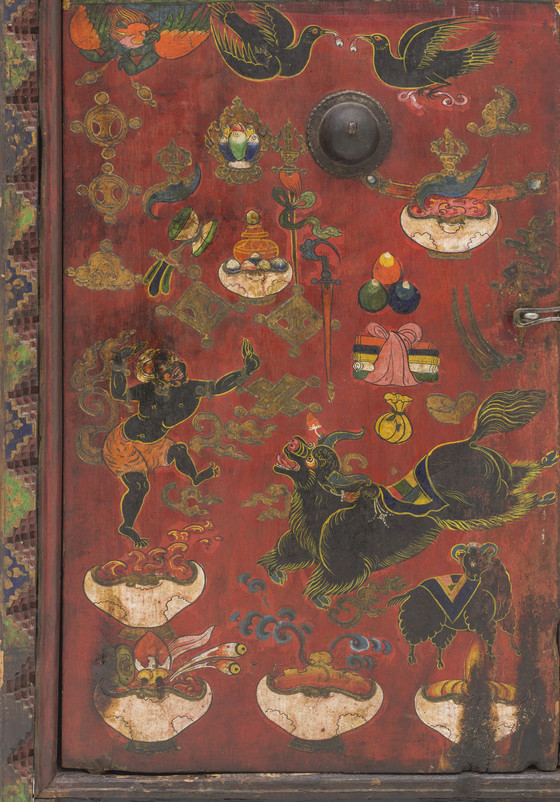
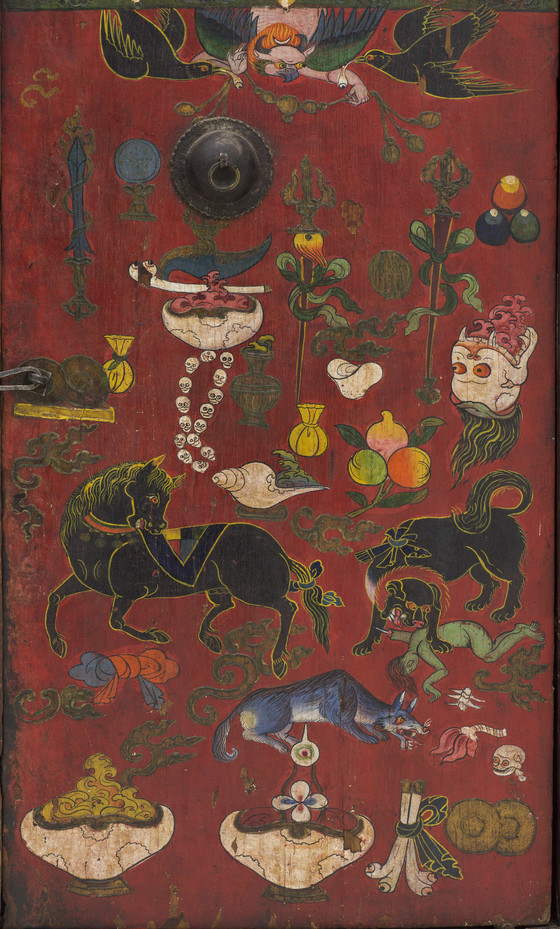
This cabinet (torgam) would have been used in the Protectors’ Chapel (gonkang) of a Tibetan monastery to protect consecrated cakes made of butter and dough (torma) that were offered to the Buddhist protective deities (dharmapala). Led by Mahakala (Great Black One), the dharmapala are believed to defend Buddhism’s teachings and institutions, as well as to destroy the hindrances of its followers. The cabinet’s doors are adorned with imagery related to the dharmapala, including various Buddhist symbols, ritual objects, symbolic offerings, sacred animals, and cemetery scenes. There are representations of the seven precious possessions of the universal monarch (chakravartin) and diverse honorific offerings, including an inverted skull filled with tantric offerings symbolizing the body parts of slain enemies. The two large skull cups in the middle are topped with a flaying knife and 'magical wooden gong' of Pañjara Mahakala on the viewer's left door, and a flaying knife, thighbone trumpet and skull necklace on the right door. Directly beneath are a black-skinned minion of Mahakala and several animals with black or dark blue fur, including a yak, ram, horse, a mastiff dismembering a human corpse, and a jackal chewing on body parts. Across the bottom are six large skull cups containing various tantric wrathful offerings, including the Inner Offering of the Five Nectars (human excrement, marrow, semen, blood and urine) and the Five Meats (cow or bull, dog, elephant, horse and human).
More...

Bibliography

  • Kamansky, David, ed.  Wooden Wonders: Tibetan Furniture in Secular and Religious Life.  Chicago: Serindia Publications, Inc., 2004.

Exhibition history

  • Ritual Offerings in Tibetan Art Los Angeles, CA, Los Angeles County Museum of Art, September 13, 2014 - October 25, 2015