Silver Drachm

* Nearly 20,000 images of artworks the museum believes to be in the public domain are available to download on this site. Other images may be protected by copyright and other intellectual property rights. By using any of these images you agree to LACMA's Terms of Use.

Silver Drachm

Iran, Rayy, Sasanian, Sasanian dynasty, reign of Khosro II (617)
Tools and Equipment; coins
Silver
1/4 × 1 in. (0.64 × 2.54 cm)
The Madina Collection of Islamic Art, gift of Camilla Chandler Frost (M.2002.1.448)
Not currently on public view

Curator Notes

Apart from their monetary function, coins from the Sasanian dynasty in Iran were symbols of legitimacy, faith, power and prestige accrued to the rulers in whose names they were struck.

...

Apart from their monetary function, coins from the Sasanian dynasty in Iran were symbols of legitimacy, faith, power and prestige accrued to the rulers in whose names they were struck. Such gold dinars and silver drachms were often works of art in their own right while their inscriptions, designs and possible archaeological contexts often provide key information in the history of art.

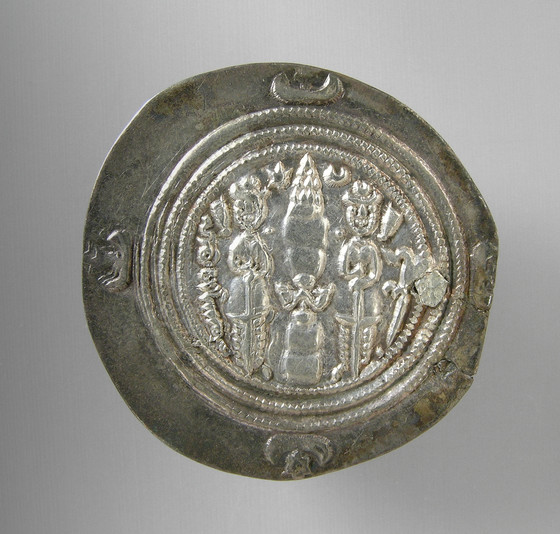
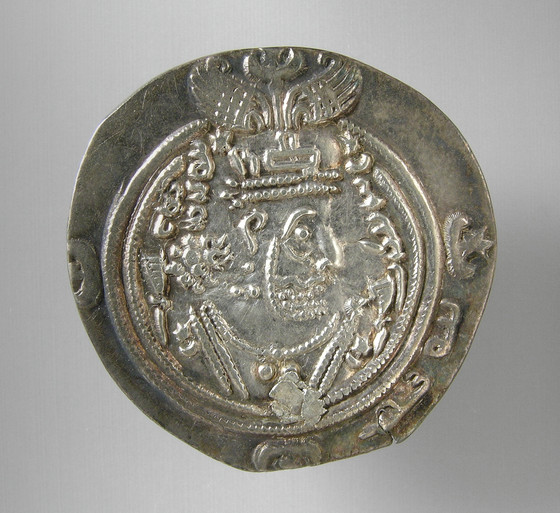
This coin follows the standard type of silver drachm from the reign of Khusraw II (590-628). On the obverse, it depicts a royal bust with characteristic winged crown; inscribed in Pahlavi at right is the ruler’s name, and at left “May his glory increase,” while outside the margin is the word “excellent.” The reverse shows the characteristic fire temple with two attendants, a symbolic scene for the Zoroastrianism religion practiced by the Sasanians, and inscribed in Pahlavi the mint name Rayy and the regnal year 27, which equates to 617 AD.

With the advent of Islam, the first Muslim rulers in the former Persian Empire continued to rely upon the coinage of the Sasanian mints, probably to prevent currency shortages and to help maintain confidence in the monetary system. Among the most common types of such early Islamic coins are those of Khusraw II, with added Arabic inscriptions. See M.2002.1.450.

More...

Bibliography

  • Mousavi, Ali. Ancient Near Eastern art at the Los Angeles County Museum of Art. Los Angeles: Los Angeles County Museum of Art, 2012.