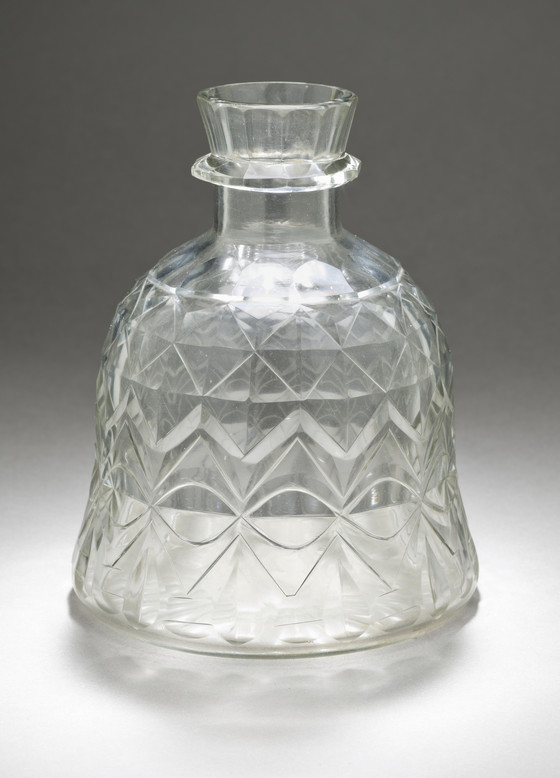
Hookah Base, Export ware made for the Indian market
* Nearly 20,000 images of artworks the museum believes to be in the public domain are available to download on this site. Other images may be protected by copyright and other intellectual property rights. By using any of these images you agree to LACMA's Terms of Use.

Hookah Base, Export ware made for the Indian market

Belgium, Flanders or Netherlands, circa 1800
Tools and Equipment; hookahs
Faceted lead glass
Height: 7 1/2 in. (19.05 cm); Diameter: 6 in. (15.24 cm)
South and Southeast Asian Acquisition Fund (M.2002.7.1)
Not currently on public view

Curator Notes

...
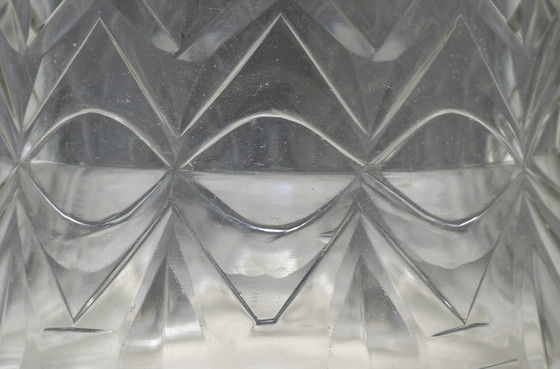
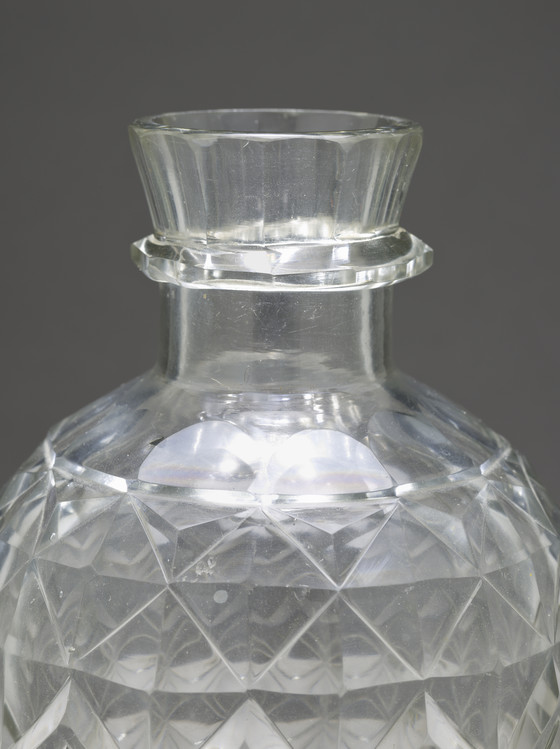
Flat-bottomed metallic hookah bases are documented in Indian painting by the late 17th century. By the mid-18th century, they had become commonplace and pictorial evidence indicates they were used concurrently with the earlier form of spherical hookah bases. Lead glass, which in general terms is distinguished by the addition of lead oxide to the batch, was patented in 1674 by the English glassmaker George Ravenscroft (1632-83). Invented to emulate Venetian cristallo soda glassworks, it was also known as Christalline, lead crystal, or flint glass. In the 18th and 19th centuries, a new style of English and Dutch lead glass became popular. Known as 'cut glass' or 'diamond-cut' glass, it featured beveled facets and grooves made by cutting into the surface with stone or iron grinding wheels. Significant quantities of European lead glassware were imported into India as trade items during this period, including vessels made in an imitation Indian style. This hookah base is made of faceted lead glass. Its scintillating design features wheel-cut fluting in the neck above and beneath the projecting molding, which was used to facilitate grasping. From the shoulder downward, it has large triangular bevels arranged in a diamond pattern, a constricted waist embellished with a horizontal series of beveled ovals, and a basal border of beveled teardrops.
More...