

Curator Notes
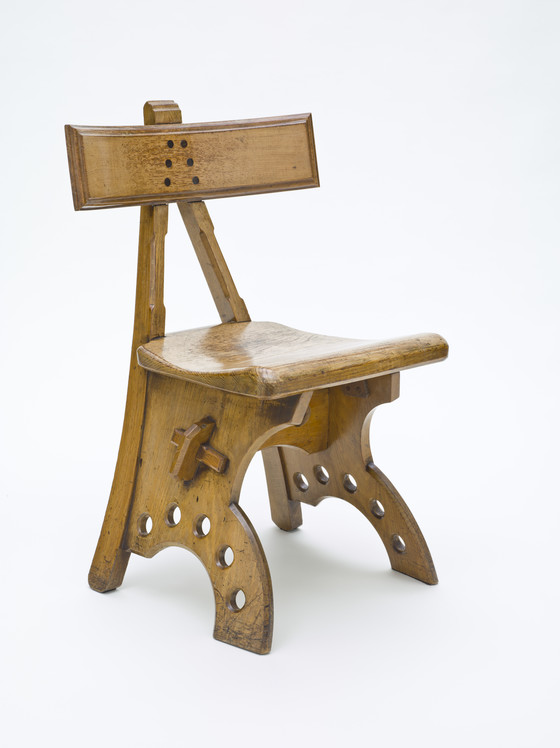
Designed by Edward Welby Pugin (1834-1875), this oak chair exhibits the structural honesty and truth to materials central to British Arts and Crafts philosophy. The eldest son of Augustus Welby Northmore Pugin, the first and most important standard bearer for the moral aesthetics of the Gothic Revival, E.W. Pugin worked in the style that A.W.N. had popularized, assisting in his father’s shop from a young age. When the senior Pugin died in 1852, the 18-year-old Edward took over the studio and unfinished commissions.
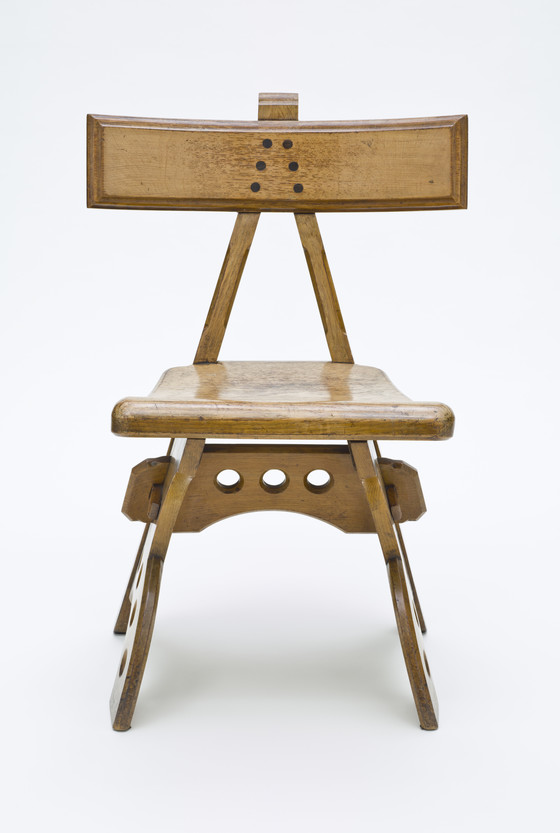
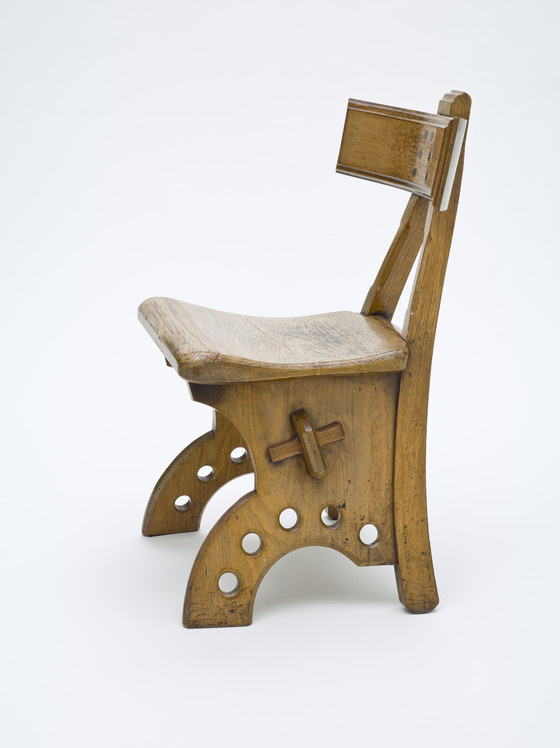
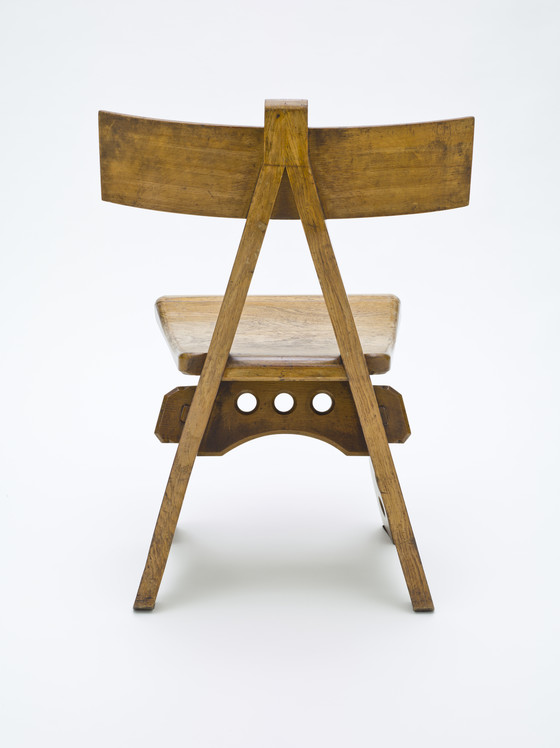
A more speculative businessman than his father, E.W. took on his most ambitious project, the Granville Hotel in Ramsgate, in 1867, which led him to file for bankruptcy in 1873. The monumental Gothic Revival structure opened in December 1869 with interiors by Pugin. This chair is a Granville Hotel design, registered by Pugin at the Patent Office (now preserved in the Public Record Office, Kew BT/43/58, no. 245877). Its exposed joinery and Gothic base demonstrate continuity between the father and son’s work while also reflecting the latter’s interest in applying Gothic design for secular and commercial purposes.
As early as 1872, Pugin began advertising "gothic furniture…similar to that supplied to the Granville Hotel," which was produced at his South Eastern Works factory. By 1876, church furnishers Cox & Sons had purchased and were manufacturing a number of Pugin’s designs. London cabinet maker C & R Light made E.W. Pugin furniture by 1880 as well. Several chairs identical to this one survive in private collections, and close variants have appeared in numerous catalogues. The Metropolitan Museum of Art, for example, has an example with brass feet and four pierced holes in the sides, differing from the five-hole design illustrated in the patent and on the chair in LACMA’s collection.
Abbey Chamberlain Brach, Curatorial Assistant, 2013
More...