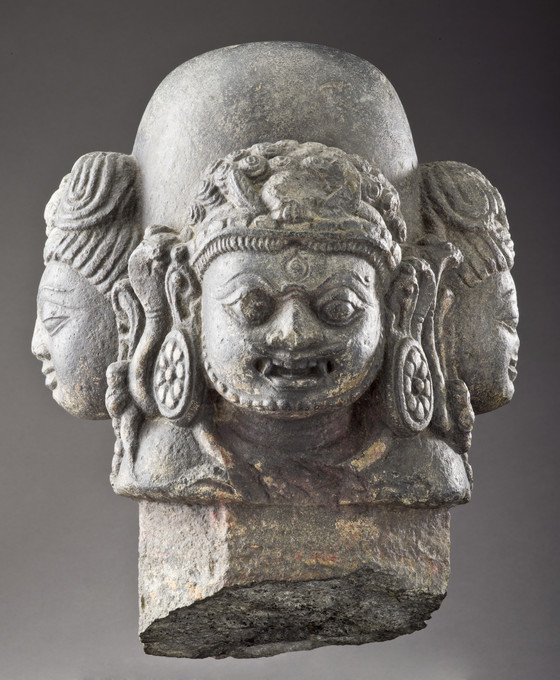
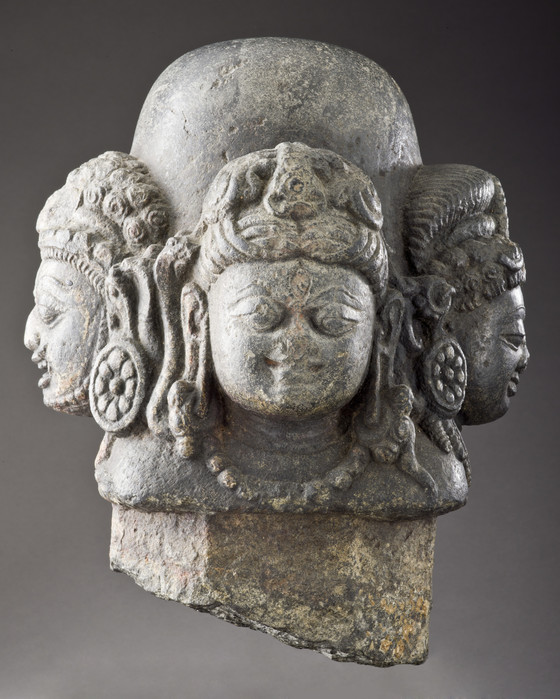
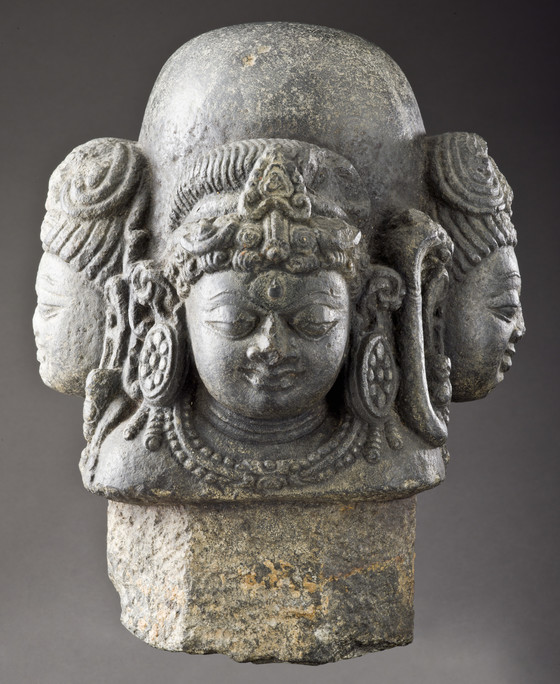
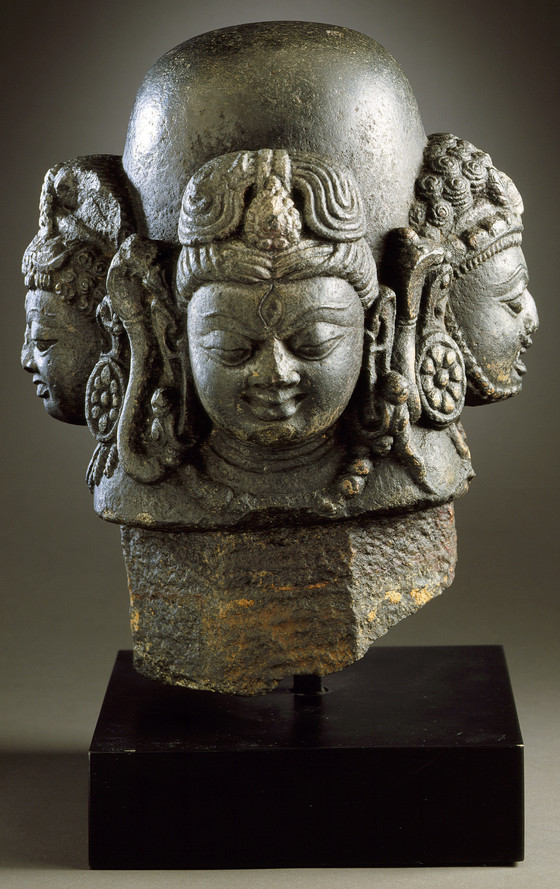
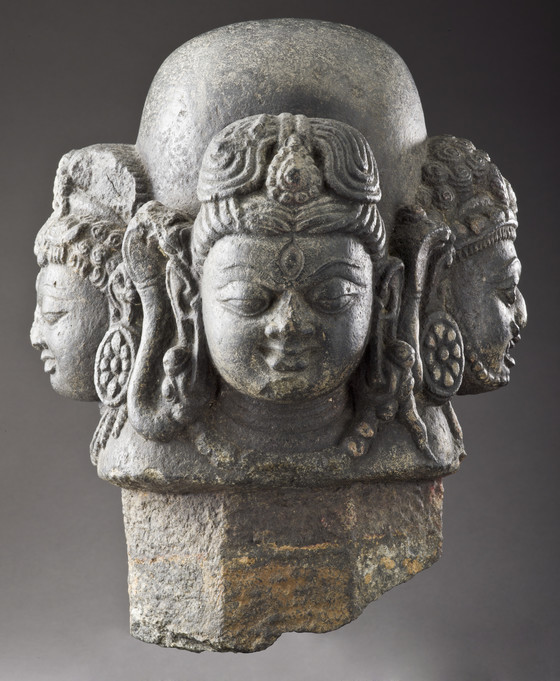
Shivalinga with Four Faces
* Nearly 20,000 images of artworks the museum believes to be in the public domain are available to download on this site. Other images may be protected by copyright and other intellectual property rights. By using any of these images you agree to LACMA's Terms of Use.

Shivalinga with Four Faces

India, Bihar, early 10th century
Sculpture
Black schist
11 7/8 x 10 1/2 in. (30.16 x 26.67 cm)
Purchased with funds provided by The Smart Family Foundation in memory of Florence Smart Richards (M.91.10)
Not currently on public view

Curator Notes

...
Since around the beginning of the Common Era, the Shivalinga (literally, the "sign" of Shiva) has been the quintessential symbol and artistic form used to represent the major Hindu god Shiva. In its core conception imagined as an aniconic column, the Shivalinga symbolizes the deity’s transcendental nature and primordial potency. As iconic imagery became increasingly prevalent in South Asian art, the Shivalinga was anthropomorphized by the addition of Shiva’s head emerging from the stone column in order to provide worshippers with a physical form that was considered more accessible than the abstract expression of his imperceptible reality. Multiple heads of Shiva were subsequently added to represent different philosophical aspects of the god. To seek blessings from Shiva, devotees worship lingas with ritual offerings of flowers, food, and incense. The deity’s large eyes and welcoming gaze are thought to help worshippers establish a personal spiritual bond, thus strengthening the power of their offering. The four faces of Shiva each have their own symbolism: Sadyojata (Newborn) represents creation, Vamadeva (Lord on the left or North) represents preservation, Aghora (Awesome) represents transformation, and Tatpurusha (literally, "his man," symbolizing Supreme Bliss) represents wisdom. In contrast to the Nepalese linga attributed to the 6th-7th century (M.88.226), this linga does not have an extended shaft. The section that would have been sunk into the base symbolizing the female principle (yoni pitha) has been roughly cut into an octagonal shaft.
More...

Bibliography

  • El Universo de la India: Obras Maestras del Museo de Arte del Condado de Los Angeles. Santiago: Centro Cultural Palacio La Moneda, 2012.